Carpet & Flooring
Flooring for Server Rooms and Data Centres in Singapore
Flooring for server room and data centre environments demands more technical precision than a standard commercial specification. In these mission-critical spaces, the floor is part of the facility’s static control, cleanliness and operational safety, not simply a surface to walk on. The wrong finish can build up static charge, shed dust into cooling air or wear out under rolling equipment long before the rest of the fit-out.
Singapore’s position as a regional data centre hub makes this a practical question for facility managers, architects and IT infrastructure planners. The government allocated a further 200MW of data centre capacity on Jurong Island in August 2026, and the wider Southeast Asian pipeline is growing fast, so more technical rooms are being planned, refitted and expanded.
The short version: most server and equipment rooms need an anti-static or static-dissipative floor finish that is correctly grounded, easy to clean and rated for rolling loads. Anti-static vinyl tiles are the most common and practical choice. They are modular, low-dust, easy to replace tile by tile and available in understated wood and stone looks for the spaces staff see every day.
Why Server Room Flooring Is Different
A server room floor has to satisfy several requirements at once:
- Static control: people generate static charge simply by walking, and uncontrolled discharge can damage sensitive electronics.
- Cleanliness: cooling fans draw air across the room, so the floor must not shed fibres or dust.
- Loads: racks, UPS cabinets and trolleys impose heavy point and rolling loads.
- Fire performance: finishes must meet local fire requirements and limit smoke.
- Change: technical rooms are reconfigured often, so the finish should be easy to lift, patch and extend.
Decorative carpet, timber and standard residential vinyl are unsuitable for the equipment areas themselves. Carpet tiles still have a role in the offices and control rooms around them, which we cover in our guide to flooring for data centre control rooms and support spaces.
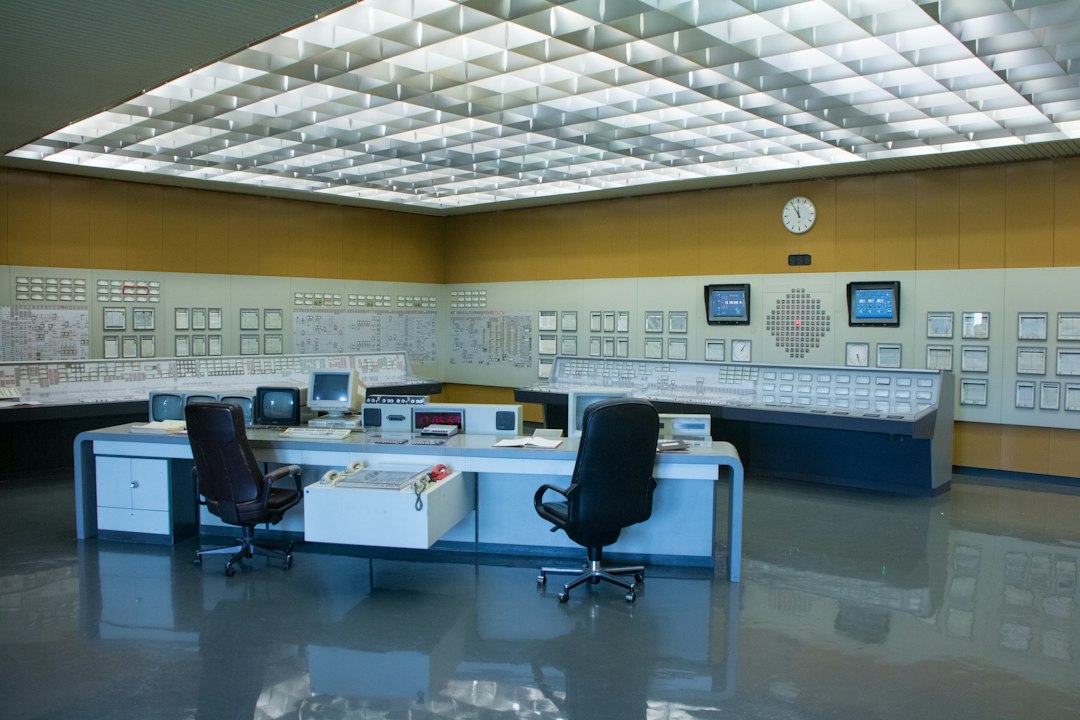
Understanding the Data Centre Floor Zones
A data centre is not one room. Treating the whole building as a single specification is a common mistake. It helps to separate three zones:
| Zone | Typical spaces | Flooring priority |
|---|---|---|
| White space | Data halls, server rooms, comms rooms | Static control, cleanliness, load rating |
| Grey space | UPS, battery, electrical and plant rooms, loading and staging | Durability, rolling loads, chemical and slip resistance |
| Support space | Network operations centre, offices, meeting rooms, corridors, pantries | Comfort, acoustics, low static, appearance |
In large hyperscale halls, the floor build-up is usually decided early by the M&E and structural teams. That may be a raised floor delivered by a specialist access-floor contractor, or increasingly a solid slab with overhead cabling and cooling. Either way, the finish on the walking surface still matters. Smaller server rooms, comms rooms and edge facilities in commercial buildings are typically on a slab, where the finish flooring does most of the work.
Anti-Static, Dissipative and Conductive: Know the Classes
Static-control flooring is classified by electrical resistance, measured in ohms. The class you need depends on how sensitive the equipment is and on the operator’s own static-control programme.
| Classification | Typical resistance range | Where it is used |
|---|---|---|
| Conductive | Below 1 x 10^6 ohms | Highly sensitive electronics handling, some clean rooms |
| Static dissipative | 1 x 10^6 to 1 x 10^9 ohms | Server rooms, data halls, electronics assembly |
| Anti-static (low charge generation) | Limits body voltage when walked on | Equipment rooms, technical offices, control rooms |
Two points trip up many specifications. First, “anti-static” is used loosely in the market. Always ask for the test report behind the claim, including the standard, resistance values and test humidity, and match it to the operator’s requirement. Second, no floor controls static on its own. Performance depends on grounding (typically copper tape connected to building earth), conductive adhesive where specified, and the right footwear and cleaning regime. Our anti-static flooring guide covers the standards and testing in more detail.
Why Anti-Static Vinyl Tiles Suit Server Rooms
For most server rooms, comms rooms and technical areas, anti-static vinyl tiles offer the best balance of performance and practicality:
- Modular replacement: a damaged or contaminated tile can be lifted and replaced without closing the room.
- Low dust: a dense, non-fibrous surface that is easy to damp-clean.
- Rolling-load tolerance: resilient vinyl handles trolleys and rack moves better than soft finishes.
- Fast installation: tiles suit phased works and live facilities, where downtime is expensive.
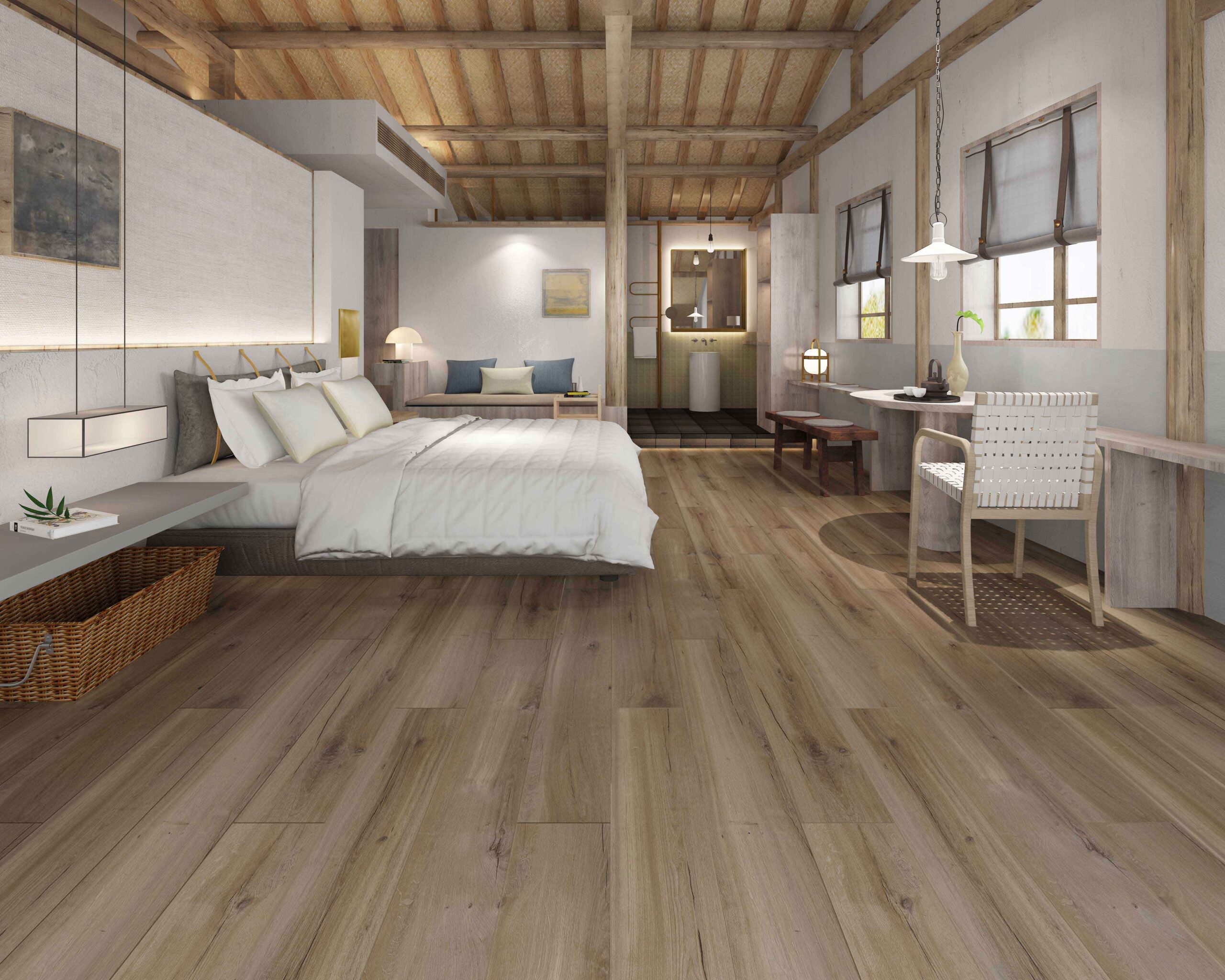
- Appearance: modern ranges come in realistic wood and stone looks, so technical rooms visible to clients or staff need not look industrial.
Goodrich supplies the Sangetsu OT anti-static vinyl tile range from Japan. It is an extensive collection of easy-to-install anti-static tiles in wood-grain and stone-grain designs. It also includes 5mm tiles that sit flush with carpet tiles, which is useful where a server room opens directly onto an office or operations floor. Our team can share product data and match the range to your project’s static-control requirement.
Loads, Rolling Traffic and Durability
Fully loaded racks can exceed 1,000 kg, spread over four small feet, and are moved on castors during installation and refresh cycles. When specifying the finish:
- Confirm the static and rolling load performance of the tile and the adhesive system.
- Use load-spreading plates or protection boards when moving heavy equipment.
- Check the substrate: a flat, dry, well-prepared slab is essential. Singapore’s humidity makes moisture testing before installation especially important.
- Consider heavier-duty finishes for loading bays and staging areas, where pallet jacks and deliveries concentrate wear.
Fire Safety and Indoor Air
Finishes in technical rooms must comply with Singapore’s fire code requirements for surface spread of flame and smoke. Ask for current fire test certificates for the exact product specified. Many operators also prefer low-smoke, halogen-conscious materials in enclosed rooms. For offices and control rooms, look for low-VOC credentials. These support indoor air quality and align with green building requirements such as those covered in our Green Mark v7 materials guide.
Maintenance That Protects Static Performance
A static-control floor only works if it is maintained correctly:
- Use cleaners approved for static-control floors. Standard polishes and waxes leave an insulating film that defeats the floor.
- Keep dust down. Regular damp mopping and walk-off matting at room entrances reduce particles drawn into equipment.
- Test periodically. Record resistance after installation as a baseline and retest on a regular schedule.
- Replace damaged tiles promptly so grounding continuity is maintained across the whole floor.
Final Thoughts
Good server room flooring starts with separating the zones, specifying the right static-control class with test evidence, and choosing a finish that can be installed, cleaned and replaced without disrupting operations. Anti-static vinyl tiles meet that brief for most equipment rooms, while acoustic, low-static carpet tiles make the surrounding workspaces comfortable for the people who run them.
Request a quotation or request samples of anti-static vinyl tiles for your server room or data centre project.
Frequently Asked Questions
What is the best flooring for a server room?
For most server rooms and comms rooms, anti-static or static-dissipative vinyl tiles are the best choice. They control static when correctly grounded, shed no fibres, handle rolling loads from racks and trolleys, and can be replaced tile by tile. Always confirm the product’s resistance test data matches the operator’s static-control requirement.
Is anti-static flooring the same as static-dissipative flooring?
Not exactly. Static-dissipative flooring has a defined resistance range, typically 1 x 10^6 to 1 x 10^9 ohms, and drains charge to ground in a controlled way. “Anti-static” is often used more loosely for floors that limit the charge people generate when walking. Ask for the test report to confirm which performance a product actually delivers.
Can carpet tiles be used in a data centre?
Not in the equipment areas, where fibres and dust are a risk to cooling and hardware. Carpet tiles with low static propensity are well suited to the offices, meeting rooms and network operations centre around the data halls, where they improve acoustics and comfort for staff.
Does server room flooring need to be grounded?
Yes. A static-control floor needs a continuous path to earth, usually copper tape laid under the tiles and connected to building earth points, often with conductive adhesive. Without correct grounding, even a high-performance anti-static tile provides little protection.