Industry Insights
Writable and Magnetic Wallcoverings for Collaborative Workspaces
The whiteboard problem is unsolved in most office interiors. The brief is consistent: collaborative teams need a writable surface within easy reach of every meeting, training, and huddle space. The execution typically defaults to wall-mounted whiteboards or glass writing boards, sized somewhere between adequate and inadequate, hung on walls that could otherwise have been writable in the first place. The boards arrive late, get damaged early, and the writable area is consistently smaller than the team actually wanted.
Writable and magnetic wallcoverings solve the brief by eliminating the discrete board. Whole walls become writable. Magnetic functionality is layered into the same surface so that printed materials, post-its, and project artefacts can be displayed on the same wall the team is writing on. The specification scales to the room rather than to a fixed-size board catalogue.
At Goodrich, the Walltalkers product family addresses this brief at commercial-grade specification. This article sets out where writable and magnetic wallcoverings earn their place in collaborative workspace specification, the technical considerations, and the project track record we have built across Singapore corporate, education, and government work.
What Writable Wallcoverings Actually Are
Writable wallcovering is a continuous surface engineered for dry-erase, wet-erase, or chalk-marker use across the entire applied area. The product is constructed as a vinyl or polymer wallcovering with a high-performance dry-erase top coat, applied over standard wallcovering substrate or directly over primed drywall. The surface accepts standard whiteboard markers, allows clean erasing, and tolerates the cleaning chemistry used in normal office maintenance.
The Walltalkers product family extends the basic writable specification by combining writing, projection, and magnetic functionality in a single continuous surface. The product is a presentation wallcovering rather than a discrete board — the entire applied area is functional, and there is no edge that defines where the writable zone ends.
Magnetic functionality is delivered through a ferrous backing layer behind the writable surface. The magnetic strength is sufficient for normal post-its-and-prints magnetic display use; it is not engineered for heavy magnetic-bonded artefacts but it handles the day-to-day magnetic display load that most collaborative spaces actually use.
Projection compatibility refers to the surface’s optical properties for use as a projection screen. The Walltalkers surface accepts projected image without the visible bright spot from glass-board specular reflection that ruins many board-based projection setups.
Where Writable Walls Earn Their Place
Huddle rooms and small meeting spaces
Huddle rooms — small bookable meeting rooms typically for two to six people — are the highest-frequency use case for writable wallcovering. The room is too small for a freestanding whiteboard; the writable wall delivers the writable area without consuming floor space or wall mounting infrastructure. We commonly specify Walltalkers across one or two walls in huddle rooms, with the remaining walls treated in coordinated decorative wallcovering for the broader interior brief.
Training rooms and learning spaces
Training rooms benefit from the scale that writable wallcovering delivers. A trainer working a multi-step process, a complex diagram, or a structured agenda needs writable area larger than any standard board. Writable walls scale to the room. Combined with projection compatibility on the same surface, the room delivers training-format flexibility without setup time.
Education classrooms
Modern classroom design often pairs writable wallcovering with traditional whiteboards or smartboards. The writable wall handles collaborative student work, group exercises, and visual reference materials; the smartboard handles instructor-led digital content. The combination is more functional than either alone.
Innovation labs and design studios
Innovation teams and design studios are the heaviest users of writable wall area. Design sprints, ideation workshops, persona walls, journey maps, and project boards all benefit from the wall-scale canvas. For design firms, in-house innovation teams, and corporate research groups, writable wall area is a productivity asset, not a finish detail.
Project rooms and war rooms
Long-running projects accumulate visual artefacts: schedules, dependency maps, status dashboards, action lists. Project rooms with writable and magnetic walls hold the visual context across the project’s life without requiring digital tooling alone to carry it. The wall becomes the project’s working memory.
Corporate visitor and client experience zones
Some specifications go beyond functional into experiential. Client-facing rooms with writable walls support visible co-creation during client meetings; the act of working on the wall during a meeting communicates collaborative posture. The specification reads as deliberate when the wall is treated as a designed element rather than a wallpaper-and-marker afterthought.
Technical Considerations in Specification
Substrate preparation
Writable wallcovering is more sensitive to substrate finish than standard decorative wallcovering. Surface flatness, texture, and primer compatibility directly affect the writability and erasability of the finished surface. Substrate that is acceptable for textured decorative wallcovering may be unacceptable for writable installation. Site survey and substrate prep are part of the specification, not site contingencies.
Marker compatibility and cleaning protocol
Writable wallcoverings are engineered for specific marker chemistry — typically standard dry-erase markers. Wet-erase markers, permanent markers, and chalk are off-spec and damage some writable products. Cleaning protocol must use approved cleaning agents; aggressive solvents or abrasive cleaners damage the surface coating. Operator training and accessible reference materials at the room level reduce off-spec marker damage.
Lighting interaction
Writable surfaces interact with the room’s lighting design. Direct downlighting onto the writable wall can produce specular glare that washes out the marker contrast. Lighting that washes the wall from a steeper angle, or indirect lighting that produces diffuse illumination, gives better readability. Writable wall specification should be coordinated with lighting design, not treated as independent.
Magnetic strength considerations
The magnetic backing layer in products like Walltalkers delivers commercial-grade magnetic display performance, suitable for post-its, prints, and small artefacts. Heavy magnetic objects (whiteboards mounted by magnet, large frames, bulky artefacts) exceed the magnetic strength specification and require traditional mounting. The brief should be clear on what magnetic load is expected.
Lifecycle and end-of-service
Writable wallcovering service life is typically 5 to 7 years before erasability begins to degrade visibly. Heavy-use surfaces (training rooms with daily multi-hour use) may approach end-of-service earlier; light-use surfaces (huddle rooms used a few hours per week) extend further. End-of-service replacement involves stripping the wallcovering and re-prepping the substrate; re-installation is a routine wallcovering operation.
Specification Coordination With the Wider Office
Writable wallcoverings work best when specified as part of an integrated collaborative-workspace specification. The complementary elements:
- Acoustic treatment. Collaborative spaces generate concentrated speech activity. The writable wall is hard-surface-equivalent acoustically. Pairing writable wall specification with acoustic wallcovering or panel treatment on the adjacent walls delivers the acoustic comfort the collaboration brief actually requires.
- Decorative wallcovering. Writable surfaces should not become the only wall finish in the room. Coordinated specification — writable on the working wall(s), decorative wallcovering on the remaining surfaces — delivers a designed room rather than a function-only one.
- Furniture and AV. Writable wall use cases interact with table layouts, chair specifications, AV presentation positioning, and room control systems. The room design should support the writable use case end-to-end.
- Storage for markers and accessories. Marker storage, eraser storage, and consumables management at the room level prevent the off-spec marker damage that is the most common writable-wall maintenance issue.
The Goodrich Project Track Record
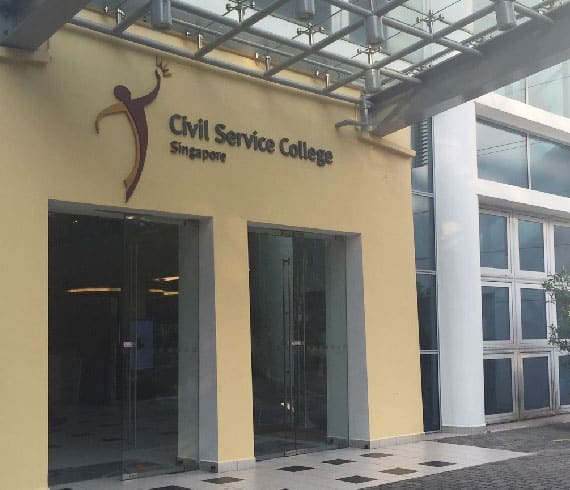
Walltalkers and complementary writable surface specifications appear across our corporate, government, and education portfolio in Singapore. References include training and learning environments at the Civil Service College, corporate huddle and meeting rooms, education facility classrooms, and innovation lab specifications across both private and public sector projects. The product is engineered for commercial-grade specification and the installation work is supported through Goodrich’s project management and installation teams.
The Selection Framework
For most briefs, the writable-wall decision works through five questions:
- Which rooms genuinely need writable surface? Not every meeting room benefits. Huddle rooms, training spaces, and project rooms benefit substantially; client-receiving rooms may not.
- How much writable area does the use case require? Single-wall, two-wall, or full-room specification each match different use intensity profiles.
- Is magnetic functionality required? Project rooms and team rooms benefit from magnetic display; pure training rooms may not.
- Is projection compatibility required? If the room hosts presentation work, projection compatibility on the writable surface eliminates a separate projection screen specification.
- How does the writable wall coordinate with acoustic and decorative specification? Best-in-class specifications integrate writable into the broader interior rather than treating it as a discrete element.
How to Specify with Goodrich
Walltalkers and other writable wallcovering products are supplied across Goodrich’s commercial portfolio with full supply-and-install support. The specification process: room schedule and use case analysis, sample-board development, substrate survey, installation programme, and post-handover operator orientation on cleaning and maintenance. For multi-room rollouts, the process coordinates writable wall specifications with the broader interior to ensure consistency and integration.
Frequently Asked Questions
Which commercial wallcovering options combine acoustic and writable surfaces?
A single wallcovering rarely does both jobs at once. Writable and magnetic wallcoverings deliver the write-on and pin-up surface, while acoustic wallcoverings and panels handle sound absorption. In collaboration spaces they are specified together as a system — writable walls where teams work, acoustic finishes on adjacent surfaces to keep the room quiet.
How do you evaluate a magnetic wallcovering system for collaboration spaces?
Assess five things: the durability of the writable surface and how cleanly markers erase without ghosting; the magnetic receptiveness of the backing layer and the holding strength it gives; substrate preparation and flatness; lighting and glare across the wall; and the product’s lifecycle and end-of-service. Commercial-grade systems such as Walltalkers are engineered against all five.
Are writable walls better than whiteboards for offices?
For collaborative teams, usually yes. A writable wallcovering turns a whole wall into a continuous write-on surface rather than a fixed-size board, so the writable area scales to the room. Magnetic function is layered into the same surface for pinning up printed materials, removing the late-arriving, easily damaged discrete board from the specification.
Can you write on and clean writable wallcovering easily?
Yes. The surface is engineered for dry-erase, wet-erase or chalk-marker use across the entire applied area. Long-term performance depends on matching the right marker type to the product and following the recommended cleaning protocol — doing so prevents staining and ghosting and keeps the wall looking clean over years of daily use.
Where are writable and magnetic wallcoverings used?
They earn their place in huddle rooms and small meeting spaces, training and learning rooms, education classrooms, innovation labs and design studios, project or “war” rooms, and corporate visitor and client experience zones — anywhere teams need generous, always-available writable and pin-up surface within reach of where they work.
Speak to our team to scope writable and magnetic wallcovering specifications. Browse Walltalkers references in the Goodrich e-catalogue, see project case studies, or review the broader Goodrich wallcovering range for coordinated specifications.