Carpet & Flooring
Hotel Room Flooring: Design and Durability Guide
Hotel room flooring design directly influences guest perception, comfort, and the overall brand experience. In Singapore’s highly competitive hospitality market — where properties range from heritage boutique hotels in Kampong Glam to five-star towers along Marina Bay — the floor surface is one of the most visible and heavily used elements in every guest room.
Selecting the right flooring requires balancing aesthetics, durability, acoustic performance, and maintenance efficiency across hundreds of identical rooms, each subjected to constant turnover and varying guest behaviours.
Why Flooring Matters in Hospitality Design
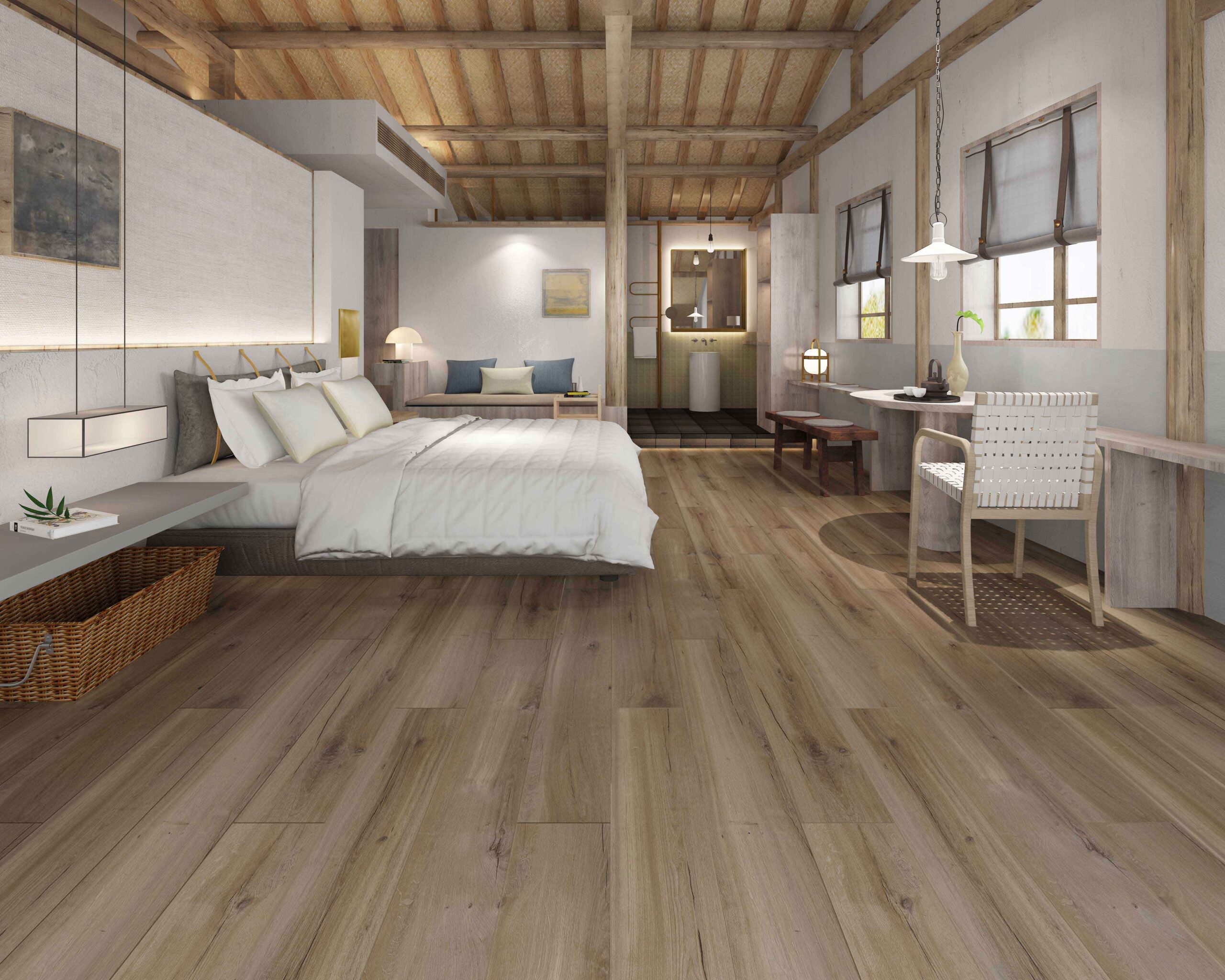
Guests form their first impression of a hotel room within seconds of opening the door. The floor is one of the largest continuous surfaces in the space, and its material, colour, and condition set the tone for the entire stay. A warm timber-look floor suggests comfort and sophistication. A stained, worn, or dated floor signals neglect — regardless of how fresh the bedding or modern the fixtures.
Beyond aesthetics, hotel room flooring must perform under conditions that residential floors never face. Rooms are cleaned daily, often with commercial-grade chemicals. Luggage wheels, high heels, and furniture movement create abrasion and impact loads. Spills from minibars, bathrooms, and room service are routine. The material must handle all of this while maintaining its appearance across a five-to-ten-year replacement cycle.
Acoustic performance is equally critical. Guests in the room below expect silence, yet the room above generates footfall, dropped items, and furniture movement. The flooring system’s ability to attenuate impact sound directly affects guest satisfaction scores and online reviews.
Flooring Materials for Hotel Guest Rooms
Luxury Vinyl Tiles and Planks
Luxury vinyl flooring has become the dominant choice for hotel guest rooms in Singapore and across Southeast Asia. It offers the visual warmth of natural wood or stone with superior moisture resistance, dimensional stability, and ease of replacement.
For hotel applications, specify commercial-grade LVT with a minimum 0.55 mm wear layer. Products with 0.7 mm wear layers extend service life in high-occupancy properties. The wear layer protects the photographic design layer from scuffs, scratches, and cleaning chemical exposure.
LVT’s design versatility allows hotel groups to achieve distinctive aesthetics without the cost and maintenance burden of natural materials. Warm oak tones create a residential feel that makes guests feel at home. Grey-washed wood effects suit contemporary, urban-chic brands. Stone-effect LVT in marble or travertine patterns elevates luxury properties without the cold, hard surface of actual stone.
Carpet
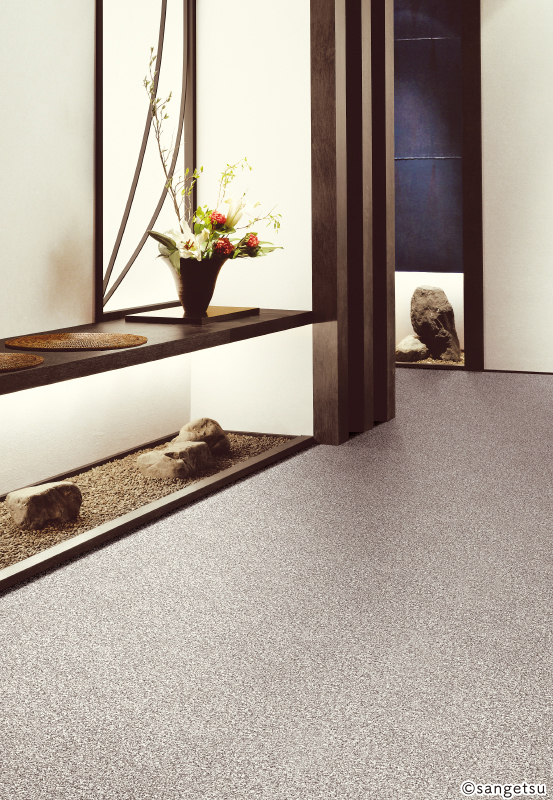
Broadloom carpet and carpet tiles remain popular in specific hotel segments. Luxury properties use high-quality woven or tufted broadloom for its unmatched softness and noise absorption. Carpet creates a sense of warmth and intimacy that hard-surface flooring cannot replicate.
However, carpet demands significantly more maintenance than vinyl. Professional deep cleaning is required regularly to manage allergens, stains, and odours. In Singapore’s humid climate, carpet in hotel rooms also requires effective air conditioning to prevent moisture retention and mildew. Many Singapore hotel operators have shifted to LVT for standard rooms while reserving carpet for suites and executive floors.
Engineered Timber
Some high-end boutique hotels specify engineered timber for its authentic grain, texture, and warmth. Engineered timber performs better than solid hardwood in Singapore’s humidity but still requires more maintenance than vinyl. It is susceptible to water damage in the bathroom-adjacent zones of the room and scratches more easily than commercial-grade LVT.
Design Considerations for Guest Rooms
Hotel room flooring design goes beyond material selection. Layout, transitions, and coordination with the overall interior scheme all require careful planning.
Continuity vs Zoning
Running a single floor material from the entrance through to the window wall creates a sense of spaciousness — valuable in Singapore’s typically compact hotel rooms. This continuous approach works well with LVT and carpet alike.
Alternatively, some designers zone the room using different materials: carpet in the sleeping area for warmth and acoustic absorption, and vinyl or tile in the entryway and bathroom threshold for moisture management. The transition between zones must be executed cleanly with flush-mounted transition strips or precision cutting.
Pattern and Plank Direction
In wood-look LVT installations, running planks lengthwise toward the window draws the eye outward and makes the room feel longer. Wide-format planks (200 mm and above) reduce the number of visible joints and create a more premium impression. Herringbone and chevron patterns add a layer of sophistication but increase installation complexity and material waste.
Colour and Light
Lighter floor tones reflect more light, helping rooms with limited natural illumination feel brighter and more open. Darker tones add drama and luxury but require careful lighting design to prevent the room from feeling enclosed. Mid-tone warm finishes — honey oak, natural walnut — offer a versatile middle ground that works with most colour schemes and lighting conditions.
Acoustic Performance Requirements
Sound insulation between hotel rooms is governed by building standards and brand requirements. Most international hotel groups specify minimum impact insulation class (IIC) ratings for floor-ceiling assemblies.
Hard-surface flooring transmits more impact sound than carpet. To meet acoustic requirements with LVT or similar materials, the flooring system needs an acoustic underlay that provides measurable sound reduction. Products with integrated acoustic backing achieving delta IIC improvements of 18 to 22 dB are widely available and commonly specified for hotel projects.
The combination of flooring material, underlay, and structural slab determines the assembly’s overall acoustic performance. Acoustic consultants should model the complete assembly early in the design process, rather than relying solely on the flooring product’s standalone rating.
Carpet inherently provides better acoustic absorption, which is one reason some luxury hotel brands maintain it in guest rooms despite the higher maintenance cost. Quality hospitality-grade carpet with dense pile and resilient backing can achieve IIC improvements of 25 dB or more.
Durability and Lifecycle Management
Hotel room flooring operates on a replacement cycle tied to the property’s renovation schedule — typically every seven to ten years for full-service hotels. The flooring must maintain acceptable appearance throughout this period despite daily cleaning and continuous guest use.
Key durability factors include:
- Wear layer thickness: For LVT, 0.55 mm minimum for standard hotels, 0.7 mm for luxury or high-occupancy properties.
- Stain resistance: The floor must resist common hotel stains — coffee, red wine, shoe polish, and cosmetics — without permanent marking.
- Cleaning chemical compatibility: Housekeeping teams use strong disinfectants and degreasers. The flooring must tolerate these chemicals without dulling, discolouration, or surface breakdown.
- Indentation resistance: Heavy bed frames, minibar cabinets, and luggage racks create sustained point loads. SPC-core products generally outperform standard LVT for indentation resistance.
- Repairability: Click-lock LVT planks can be individually replaced if damaged, avoiding the need to refurbish an entire room’s floor. This capability reduces maintenance costs significantly over the property’s lifecycle.
Final Thoughts
Hotel room flooring design in Singapore demands a material that looks exceptional, performs reliably, and manages acoustic transmission — all while withstanding the rigours of daily housekeeping and constant guest turnover. Luxury vinyl flooring meets these requirements for the majority of hotel segments, with carpet remaining a strong option for premium suites and brands that prioritise tactile warmth.
Specifying the right product and installation system from the outset protects the property’s aesthetic standards and reduces lifecycle costs across hundreds of rooms.
Request free samples of Goodrich Global’s hospitality flooring range for your next hotel project.