Industry Insights
The Design Buyer’s Guide to Specifying Interior Materials
This design buyer guide is written for the people the Design 2035 Masterplan calls the Business Community — the developers, facilities managers, procurement leads, and decision-makers who invest in design and buy interior materials, often without a design background. The Masterplan makes growing client and consumer demand for design a central goal, and a confident, well-informed buyer is the foundation of that. Specifying interior surfaces well is a skill, and this guide sets out how to do it with confidence.
It is a practical companion to our specifier-focused material on certification, including the SGBC certification ladder and the Green Mark certified materials guide. Here the focus is the buyer’s whole journey, from brief to procurement.
Start With The Brief, Not The Product
The most common mistake design buyers make is starting with a product — “we want this carpet” — rather than a brief. A good material brief defines the problem the material must solve before any product is considered:
- Use and traffic: who uses the space, how intensively, and for what?
- Performance requirements: slip resistance, fire rating, acoustics, hygiene, durability.
- Environment: Singapore’s humidity, the specific moisture and wear conditions of the space.
- Lifespan and budget: how long must it last, and what is the whole-life budget?
- Sustainability and certification: what green building or corporate standards apply?
A clear brief turns material selection from guesswork into matching. It also protects the buyer from being sold a product that looks right but is wrong for the setting.
Understand What Drives Material Cost
Design buyers are often surprised by interior material costs, partly because the headline construction budget excludes them — a point we explain in our guide to where fit-out and FF&E sit in construction costs. The fit-out layer is a distinct, significant budget that must be planned for from the start.
Beyond that, buyers should weigh whole-life cost rather than installed price alone. A cheaper material that wears out in half the time, or that disrupts an operating building to replace, is rarely the economy it appears. Durability, maintainability, and replacement intervals all belong in the cost comparison. Comparing options across a full flooring and carpet range, rather than a narrow shortlist, helps a buyer find the product whose whole-life cost genuinely suits the brief.
Evaluate Claims Critically
Material marketing is full of claims — durable, sustainable, antimicrobial, premium. A capable design buyer learns to ask for the evidence behind them:
| Claim | What to ask for |
|---|---|
| Durable | Wear ratings, warranty, references from comparable projects |
| Sustainable | Recognised certifications, recycled-content figures, documentation |
| Hygienic / antimicrobial | Test standards and clinical evidence, not just description |
| Suitable for the space | Slip, fire, and acoustic ratings matched to the requirement |
The Masterplan encourages buyers to become more discerning, and this is where that discernment pays off — distinguishing products with evidence from those with only vocabulary.
Always Sample Before You Commit
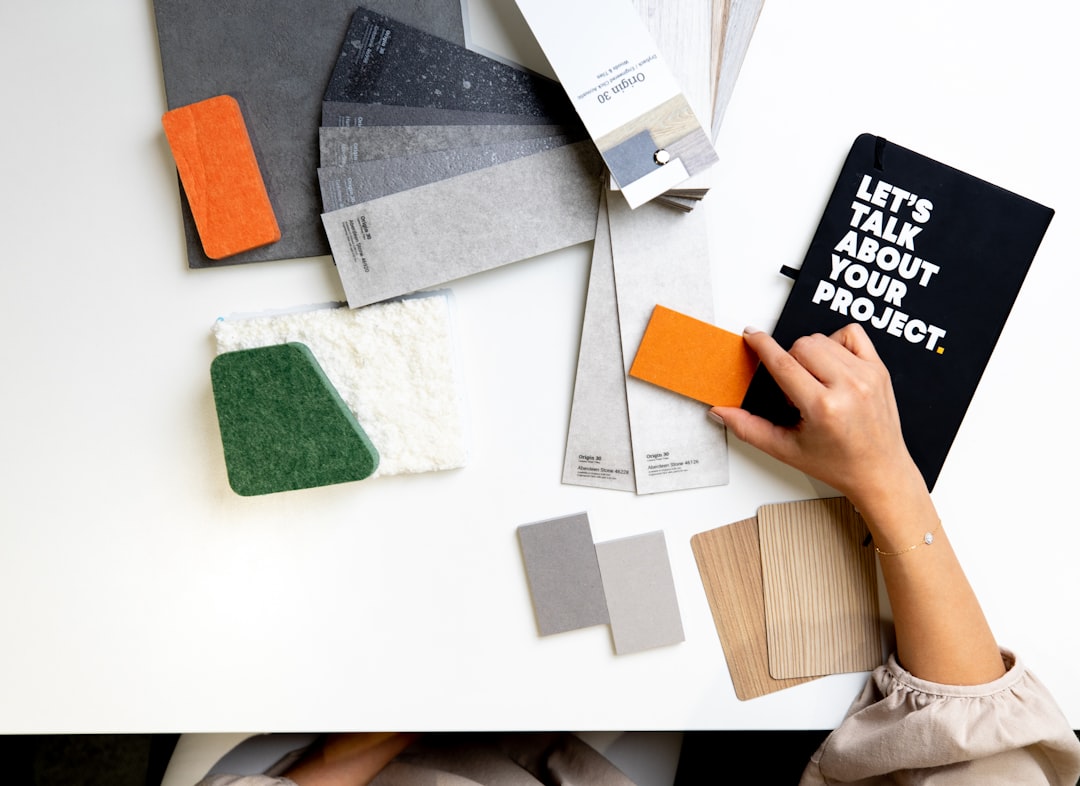
No specification should be finalised from an image or a swatch on a screen. Materials look and feel different in the actual space, under its real light, at full scale. Requesting physical samples and viewing them in situ is the single most reliable way to avoid an expensive mistake. For large or critical projects, mock-ups of a typical area are worth the time. Colour, texture, and how a material reads against the rest of the scheme can only be judged in reality.
Engage Suppliers Early And Use Their Expertise
Design buyers do not need to know everything about materials — they need to know how to draw on those who do. A good supplier is a source of technical guidance, not just products: advising on what suits the brief, flagging performance issues, providing documentation, and confirming availability and lead times. Engaging them early, while options are still open, produces far better outcomes than treating them as an order-taker at the end. This is especially true for specialised settings — healthcare, hospitality, heritage — where the material requirements are exacting and the cost of a wrong choice is high.
Plan For The Whole Project Timeline
Material decisions are not single moments but a sequence that runs across a project’s life, and a capable buyer plans for the whole timeline. Lead times can be long for specialised or imported products, and a material chosen late may not arrive in time, forcing a compromise substitution. Stock availability and batch consistency matter too, particularly on large projects where a shortfall mid-installation means visible colour or texture mismatches.
Confirming availability, lead times, and batch reservations early — before the programme depends on them — removes a common source of late-stage stress. This is especially important for phased projects and rollouts, where the same material may be needed repeatedly over months or years and continuity of supply becomes a specification criterion in its own right.
Build A Relationship, Not Just A Transaction
The most effective design buyers treat key suppliers as ongoing partners rather than one-off vendors. A supplier who understands a buyer’s portfolio, standards, and recurring requirements can anticipate needs, flag relevant new products, and respond faster when a project moves quickly. Over multiple projects, that relationship compounds into better pricing, priority on stock, and a level of technical support that a purely transactional approach never earns. For organisations that build or refit regularly — developers, hospitality groups, healthcare operators — this relationship is among the most valuable assets in the procurement toolkit.
Specify For The Direction Of Travel
Finally, a capable design buyer specifies with one eye on where standards are heading. The Design 2035 Masterplan signals rising expectations around sustainability, wellbeing, and design quality over the coming decade. Materials chosen today will be judged against tomorrow’s standards, so favouring responsible, durable, well-credentialled products is not just good practice now but protection against obsolescence later. Browsing the full e-catalogue early in a project helps a buyer see the range of what is possible before narrowing down.
Common Mistakes Design Buyers Make
Even experienced buyers fall into recurring traps, and naming them is the quickest way to avoid them. The most frequent is deciding on appearance alone, choosing a material because it looks right in a showroom without confirming it suits the traffic, climate, and regulations of the actual space. A close second is leaving material decisions too late, so that lead times force a compromise. A third is taking claims at face value rather than asking for evidence.
Other common errors include underestimating the fit-out budget because the headline construction figure excludes it, ignoring whole-life cost in favour of the cheapest installed price, and skipping physical samples. Each of these is avoidable with the disciplines set out above — and avoiding them is largely what separates a confident, capable design buyer from one who is repeatedly surprised by avoidable problems.
Final Thoughts
Specifying interior materials with confidence comes down to a repeatable discipline: brief before product, whole-life cost over installed price, evidence over claims, samples before commitment, suppliers as expert partners, and an eye on where standards are heading. A design buyer who works this way turns material procurement from a risk into a strength — which is exactly the empowered demand the Design 2035 Masterplan is trying to grow.
Contact our team for expert guidance on specifying interior materials for your next project.
Request a Quotation
Speak to our commercial team about specifications, samples, and pricing for your project.