Healthcare Interiors
Eco-Friendly Wallcovering for Healthcare Interiors: A Guide
Choosing eco-friendly wallcovering for healthcare interiors means resolving a genuine tension: the same wards, clinics and care homes that most need low-emission, sustainable finishes are also the ones with the strictest demands for hygiene, durability and fire safety. A wall in a hospital corridor has to survive daily disinfection, resist scuffs from trolleys and beds, and give off as little in the way of chemical emissions as possible — because the people breathing that air are often the most vulnerable in the building.
This guide sets out what actually makes a wallcovering suitable for healthcare, where “eco-friendly” and “healthcare-grade” pull in different directions, the material types worth specifying, and the certifications that separate a genuine claim from greenwashing.
The short answer: the best eco-friendly wallcovering for healthcare interiors is a PVC-free (polyolefin) or phthalate-free, recycled-content wallcovering that carries a recognised low-emission certification such as GREENGUARD Gold, meets the relevant fire rating, and is scrubbable enough to withstand hospital-grade disinfectants. No single label makes a product “healthcare-safe” — it is the combination of low emissions, cleanability and fire performance that counts.
The Non-Negotiables in Any Healthcare Interior
Before sustainability enters the conversation, a healthcare wallcovering has to clear four hard requirements. Miss any one of them and the eco credentials are irrelevant, because the product will not be specified.
- Infection control: Surfaces must be non-porous, seamless and cleanable so bacteria cannot harbour in the finish. In clinical zones the wallcovering has to tolerate repeated wiping with hospital-grade disinfectants — chlorine, hydrogen peroxide or quaternary ammonium — without discolouring or degrading.
- Durability: Corridors, wards and treatment rooms see constant contact from beds, trolleys, wheelchairs and handrails. A commercial-weight wallcovering resists abrasion and impact far better than a residential paper.
- Fire safety: Healthcare buildings demand a high fire rating — typically Euroclass B-s1,d0 or equivalent — for wall finishes on escape routes. Confirm the tested rating for the exact product and substrate.
- Indoor air quality: Patients spend long, uninterrupted hours indoors, so low chemical emissions matter more here than almost anywhere else. This is where the eco and clinical priorities finally align.
Where “Eco-Friendly” and “Healthcare-Grade” Meet — and Clash
The historic workhorse of healthcare walls is Type II commercial vinyl: tough, wipeable and cheap to maintain, but PVC-based, and older formulations relied on phthalate plasticisers now under scrutiny. The instinct to swap it for a “natural” wallcovering can backfire — many genuinely natural finishes (grasscloth, untreated paper, some textiles) are porous, hard to disinfect and poor on fire, which rules them out of clinical areas entirely.
The productive middle ground is not “natural versus vinyl” but cleaner, lower-emission engineered wallcoverings that keep the performance. Two shifts make this possible: PVC-free polyolefin wallcoverings that behave like vinyl without the chlorine chemistry or phthalates, and improved vinyl formulations that are phthalate-free and carry meaningful recycled content. Both can be scrubbable, fire-rated and low-VOC at once — which is exactly what a healthcare specifier needs.
Eco-Friendly Wallcovering Types for Healthcare
PVC-Free (Polyolefin) Wallcovering
A chlorine-free, phthalate-free alternative engineered to match vinyl’s wipe-clean durability. Because it avoids PVC entirely, it typically emits fewer volatile compounds and is cleaner to manufacture and dispose of. This is the strongest all-round choice for clinical zones that need both hygiene and green credentials.
Phthalate-Free, Recycled-Content Vinyl
Where budget or availability rules out full PVC-free, a modern Type II vinyl that is phthalate-free and includes recycled content is a pragmatic step up from legacy material — retaining the proven scrubbability and fire performance healthcare relies on while reducing the environmental load.
Non-Woven Wallcovering
Breathable, dimensionally stable and often low-VOC, non-woven substrates suit lower-risk areas such as administrative offices, waiting rooms and staff spaces. They are easier to strip and replace with less waste, though they suit wipe-cleaning rather than aggressive disinfection — so keep them out of the most demanding clinical zones.
Digitally Printed Biophilic Finishes
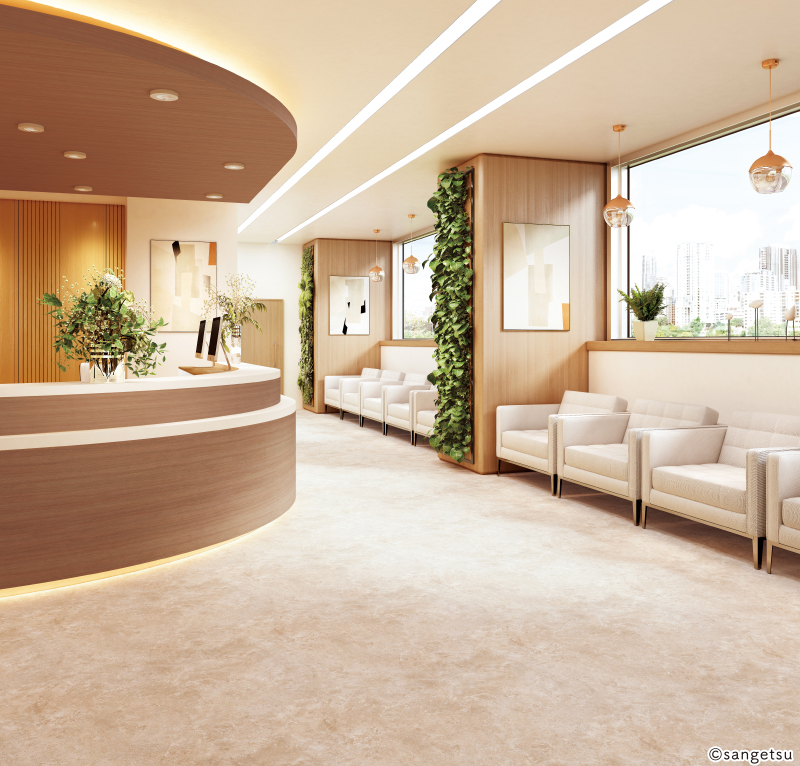
Evidence that calming, nature-referencing interiors aid recovery has made biophilic design central to healthcare. Digitally printed wallcoverings on an eco substrate, using low-emission inks, let you deliver that restorative look on a durable, cleanable surface — a rare case where wellbeing, aesthetics and specification all agree.
| Wallcovering type | Cleanability | Eco profile | Best healthcare zone |
|---|---|---|---|
| PVC-free (polyolefin) | Scrubbable, disinfectant-tolerant | Strong — no PVC or phthalates | Wards, corridors, clinical rooms |
| Phthalate-free recycled vinyl | Scrubbable, disinfectant-tolerant | Improved — recycled content | High-traffic clinical and public areas |
| Non-woven | Wipeable | Good — low-VOC, low waste | Offices, waiting and staff areas |
| Digitally printed (eco substrate) | Depends on base + inks | Good with low-emission inks | Biophilic feature walls, lobbies |
Certifications Worth Specifying
“Eco-friendly” is only as good as the evidence behind it. In a healthcare setting, prioritise certifications that speak to emissions and safety, not just recyclability:
- GREENGUARD Gold: the key one for healthcare — it certifies low chemical emissions against criteria set for sensitive occupants, including in medical and school environments.
- Singapore Green Label: a recognised local eco mark that helps with Green Mark project documentation.
- Phthalate-free / REACH compliance: confirms the product avoids the plasticisers of concern in older vinyls.
- Fire rating (Euroclass B-s1,d0 or equivalent): non-negotiable on escape routes — always verify the tested figure for the specific product.
- Recycled content and recyclability: useful for a project’s sustainability score, but treat it as a secondary filter after emissions and hygiene are satisfied.
Specifying for Singapore Healthcare Settings
Singapore’s climate and building rules add a further layer. High humidity makes moisture and mould resistance essential, particularly behind furniture and in areas subject to wet cleaning, so favour finishes rated for humid conditions and ensure walls are properly dried before installation. Match the specification to the zone rather than the whole building: reserve the toughest scrubbable, fire-rated wallcoverings for wards, treatment rooms and corridors, and use lower-impact non-woven or printed finishes in offices, lobbies and staff areas where hygiene demands relax.
In high-contact corridors, pair the wallcovering with dedicated wall protection such as rails and impact panels, so the decorative surface is not doing structural duty it was never designed for. For the wider sustainability picture beyond healthcare, our guide to sustainable wallcovering options for green buildings covers eco substrates in depth, while the piece on indoor air quality and interior material choices expands on the low-emission side. For the performance baseline, see how these products are specified as commercial vinyl wallcovering.
Final Thoughts
The best eco-friendly wallcovering for healthcare interiors is rarely the most “natural” one — it is the engineered finish that manages to be low-emission and sustainable without giving up the cleanability, durability and fire performance a clinical environment demands. In practice that points to PVC-free polyolefin or phthalate-free recycled vinyl, certified for low emissions, verified for fire, and matched zone by zone to how each space is used and cleaned. Get that balance right and you protect both patient wellbeing and the planet, without compromising the standards a hospital cannot bend on.
Goodrich Global supplies commercial wallcovering across the healthcare, education and hospitality sectors, including PVC-free and low-emission ranges. Explore the wallcovering category to see what suits your project.
Frequently Asked Questions
What is the best eco-friendly wallcovering for healthcare interiors?
The best eco-friendly wallcovering for healthcare interiors is a PVC-free (polyolefin) or phthalate-free, recycled-content wallcovering that carries a recognised low-emission certification such as GREENGUARD Gold, meets the relevant fire rating, and is scrubbable enough to withstand hospital-grade disinfectants. No single label makes a product healthcare-safe — it is the combination of low emissions, cleanability and fire performance that counts.
Is PVC-free wallcovering suitable for hospitals and clinics?
Yes. PVC-free polyolefin wallcovering is engineered to match vinyl’s wipe-clean durability without chlorine chemistry or phthalates, so it typically emits fewer volatile compounds while remaining scrubbable and fire-rated. It is the strongest all-round choice for clinical zones that need both hygiene and green credentials.
Which certifications should eco-friendly healthcare wallcovering have?
Prioritise GREENGUARD Gold for low chemical emissions, Singapore Green Label for local green-building documentation, phthalate-free or REACH compliance, and a verified fire rating such as Euroclass B-s1,d0 on escape routes. Recycled content is useful but secondary to emissions and hygiene.
Book an appointment with our consultants to specify eco-friendly, healthcare-grade wallcovering for your next project.