Commercial Interiors
Heritage Hospitality: Materials for Conservation Spaces
Heritage hospitality is one of the most distinctive corners of Singapore’s interiors market — conservation shophouses, restored bungalows, and historic buildings reborn as boutique hotels, restaurants, and bars. It is also one of the most demanding to specify materials for, because the brief asks two things at once: honour the heritage fabric and meet the relentless performance demands of a commercial hospitality space. The Design 2035 Masterplan’s call for a culturally distinct city that nurtures craft and heritage makes this a growing, strategically important field.
This article looks at how to specify interior materials for heritage hospitality projects in Singapore — the conservation constraints, the commercial requirements, and how surfaces can bridge the two. It complements our residential-focused guides to Peranakan-inspired interiors and shophouse renovation, applying the same heritage sensibility to commercial settings.
A Growing Pipeline Of Heritage Projects
Heritage hospitality is not a fringe activity in Singapore. The conservation sales market regularly puts historic clusters into play — recent examples include large groupings of Peranakan conservation shophouses being offered as hospitality and lifestyle developments, and historic sites earmarked for mixed-use schemes combining hotel concepts with lifestyle and community uses. Each such project is a substantial interior fit-out where heritage character is central to the commercial proposition.
The appeal aligns directly with Tourism 2040’s emphasis on culture and heritage as part of the visitor experience, which we explore in our piece on hospitality interior design under Tourism 2040. A guest increasingly wants somewhere with a story, and a restored heritage building delivers that authenticity in a way new-build cannot.
The Twin Demands Of Heritage Hospitality
The defining challenge is reconciling two sets of requirements that can pull in opposite directions.
| Heritage demands | Commercial demands |
|---|---|
| Respect original fabric and character | Withstand heavy, continuous guest traffic |
| Reversible, non-damaging interventions | Meet fire, slip, and safety regulations |
| Period-appropriate materials and palettes | Easy cleaning and maintenance |
| Conservation-authority compliance | Durability and commercial lifespan |
The art of specification lies in finding materials that satisfy the commercial column without betraying the heritage one — surfaces that perform like contract products but read as sympathetic to the building’s age and character.
Working Within Conservation Constraints
Singapore’s conserved buildings come with real constraints. Original elements — timber structures, decorative tiles, plasterwork, shopfronts — may be protected, and interventions often need to be reversible so that future restoration is possible. This shapes material strategy in specific ways.
Floating and loose-lay floor systems, for instance, can sit over an original floor without permanent fixing, protecting heritage fabric while delivering a serviceable commercial surface. Wallcoverings can refresh and protect walls without the irreversibility of replastering. The principle is to add a performant, removable commercial layer that respects rather than replaces the historic substrate.
Materials That Bridge Old And New
The most successful heritage hospitality interiors use materials that feel continuous with the building’s era while performing to modern standards. Several approaches help:
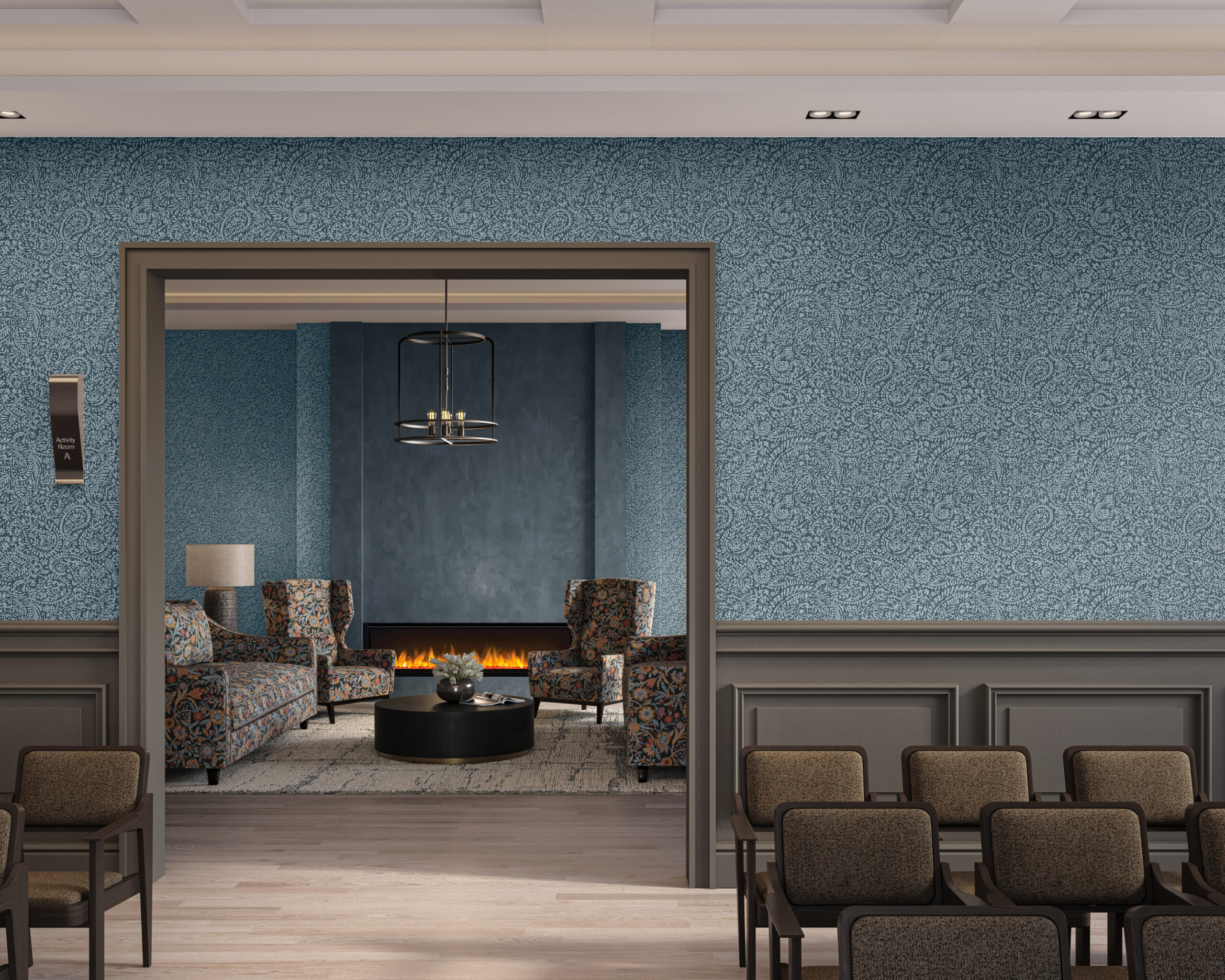
- Period-sympathetic palettes and patterns — wallcoverings and textiles referencing the building’s age, region, and craft traditions.
- Natural textures — timber-look flooring, natural-fibre wallcoverings, and tactile fabrics that echo traditional materials with contemporary durability.
- Restrained contrast — letting original features remain the heroes, with new surfaces playing a supporting role rather than competing.
Drawing these from a broad wallcovering range alongside coordinated flooring and fabric lets a designer assemble a sympathetic, high-performing scheme from a single coherent source.
The Tropical Conservation Challenge
Singapore’s climate adds a layer of difficulty unique to heritage hospitality here. Older buildings were constructed before modern damp-proofing and air-conditioning, and high humidity threatens both the heritage fabric and any materials added to it. Moisture-tolerant specification is therefore essential: surfaces that resist humidity, mould, and the movement of older substrates, and that will not trap dampness against original walls and floors.
This favours breathable, moisture-stable materials and installation methods that allow the building to manage humidity rather than fight it. Getting this wrong damages both the new fit-out and the heritage asset it sits within, which makes early technical advice particularly valuable on conservation projects. It is worth engaging a supplier for guidance and quotation before specification is fixed, so material behaviour in a humid heritage building is accounted for from the start.
Telling The Building’s Story Through Materials
The commercial reason heritage hospitality works is the story it tells, and materials are a primary storytelling tool. Surfaces can reference the building’s original use, the trades and communities that once occupied it, and the cultural layers of its neighbourhood — turning a fit-out into a narrative a guest can read. A former trading shophouse, a clan association building, or a colonial bungalow each suggests a different material language. The most resonant heritage interiors use surfaces deliberately to connect guests to that history, which is exactly the kind of culturally distinct, place-rooted experience the Design 2035 Masterplan champions and that distinguishes a memorable destination from a generic one.
Don’t Forget The Performance Brief
It is easy, in pursuit of heritage character, to lose sight of the fact that these are commercial hospitality spaces with all the usual demands. Floors still need slip resistance and durability under guest traffic; fabrics still need stain and abrasion performance; surfaces still need to meet fire regulations and clean easily. A heritage hotel that looks exquisite but wears out or fails inspection has not succeeded. The discipline is to apply the same rigour to performance as to character — covered more fully in our guide to hotel lobby flooring — and to choose materials that genuinely deliver both.
Coordinating Many Surfaces In A Small Footprint
Heritage hospitality buildings — shophouses especially — tend to be compact, vertical, and intricate, packing many functions into a small footprint. A single restored shophouse hotel might contain a ground-floor bar, guest rooms above, a rooftop space, and tight circulation linking them. That density means many different surfaces meet in close quarters, and coordinating them into a coherent scheme is harder than in a large, open new-build.
The advantage of sourcing flooring, wallcovering, and fabric from a single coordinated range is most pronounced here. It lets a designer maintain a consistent material language as the space turns and rises, so the building reads as one considered whole rather than a series of disconnected rooms. In a small heritage footprint where every surface is visible and close at hand, that coherence is what separates a polished hospitality interior from a patchwork one. It also simplifies procurement and documentation on projects where conservation approvals already add complexity, letting the design team spend its energy on character rather than chasing disparate suppliers.
Final Thoughts
Heritage hospitality asks interior materials to honour the past and perform for the present at once. The best specifications add a durable, reversible, sympathetic commercial layer to a treasured building — respecting conservation constraints, referencing the building’s character, and still meeting every demand of a working hotel or restaurant. Done well, it delivers exactly the culturally distinct, story-rich experience that Singapore’s design and tourism ambitions are reaching for. As the pipeline of conservation buildings entering hospitality use grows, the specifiers who master this balance of reverence and performance will be the ones shaping Singapore’s most distinctive places to stay, eat, and gather.
Request a Quotation
Speak to our commercial team about specifications, samples, and pricing for your project.