Industry Insights
Hotel Flooring Trends in Southeast Asia 2026
Hospitality Construction Across Southeast Asia Is Shifting — and So Are Material Expectations
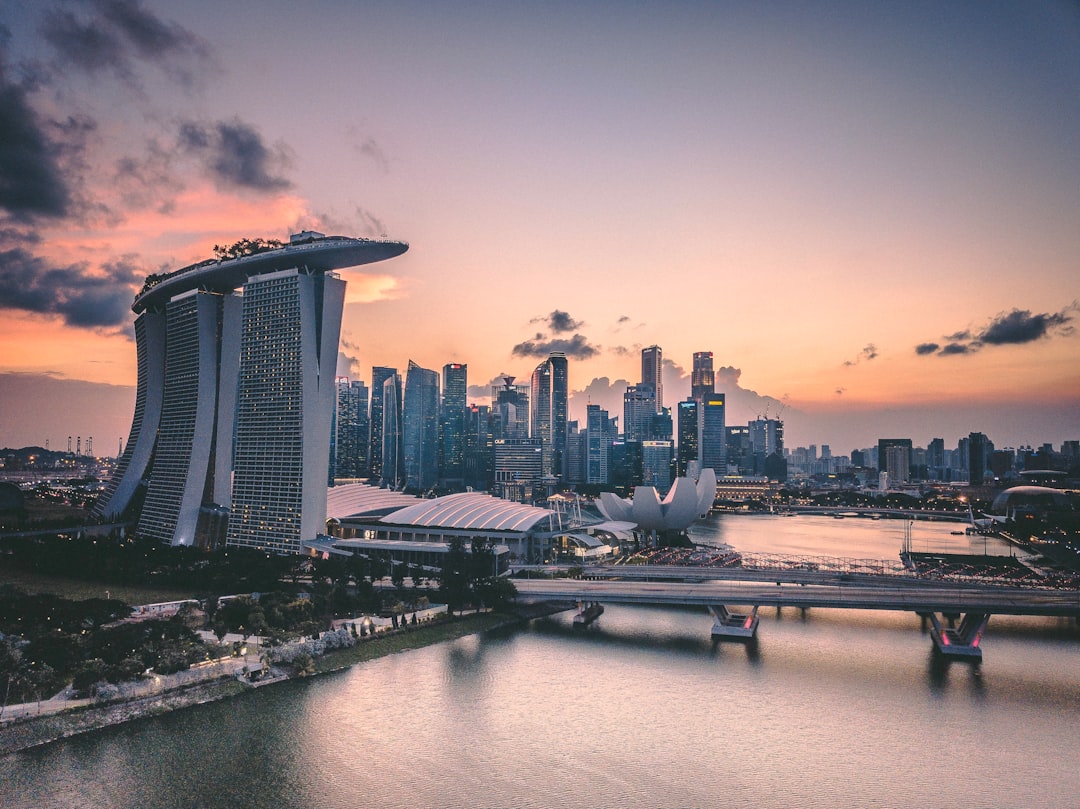
Southeast Asia’s hospitality sector has moved decisively past the post-pandemic recovery phase. Across the region — from Singapore’s integrated resorts and Bangkok’s luxury brands to Bali’s resort pipeline and Vietnam’s emerging coastal destinations — new hotel construction and large-scale refurbishment programmes are running at levels that match or exceed pre-2020 activity. The Singapore Tourism Board (STB) has noted sustained growth in visitor arrivals, while markets such as Vietnam and Indonesia are seeing significant international hotel brand entries.
What is different in this cycle is the design language. The hospitality projects we are supplying materials for today reflect a clear shift in what designers, owners, and operators expect from interior finishes. Flooring and wall finishes are no longer treated as background elements — they are central to the guest experience narrative. And the materials being specified in 2026 are measurably different from those that dominated hotel fit-outs five or ten years ago.
The Big Shifts in Hospitality Flooring Specification
Several trends are converging to reshape what designers specify for hotel floors across Southeast Asia. These are not superficial aesthetic fads — they reflect fundamental changes in how hotels operate, what guests expect, and how owners think about lifecycle costs.
Luxury Vinyl Is Gaining Ground in Guest Rooms
For decades, broadloom carpet was the default guest room flooring in four- and five-star hotels across the region. It provided acoustic comfort, a sense of luxury, and visual warmth. That consensus is breaking down. An increasing number of hotel designers are specifying luxury vinyl tile (LVT) or stone polymer composite (SPC) flooring for guest rooms, particularly in tropical markets where humidity and hygiene concerns make carpet maintenance more challenging.
The drivers are practical. In Singapore’s climate, guest room carpet in a 300-key hotel requires intensive maintenance — regular deep extraction cleaning, antimicrobial treatments, and replacement cycles as short as five to seven years in high-occupancy properties. LVT with a realistic timber or stone visual, combined with acoustic underlay, can deliver a comparable guest experience with significantly lower maintenance costs and a longer replacement cycle. What we are seeing from hotel operators is a growing willingness to move away from carpet in rooms, provided the alternative delivers on acoustics and perceived quality.
That said, carpet is not disappearing from guest rooms entirely. Luxury and ultra-luxury brands, where the tactile experience of stepping onto plush carpet is part of the brand promise, continue to specify high-quality broadloom or carpet tiles. The shift is most pronounced in the upper-midscale and upscale segments, where operators are more attuned to maintenance economics.
Textured Wallcoverings Are Defining Lobby and Public Area Character
Hotel lobbies and public areas are where first impressions are formed, and designers are investing heavily in surfaces that create immediate visual and tactile impact. Textured wallcoverings — woven textiles, natural fibre grasscloths, metallic finishes, and embossed vinyl — are being specified at scales that would have been unusual a few years ago. Feature walls, elevator lobbies, and corridor accent panels are all areas where wallcovering is being used to create layered, sensory-rich environments.
The trend reflects a broader design movement away from minimalism towards warmth and materiality. Designers working on Southeast Asian hotel projects are drawing on regional craft traditions — rattan textures, batik-inspired patterns, woven grasscloth — and translating them through commercial-grade wallcovering products that can withstand the demands of a hotel environment.
Sustainability Is Now a Specification Requirement, Not a Nice-to-Have
International hotel groups operating in Southeast Asia — IHG, Marriott, Accor, Hilton, and others — have corporate sustainability commitments that flow through to material procurement. Specifiers working on these projects are required to demonstrate that specified materials meet environmental criteria: low VOC emissions, recycled content, responsible sourcing, and end-of-life recyclability. Third-party certifications such as FloorScore, Greenguard, or Environmental Product Declarations (EPDs) are increasingly listed in specification requirements rather than treated as optional preferences.
In Singapore, where the BCA Green Mark scheme applies to new hotel construction and major renovations, the sustainability credentials of flooring and wallcovering products directly affect the building’s certification outcome. We have seen this shift accelerate — sustainability is no longer a differentiator but a baseline expectation for hotel fit-out materials across the region.
What Hotel Designers Specify by Zone
Hotel flooring specification is inherently zone-based. The performance requirements, aesthetic expectations, and budget considerations differ dramatically between the lobby and the back of house. Here is what we are seeing specified across the key zones in Southeast Asian hotel projects in 2026.
Lobby and Reception
The lobby sets the design tone for the entire property. Designers typically specify premium materials here — natural stone, large-format porcelain, or high-end LVT with stone or concrete visuals. In properties where budget constraints preclude natural stone throughout, we see designers using stone for high-impact arrival areas and transitioning to LVT in surrounding zones, achieving visual continuity at a lower installed cost. Acoustic management is important in large lobby spaces, and flooring choices are balanced with soft furnishing elements — upholstery fabrics on seating, drapery, and area rugs — to control reverberation.
Guest Room Corridors
Corridors are where acoustics become critical. Guests expect silence or near-silence when passing rooms, and impact sound transmission through the floor structure is a primary concern for operators. Carpet — either broadloom or carpet tiles — remains the dominant corridor flooring in most hotel segments because of its superior impact sound insulation. Designers are specifying bolder corridor carpet patterns than in previous years, using corridor flooring as a wayfinding and branding element rather than a neutral background.
Where designers choose hard flooring for corridors, acoustic underlay is essential. Products with Impact Insulation Class (IIC) ratings above 60 are typically required, and the flooring system — not just the surface product — must be tested and certified to meet these requirements.
Guest Rooms
As noted, guest room flooring is in transition. The current split we observe across Southeast Asian projects is roughly even between carpet and hard flooring in the upscale segment, with carpet still dominant in luxury and hard flooring increasingly prevalent in upper-midscale. Regardless of the surface material, acoustic performance underfoot is non-negotiable. Guests will not tolerate footfall noise from adjacent rooms or corridors.
Design trends in guest rooms are leaning towards warmer, more residential aesthetics — mid-tone timber visuals, subtle grain patterns, and matte finishes. The high-gloss, heavily polished look that characterised hotel rooms in previous decades has given way to surfaces that feel more natural and authentic. This suits LVT products well, as current-generation LVT can reproduce timber and stone visuals with remarkable fidelity, including embossed-in-register textures that align the surface texture with the printed visual.
Food and Beverage Areas
Hotel F&B outlets — restaurants, bars, lounges, and breakfast areas — present a distinct set of flooring challenges. The surface must handle food and beverage spills, heavy chair traffic (chairs being dragged generates severe abrasion), high foot traffic during meal service periods, and regular cleaning with commercial-grade detergents. Slip resistance is a safety and liability concern, particularly in areas adjacent to kitchens where grease and water may be tracked onto the floor.
LVT and SPC flooring are well-suited to F&B areas, offering the water resistance and ease of cleaning that carpet cannot provide, with the warmth and visual interest that ceramic tile sometimes lacks. Designers are specifying wood-look and stone-look LVT in restaurant areas, often with herringbone or chevron installation patterns that create a more design-forward look than standard plank layouts.
Back of House
Back-of-house areas — kitchens, laundries, service corridors, plant rooms, and staff areas — are specified for pure performance. Durability, chemical resistance, and slip resistance take precedence over aesthetics. Homogeneous vinyl sheet, safety flooring with embedded aggregate for wet-area grip, and heavy-duty commercial vinyl are the standard materials. These zones rarely feature in design presentations, but they represent a significant portion of the total flooring area in any hotel and they directly affect operational efficiency and staff safety.
Acoustics: The Specification That Operators Care About Most
If there is one flooring performance criterion that hotel operators consistently rank above all others, it is acoustic performance. Noise complaints are among the most common guest grievances, and they directly affect online ratings and repeat bookings. The acoustic performance of the floor system — including the surface material, any underlay, and the structural floor — determines how much impact sound and airborne sound transfers between rooms and between floors.
Carpet provides inherent acoustic benefits: its fibrous structure absorbs impact energy and reduces sound transmission. A quality broadloom carpet with appropriate underlay can achieve IIC improvements of 20–30 points over bare concrete. LVT and SPC flooring, by contrast, require purpose-designed acoustic underlays to achieve comparable performance. Specifiers choosing hard flooring for guest rooms must ensure that the complete system — not just the surface product — is tested and certified to meet the hotel operator’s acoustic requirements.
What we advise specifiers is to consider the acoustic requirement as a system specification rather than a product specification. The surface material, the underlay, the adhesive, and the subfloor preparation all contribute to the final acoustic performance. Selecting products in isolation, without verifying system-level performance, is a common source of post-completion acoustic problems in hotel projects.
Maintenance and Lifecycle Considerations
Hotel owners and operators are increasingly sophisticated in their evaluation of flooring lifecycle costs. The initial installed cost of flooring materials is only one component of the total cost of ownership. Maintenance costs, replacement frequency, and the operational disruption caused by refurbishment all factor into the calculation.
In Southeast Asia’s tropical climate, these considerations are amplified. High humidity accelerates wear on certain materials, promotes mould growth in poorly maintained carpet, and can cause dimensional instability in flooring products that are not engineered for the conditions. Specifiers need to account for these environmental factors when selecting materials and planning maintenance regimes.
What we consistently advise hotel clients is to specify flooring products that have been proven in tropical hospitality environments, not just tested in laboratory conditions. A product that performs well in a European hotel may not deliver the same results in a Singapore or Bali property where humidity, temperature, and cleaning practices are fundamentally different.
How Goodrich Supports Hospitality Projects Across the Region
Goodrich has been supplying flooring, wallcovering, and fabric to hotel projects across Southeast Asia for over four decades. Our regional presence — with operations in Singapore, Malaysia, Indonesia, Thailand, and Vietnam — means we can support multi-property hotel groups with consistent product availability, coordinated specifications, and local technical support in each market.
For hospitality projects, we offer a comprehensive material range that covers every zone in the hotel: LVT and SPC flooring for guest rooms and F&B areas, carpet and carpet tiles for corridors and public areas, wallcoverings for lobbies and feature areas, and upholstery fabrics for FF&E programmes. This breadth allows designers to work with a single supplier for the majority of their soft finishes, simplifying procurement and ensuring material compatibility across zones.
The hospitality flooring market in Southeast Asia is evolving rapidly. Designers are more ambitious, operators are more demanding, and sustainability requirements are more stringent than at any previous point. For specifiers navigating these expectations, working with a supplier who understands both the design intent and the operational reality of hotel environments is essential.
Request product specifications and samples for your commercial project.