Industry Insights
Jurong Lake District: Mixed-Use Material Guide
Jurong Lake District is not simply another development node on Singapore’s planning map. It is the most ambitious mixed-use precinct the country has conceived outside the Central Business District — a deliberate, long-horizon effort by URA to create a second CBD anchored around Jurong East MRT interchange, the High Speed Rail terminus, and the 90-hectare Jurong Lake Gardens. For architects, interior designers, and material specifiers, JLD represents a design challenge unlike anything currently in the Singapore pipeline. The precinct will combine Grade A office towers, residential developments, retail and F&B destinations, hotels, civic and cultural facilities, and public realm infrastructure within a single integrated district. The interior material demands of such a precinct are not just high in volume — they are high in diversity, requiring products and specification strategies that work across multiple use cases, sustainability frameworks, and performance thresholds simultaneously.
At Goodrich, we supply across every commercial vertical that JLD will encompass. Our perspective on the district is shaped by decades of experience supplying materials to Singapore’s most complex mixed-use projects — integrated resorts, hospital campuses, transit-oriented developments, and multi-use commercial hubs. JLD will draw on all of that experience and extend it further.
What Jurong Lake District Will Become
URA’s Master Plan designates Jurong Lake District as Singapore’s largest business district outside the CBD, planned to accommodate over 100,000 jobs and 20,000 homes at full build-out. The precinct is structured around several key components.
The Lakeside Gateway
The area immediately surrounding Jurong East MRT interchange is envisioned as a commercial and retail hub — a concentration of office towers, mixed-use podiums, and street-level retail that will function as the district’s commercial core. The interior material demands here will mirror those of the CBD but with a distinctly contemporary design language shaped by the precinct’s lakeside setting and sustainability ambitions.
Jurong Lake Gardens Integration
The 90-hectare Jurong Lake Gardens — already partially operational — is the green heart of the district. Developments adjacent to the gardens will be expected to integrate landscape and biophilic principles into their interior design, creating a visual and experiential continuity between outdoor parkland and indoor environments. This has direct implications for material selection: nature-inspired flooring, organic wallcovering textures, and natural-fibre fabrics will be essential to achieving the design intent.
Residential and Community
The residential component of JLD will include both public and private housing, supported by community facilities, schools, healthcare services, and recreational amenities. The material requirements for residential common areas, community centres, and supporting facilities add another layer of specification complexity — different performance requirements, different budget parameters, and different aesthetic expectations from the commercial components.
Hospitality and Leisure
Hotels, serviced residences, and leisure facilities within JLD will serve both the business and tourism markets. Hospitality interior design demands the highest level of material curation — bespoke wallcoverings, custom carpet designs, premium upholstery fabrics, and flooring that combines visual impact with extreme durability. The hospitality vertical within JLD will require materials that create distinctive brand environments while meeting the sustainability standards applied across the entire precinct.
The Mixed-Use Material Challenge
Mixed-use developments are inherently more complex to specify than single-use buildings. A standalone office tower has a relatively consistent set of material requirements: commercial-grade carpet tiles in work areas, LVT or stone in lobbies and corridors, durable wallcoverings in lift lobbies and common areas. A mixed-use precinct like JLD multiplies this complexity across every vertical.
Performance Variation Across Use Cases
The performance demands on a flooring product vary enormously between an office floor plate, a hotel guest room, a retail concourse, a healthcare clinic, and a residential lobby — all of which may exist within a single JLD development or adjacent buildings within the precinct.
- Office environments prioritise acoustic performance (particularly underfoot noise and impact sound insulation), ease of reconfiguration, and aesthetic coherence across large floor plates.
- Hotel guest rooms demand visual warmth, acoustic privacy between rooms, stain resistance, and a premium tactile quality that supports the brand experience.
- Retail and F&B spaces require extreme durability, moisture resistance, slip resistance, and easy maintenance under conditions of heavy foot traffic, spills, and frequent cleaning.
- Healthcare facilities need seamless, hygienic surfaces, antimicrobial properties, chemical resistance to cleaning agents, and compliance with infection control protocols.
- Residential common areas balance durability with a domestic aesthetic sensibility, requiring materials that feel welcoming rather than institutional.
A single material supplier serving a JLD development must be able to provide products that address each of these performance profiles while maintaining design coherence across the precinct. This is not a challenge that can be solved by a flooring specialist alone or a wallcovering supplier in isolation. It requires a comprehensive interior materials partner.
Design Coherence Across a Precinct
One of the defining design challenges of JLD is achieving a sense of place — a coherent material and design language that identifies the district while allowing individual buildings and tenants to express their own identity. This is a planning-level ambition that flows down to material-level decisions.
Common areas, podium levels, covered walkways, and public realm interfaces need a consistent material palette that unifies the precinct. Individual tenancies, hotels, and residential developments need the freedom to differentiate. The material specification strategy must balance these competing demands — providing a coherent base vocabulary (consistent flooring in shared corridors, unified wallcovering treatments in common lift lobbies) while accommodating diversity at the tenancy and building level.
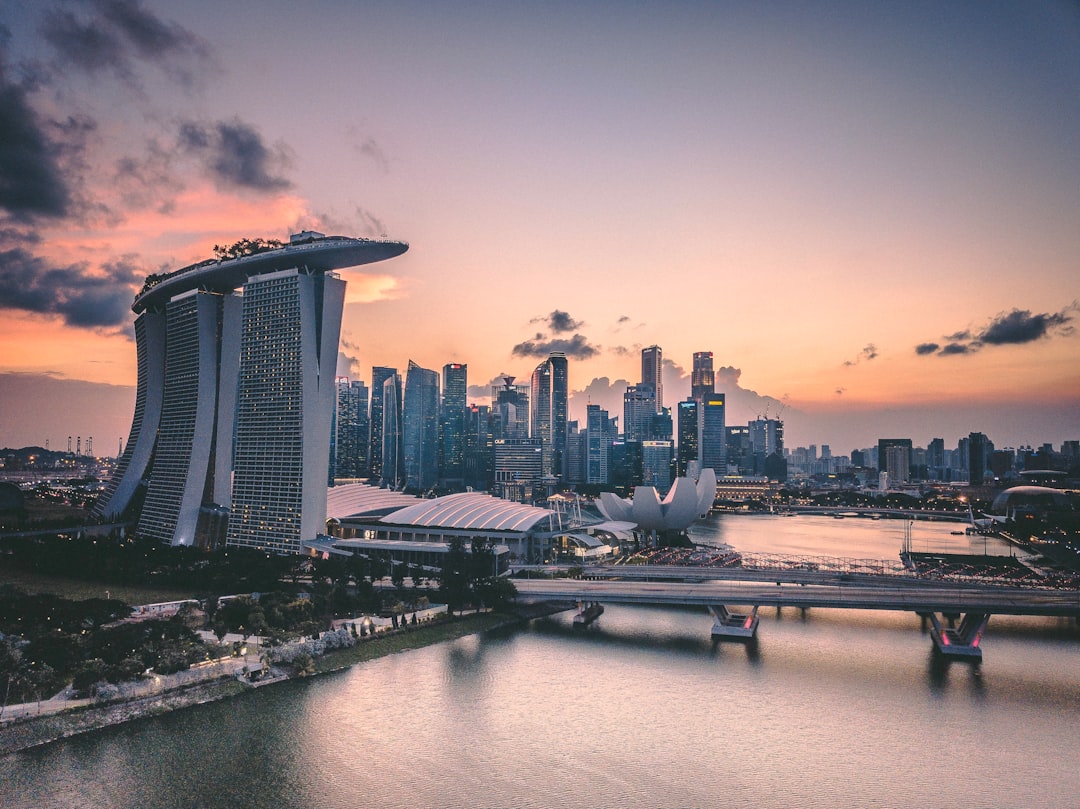
In our experience with integrated developments like Marina Bay Sands, Jewel Changi Airport precinct, and mixed-use projects along the Greater Southern Waterfront, this balance is achieved through a disciplined material palette at the precinct level — typically 3 to 5 core flooring types, 2 to 3 wallcovering families, and a coordinated fabric and soft furnishing range — with curated variations and bespoke selections within individual tenancies.
Flooring Strategy for Mixed-Use Precincts
Flooring is the most technically demanding material category in a mixed-use precinct because it must perform under the widest range of conditions.
LVT as the Versatile Baseline
Luxury vinyl tile has emerged as the default versatile flooring solution for mixed-use projects, and for good reason. A well-specified LVT range can serve office lobbies, hotel corridors, retail common areas, and residential entrances with different designs drawn from the same product platform — ensuring consistent quality and performance while allowing visual differentiation between zones.
For JLD developments, specifiers should consider LVT platforms that offer both wood-look and stone-look designs within a single collection, enabling design transitions between zones (warm timber tones in residential and hospitality areas, cooler mineral aesthetics in commercial and retail spaces) without changing the fundamental product specification. This simplifies procurement, installation coordination, and long-term maintenance.
Carpet Tiles for Office and Hospitality
Carpet tiles will be essential for office floor plates and hospitality guest rooms within JLD, providing the acoustic performance and visual warmth that hard flooring cannot deliver in these applications. The modular format is particularly advantageous in mixed-use developments, where phased fit-out, tenant changes, and ongoing maintenance require flooring that can be replaced in sections rather than wholesale.
For precinct-level coherence, coordinated carpet tile collections — where the same design system offers different densities, textures, and colourways for office, hospitality, and conference environments — allow design continuity across the development while meeting the specific performance requirements of each space type.
Specialist Flooring for Specific Verticals
Healthcare facilities within JLD will require specialist sheet vinyl with welded seams and coved skirting. Retail food courts and F&B areas may demand ceramic-look vinyl with enhanced slip resistance. Fitness and leisure facilities need resilient flooring with impact absorption properties. These specialist requirements sit alongside the general-purpose flooring strategy and must be coordinated within the overall material procurement framework.
Wallcovering Selection in Multi-Use Environments
Wallcoverings in a mixed-use precinct serve both functional and identity-building roles. In shared spaces — lift lobbies, corridors, common areas — wallcoverings establish the precinct’s design identity. In individual tenancies, they differentiate one space from another.
Commercial Vinyl Wallcovering for High-Traffic Areas
The shared circulation spaces of a mixed-use development — lobbies, corridors, lift cars, and stairwell entries — experience foot traffic and surface contact intensity comparable to transport infrastructure. Wallcoverings in these areas must withstand regular cleaning, resist scuffing and impact damage, and maintain their appearance over service lives of 7 to 10 years or more. Commercial-grade vinyl wallcoverings with enhanced abrasion resistance and stain-repellent treatments are the standard solution, offering the durability required without sacrificing design flexibility.
Feature Wallcoverings for Identity Spaces
Hotel lobbies, premium office receptions, residential entrance halls, and retail anchor tenancies require wallcoverings that create visual impact and brand identity. Natural material wallcoverings (grasscloth, cork, metallic leaf), digital-print murals, and textured specialty wallcoverings serve this purpose. In a precinct like JLD, where multiple hospitality and commercial brands will compete for attention, the wallcovering in identity spaces becomes a primary tool for differentiation.
Biophilic Wallcoverings for Lakeside Integration
JLD’s adjacency to Jurong Lake Gardens creates a specific design opportunity — and expectation — for nature-connected interiors. Wallcoverings that reference the lakeside landscape — water-inspired textures, botanical patterns, earth-tone colour palettes — will be appropriate across multiple use cases within the precinct. This is not merely aesthetic preference; URA’s planning guidelines for the district emphasise landscape integration and sustainable design, making biophilic interior treatments a coherent response to the precinct’s design framework.
Fabric and Soft Furnishing Across Verticals
Fabric specification in a mixed-use precinct spans an unusually wide range of applications. Office environments require acoustic panel fabrics, task seating upholstery, and meeting room curtains. Hotels need bedding fabrics, curtain materials, upholstered headboards, and banquette seating. Retail and F&B spaces demand stain-resistant upholstery for heavy public use. Residential common areas require fabrics that balance durability with a domestic sensibility.
The unifying requirement across all these applications is performance. Every fabric specified for a JLD environment must meet commercial durability standards (Martindale abrasion resistance, colour fastness, pilling resistance) and fire safety regulations while delivering the aesthetic appropriate to its specific use case. Performance fabrics — engineered textiles that combine the appearance of natural fibres with the durability and cleanability of synthetic materials — are increasingly the default choice for multi-use developments where maintenance regimes must be practical at scale.
Sustainability Requirements for JLD Developments
JLD is being planned and developed under Singapore’s most current sustainability frameworks. New buildings within the precinct will be assessed under BCA Green Mark 2021, with the expectation that developments will target high certification levels. The Singapore Green Plan 2030 targets are explicitly integrated into the district’s planning parameters. URA’s sustainability guidelines for the precinct include provisions for embodied carbon management, green building materials, and indoor environmental quality.
For interior material specifiers, this means that every product selected for a JLD project must be supported by sustainability documentation: EPDs for embodied carbon assessment, VOC test reports for indoor air quality compliance, recycled content certifications for sustainable product credits, and fire performance data for regulatory approval. The documentation burden is significant, and it applies across every material category — flooring, wallcoverings, fabric, and ancillary materials such as adhesives and underlay.
The scale of JLD also creates opportunities for sustainability innovation. Large-volume procurement across a precinct enables carpet tile take-back programmes, coordinated waste management for flooring off-cuts, and bulk specification of EPD-verified products that might not be commercially viable for smaller individual projects. Developers and managing agents who approach JLD as a precinct-level material strategy rather than a building-by-building exercise can capture these efficiencies.
Outdoor and Transitional Spaces
JLD’s integration with Jurong Lake Gardens and its emphasis on walkability and public realm quality means that the boundary between indoor and outdoor environments will be more porous than in a typical CBD development. Covered walkways, semi-sheltered podium areas, rooftop terraces, and lakeside promenades all require materials that bridge the indoor-outdoor transition.
Outdoor decking for terraces and elevated walkways, weather-resistant outdoor fabrics for al fresco seating, and flooring products rated for semi-sheltered conditions will all feature in JLD specifications. The tropical climate — intense UV exposure, frequent heavy rainfall, consistently high humidity — demands materials engineered for outdoor performance, not simply indoor products extended into sheltered areas.
How Goodrich Serves Mixed-Use Precincts
The single most valuable thing we bring to a mixed-use project is range. When a developer or design team needs flooring, wallcoverings, and fabric across office, hospitality, retail, healthcare, and residential applications within a single precinct, working with a supplier who covers all these categories and all these verticals eliminates coordination complexity. One point of contact, one procurement relationship, one documentation framework — applied across the full material palette.
Our portfolio includes LVT and SPC flooring in wood, stone, and abstract designs; commercial carpet tiles from multiple manufacturers offering different performance tiers and design systems; sheet vinyl for healthcare and wet-area applications; vinyl and natural material wallcoverings; digital-print and specialty wallcoverings for identity spaces; upholstery, curtain, and acoustic fabrics; and outdoor decking and weather-resistant materials for transitional zones.
For a precinct like JLD, we can work with the master architect or precinct design team to establish the base material palette, then support individual building teams and tenants with selections that align with the precinct identity while meeting their specific requirements. This is the kind of coordinated, multi-vertical material supply that JLD will demand — and that our 40-plus years in the Singapore market have equipped us to deliver.
Speak to our commercial team about your next project. Whether you are working on a JLD development or any mixed-use project in Singapore, contact us for project-specific material guidance across all interior verticals.