Wallpaper & Wallcovering
Mural Wallpaper for Statement Walls in Singapore
Mural wallpaper transforms an ordinary wall into a dramatic focal point, turning flat surfaces into immersive scenes, abstract compositions, or oversized botanical displays. Unlike repeating wallpaper patterns, murals are designed as a single, continuous image that spans an entire wall — creating impact that no other wall treatment can match.
In Singapore, where space is at a premium and every design element must earn its place, a well-chosen mural wallpaper adds depth, personality, and visual drama without consuming a single square metre of floor space.
What Sets Mural Wallpaper Apart
Traditional wallpaper uses a repeating pattern applied in identical strips across the wall. Mural wallpaper, by contrast, is printed as a complete image divided into numbered panels that are hung in sequence to form the full picture.
This fundamental difference opens up design possibilities that repeating patterns cannot achieve. A mural can depict a sweeping landscape, an abstract watercolour wash, an architectural scene, or a photographic close-up of natural textures at a scale that fills the entire wall.
Modern digital printing technology has dramatically expanded what is possible. High-resolution murals can reproduce fine art, photography, and custom illustrations with exceptional clarity and colour accuracy. The quality of today’s mural wallpapers is a significant leap from the scenic wallpapers of previous decades.
Choosing the Right Wall for a Mural
Placement is everything with mural wallpaper. The ideal wall for a mural meets several criteria.
- Visibility: The mural should be the first thing you see when entering the room or the natural resting point for the eye. In most living rooms, this is the wall behind the sofa or the wall facing the entrance.
- Uninterrupted surface: Murals work best on walls with minimal breaks — few doors, windows, or switches. A long, unbroken wall provides the best canvas.
- Adequate viewing distance: You need enough space to step back and appreciate the full image. In compact HDB living rooms, a mural on the feature wall opposite the entrance provides the longest sightline.
- Lighting: Natural or artificial light that washes across the wall evenly will display the mural at its best. Avoid walls with strong side-lighting that creates glare on one half.
Room-by-Room Placement Ideas
In the living room, the wall behind the television console or sofa is the classic mural location. In bedrooms, the headboard wall creates an enveloping backdrop. Dining areas benefit from scenic or botanical murals that create an atmospheric setting for meals. Even powder rooms and entrance foyers — small spaces that benefit from dramatic design — are excellent candidates.
Popular Mural Wallpaper Styles for Singapore
The style of mural you choose should complement your overall interior scheme while making a deliberate statement.
Tropical and Botanical
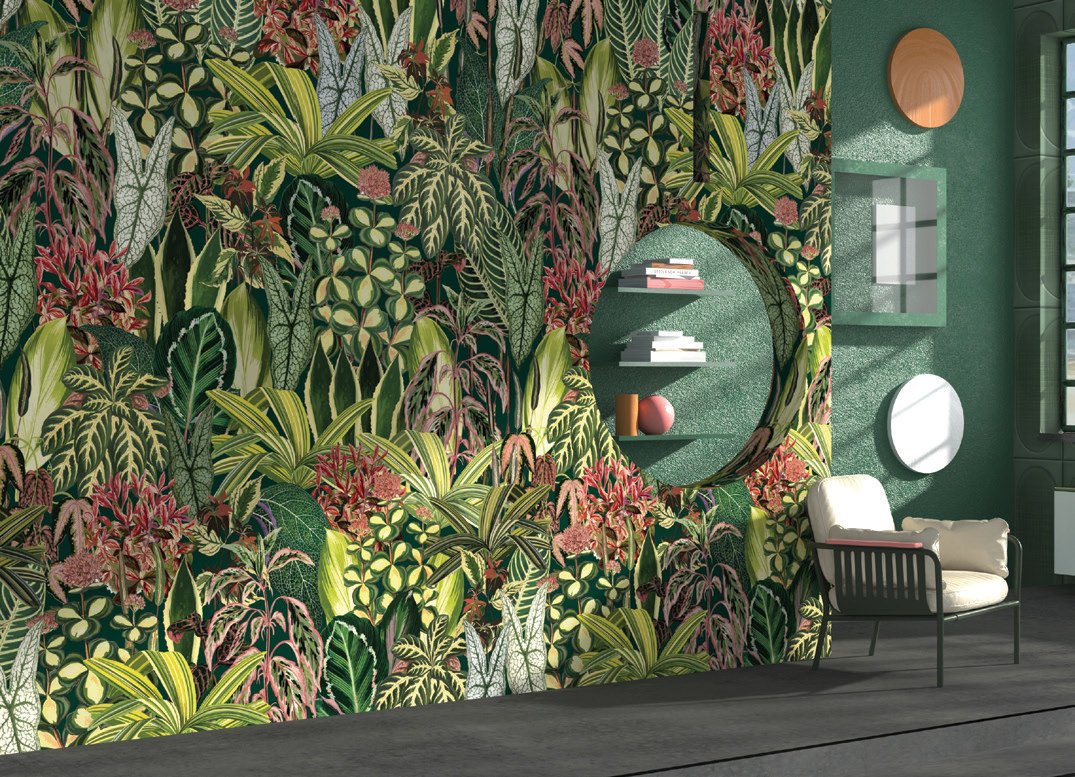
Lush tropical foliage, palm fronds, banana leaves, and exotic flowers resonate naturally with Singapore’s equatorial setting. These murals bring the vibrancy of the outdoors inside and pair well with both modern and colonial-inspired interiors. Botanical murals in muted, watercolour tones suit contemporary spaces, while rich, saturated versions create a more dramatic, maximalist effect.
Abstract and Artistic
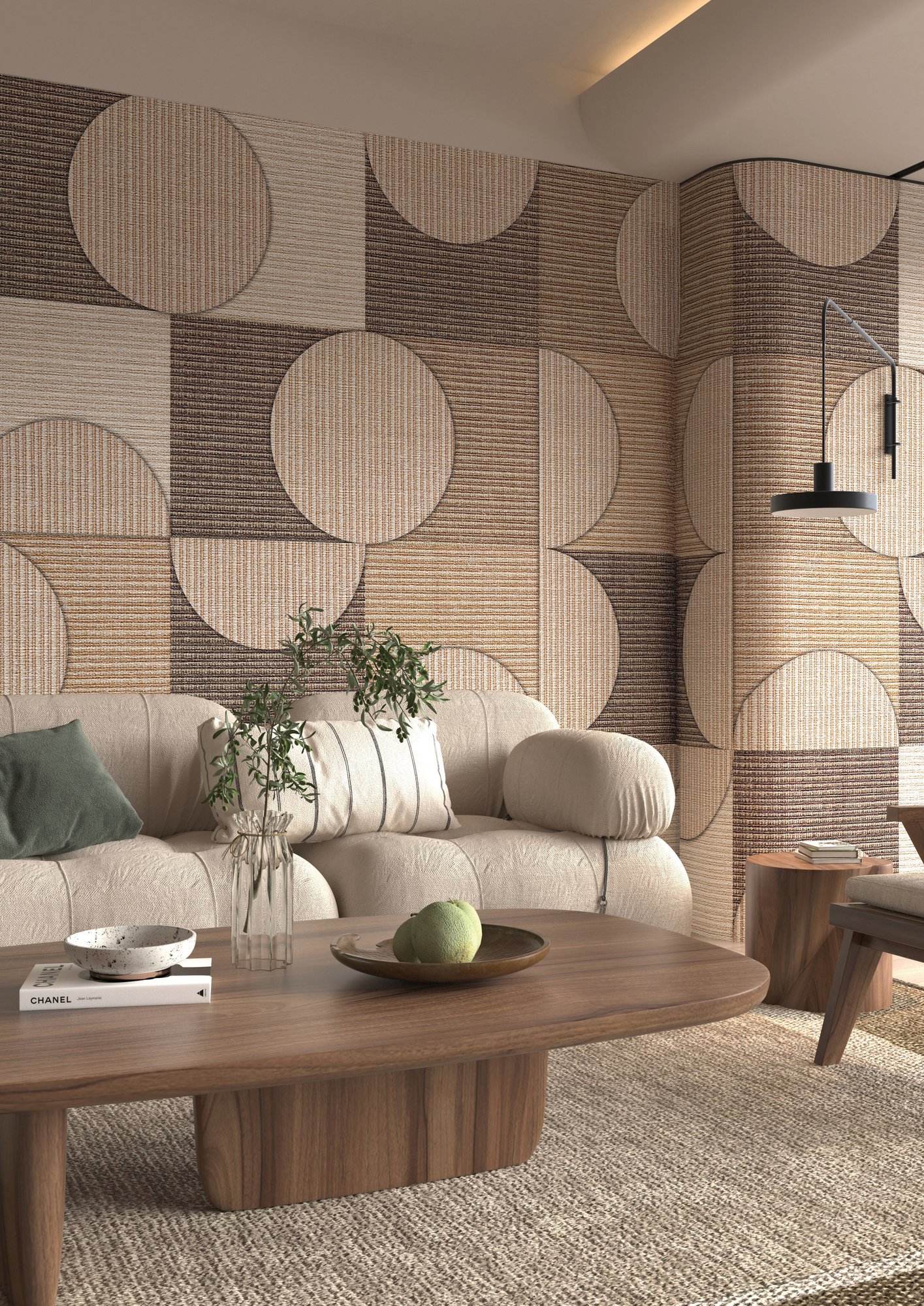
Abstract murals — watercolour washes, geometric compositions, brushstroke textures, and colour-block designs — add artistic impact without a literal subject matter. These are particularly effective in modern condo interiors and commercial spaces where the design needs to feel sophisticated without being too specific.
Scenic and Landscape
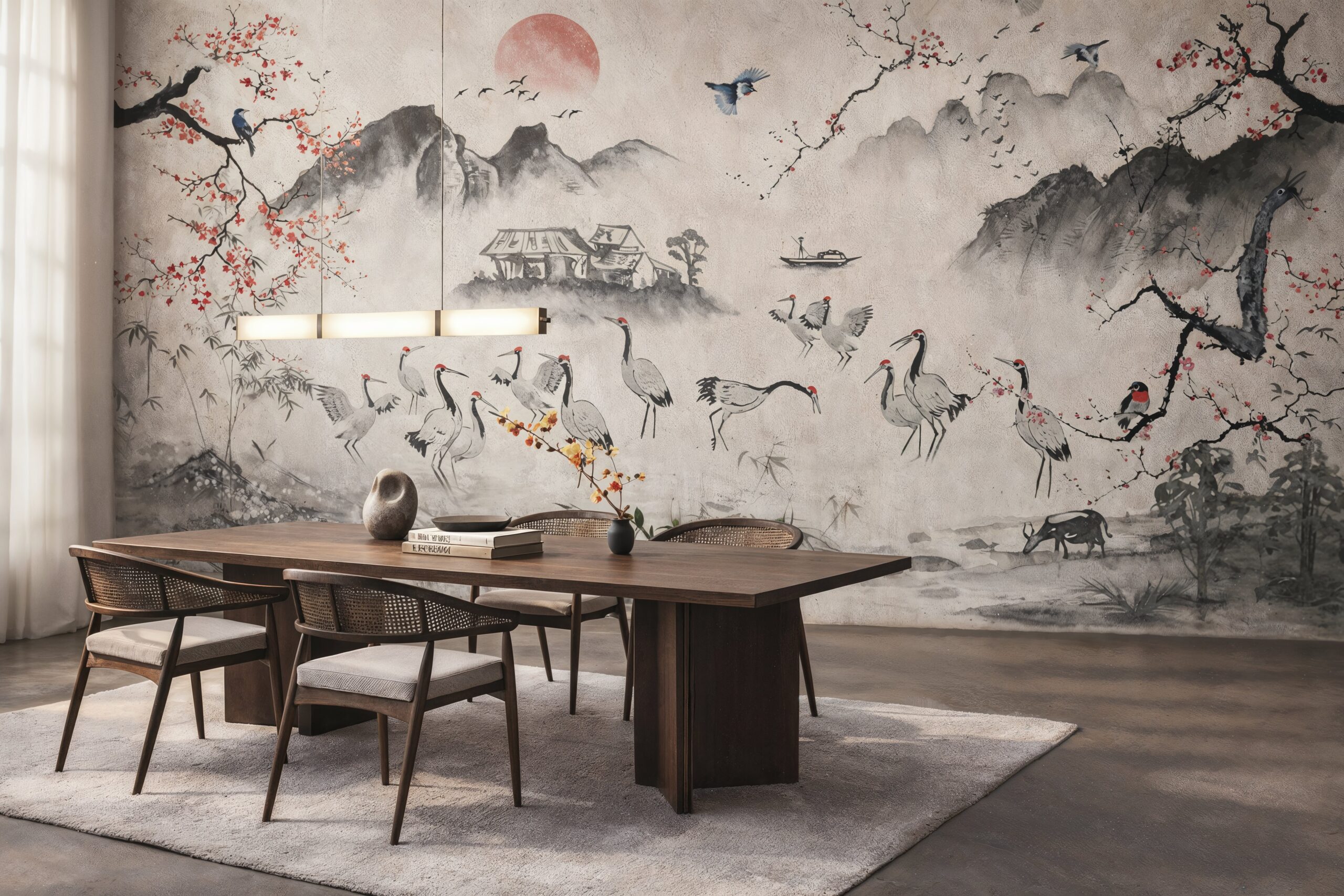
Mountain vistas, misty forests, coastal scenes, and cityscape silhouettes create a sense of depth and escape. In compact Singapore apartments, a landscape mural can make a room feel expansive, as the eye travels into the depicted scene rather than stopping at the wall surface.
Textural and Tonal
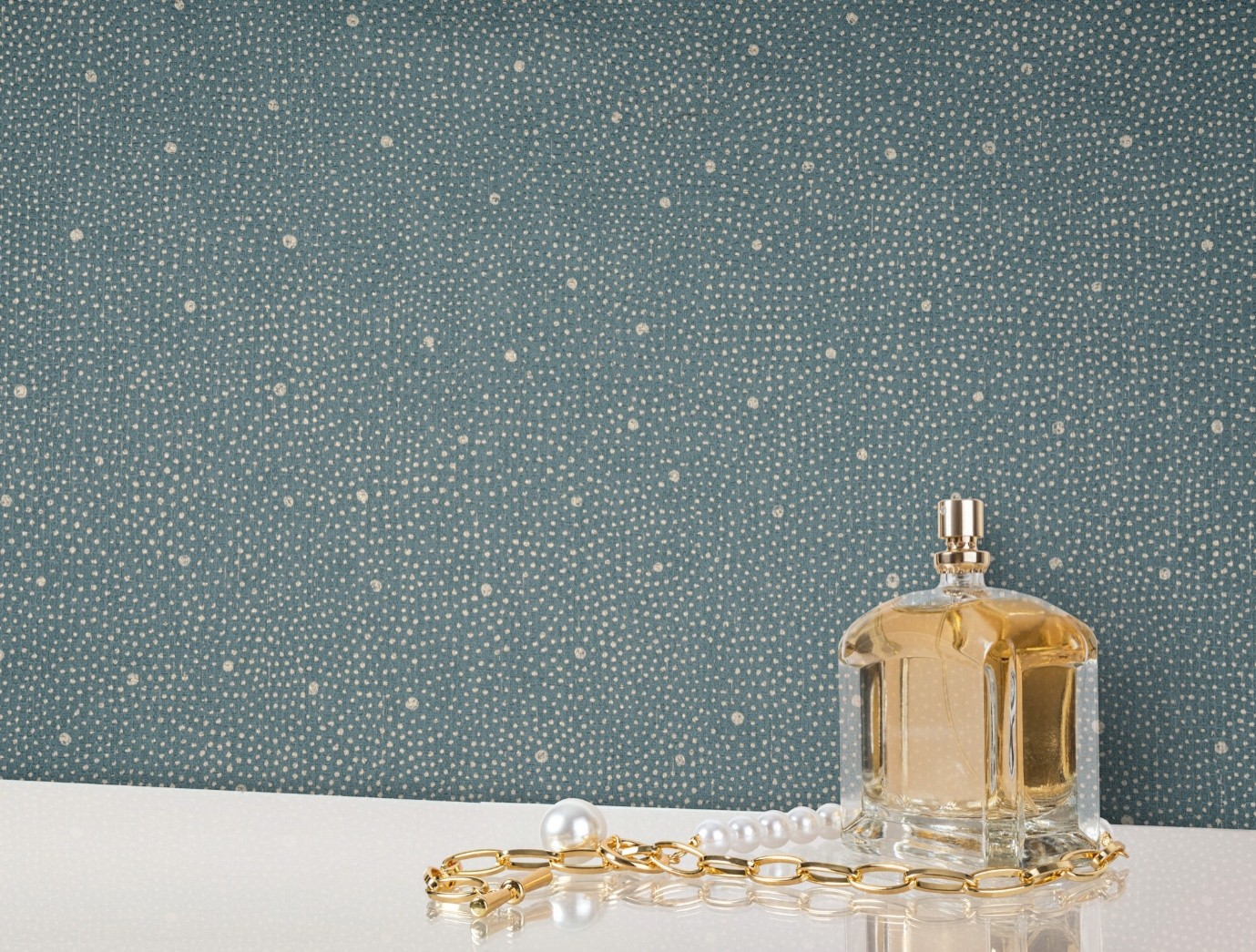
Not every mural needs to depict a recognisable scene. Oversized marble veining, concrete textures, aged patina effects, and cloud formations create subtle, sophisticated backdrops that function almost like an art installation. These tonal murals suit minimalist interiors where the wall itself becomes the design feature.
Sizing and Scaling Considerations
Getting the scale right is crucial for a successful mural installation. Too small, and the image looks awkward; too large, and important elements may be cropped.
Most mural wallpapers are available in standard sizes that cover common wall dimensions. Many manufacturers also offer custom sizing, where the image is scaled and printed to fit your exact wall measurements. When ordering, measure the wall precisely — height from floor to ceiling and width from corner to corner — and communicate these dimensions to your supplier.
Consider what happens at the edges of the image. Some murals are designed with fade-out borders that transition naturally to the adjacent painted walls. Others have defined edges that work best when they run precisely to the corners. Discuss these details with your wallpaper specialist to avoid awkward cropping.
For HDB flats with standard 2.6-metre ceilings, ensure the mural design accounts for this height. Some murals designed for taller spaces may lose their intended composition when cropped to fit a lower ceiling.
Installation and Practical Tips
Mural wallpaper installation requires more precision than standard repeating wallpaper. Each panel must align perfectly with the next to maintain the continuity of the image.
Professional installation is strongly recommended. A skilled wallpaper installer will ensure panels are level, seams are invisible, and the image flows seamlessly across the wall. In Singapore, experienced installers familiar with mural wallpaper can be sourced through reputable wallcovering suppliers like Goodrich Global.
Wall preparation is especially important for murals. Any bumps, cracks, or unevenness in the wall surface will show through the mural and disrupt the image. Skim-coat older walls to a smooth finish before installation. In new BTO flats, walls are typically smooth enough for direct application after priming.
If your wall has light switches, power points, or air-conditioning piping that cannot be relocated, plan the mural placement so these interruptions fall in less critical areas of the image — in a sky area rather than across a face, for example.
Mural Wallpaper in Commercial Spaces
Beyond residential use, mural wallpaper is increasingly popular in Singapore’s commercial interiors. Restaurants use scenic murals to create atmosphere and transport diners. Hotels feature custom murals in lobbies and suites for a signature look. Retail stores use branded or artistic murals as Instagram-worthy backdrops that encourage social media sharing.
For commercial applications, choose murals printed on durable, fire-rated materials that meet Singapore’s building codes. Commercial-grade wallcoverings offer enhanced durability and typically carry the necessary fire certifications for public spaces. Request a quotation for commercial mural projects to discuss material specifications and fire-rating requirements.
Final Thoughts
Mural wallpaper is one of the most powerful tools in interior design, capable of completely redefining a room’s character in a single wall. In Singapore’s compact living spaces, a thoughtfully chosen mural adds depth, artistry, and personality that far exceeds what paint or repeating patterns can deliver.
The key is selecting a design that complements your space, sizing it correctly, and ensuring professional installation for a flawless finish.
Browse our e-catalogue for the latest designs and discover mural wallpapers suited to your home or commercial project.