Wallpaper & Wallcovering
Wall Coverings That Hide Imperfect Walls
Choosing a wall covering for uneven walls is one of the most common briefs we hear from owners of resale HDB flats and older condominiums. Decades of previous renovations leave their marks: hacked and patched surfaces where built-ins were removed, uneven plaster, hairline cracks, filled cable chases, and paint layered over paint. The good news is that the right wallcovering can make a tired wall look freshly finished — if you match the product to the severity of the problem.
This guide covers what actually works — lining paper, thick textured vinyls, deep-emboss wallcoverings, and panel-effect designs — and, just as importantly, when the honest answer is to skim-coat the wall first.
First, Diagnose the Wall
Imperfect walls fall into three broad categories, and the remedy differs for each:
- Cosmetic flaws: Hairline cracks, minor patch marks, small dents, uneven paint sheen. The wall is sound and reasonably flat — it just looks tired. Wallcoverings handle this category outright.
- Texture problems: Rough or sandy plaster, visible trowel marks, shallow undulations, orange-peel paint texture. Wallcoverings still work well here, but product choice matters — thin, glossy papers will telegraph every bump.
- Structural or surface failures: Flaking or powdery plaster, damp patches, active cracks that reopen, hollow-sounding render, or walls out of plane by more than a few millimetres over a metre. No wallcovering fixes these; the substrate needs repair first.
Run your hand across the wall in raking light — light skimming along the surface from a window or a handheld lamp. What you see in raking light is what a thin wallpaper will show after installation. Do this check in every room before finalising products, because a single flat can easily contain all three categories of wall.
Lining Paper: The Underrated Fix
Lining paper is a plain, unprinted paper or non-woven layer hung on the wall before the decorative wallcovering. It does three jobs: it evens out minor texture differences and patch marks, it provides a uniformly absorbent surface so the top layer adheres evenly, and it bridges hairline cracks that would otherwise reappear through the finish.
On resale-flat walls with a patchwork history — part original plaster, part filler, part old paint — lining paper is often the difference between an acceptable result and a flawless one. Heavier grades smooth more; your installer will recommend a weight after seeing the wall. It adds modest cost and a day to the schedule, and it is almost always worth it on older walls.
Thick Vinyl Wallcoverings: Body That Hides
Wallcovering thickness is the single biggest factor in how much a product conceals. Heavyweight vinyls — the same constructions specified for hotels and offices — have enough body to bridge minor unevenness rather than draping into it. A thick vinyl with a matt finish and a light surface texture will hide small imperfections that a thin paper would amplify.
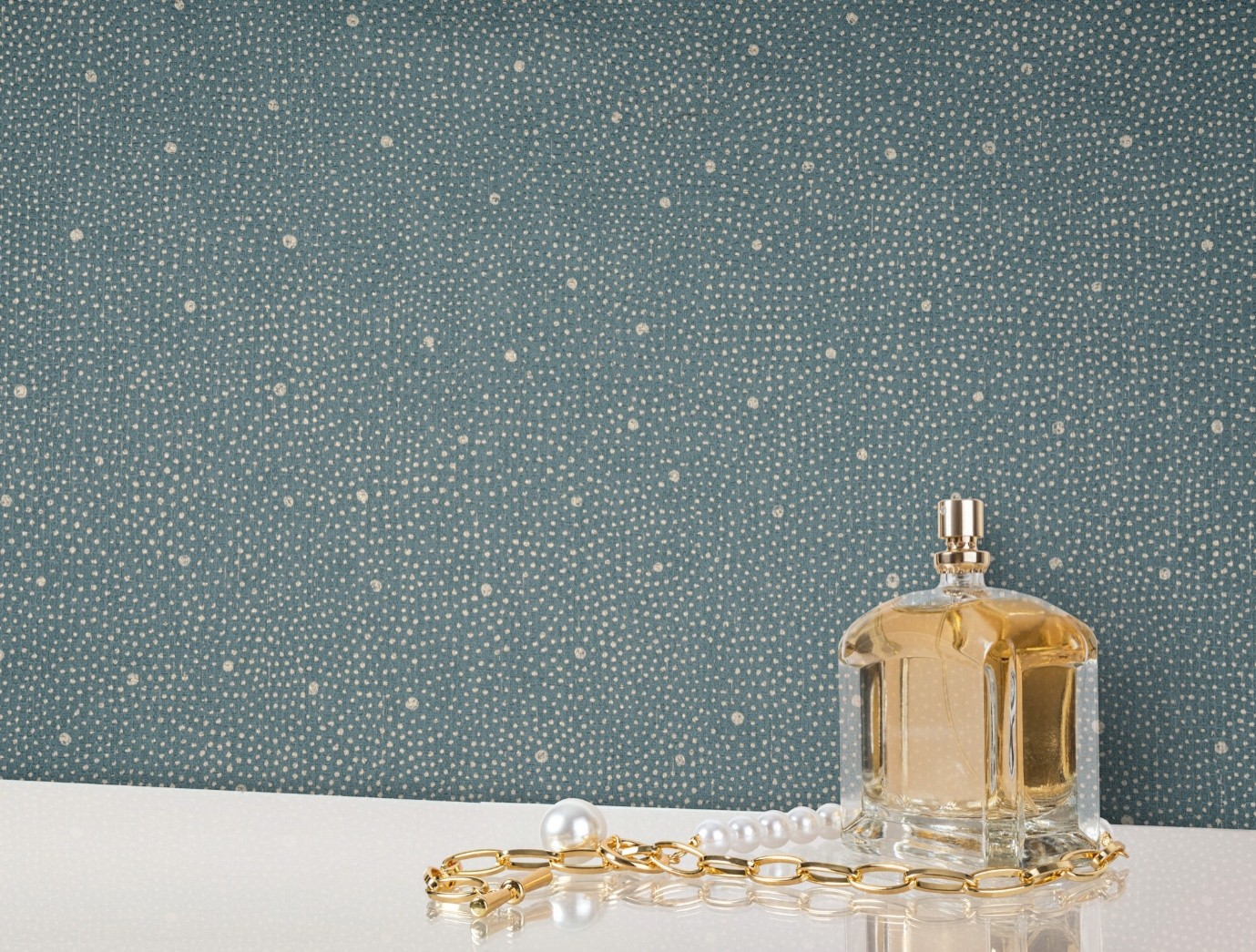
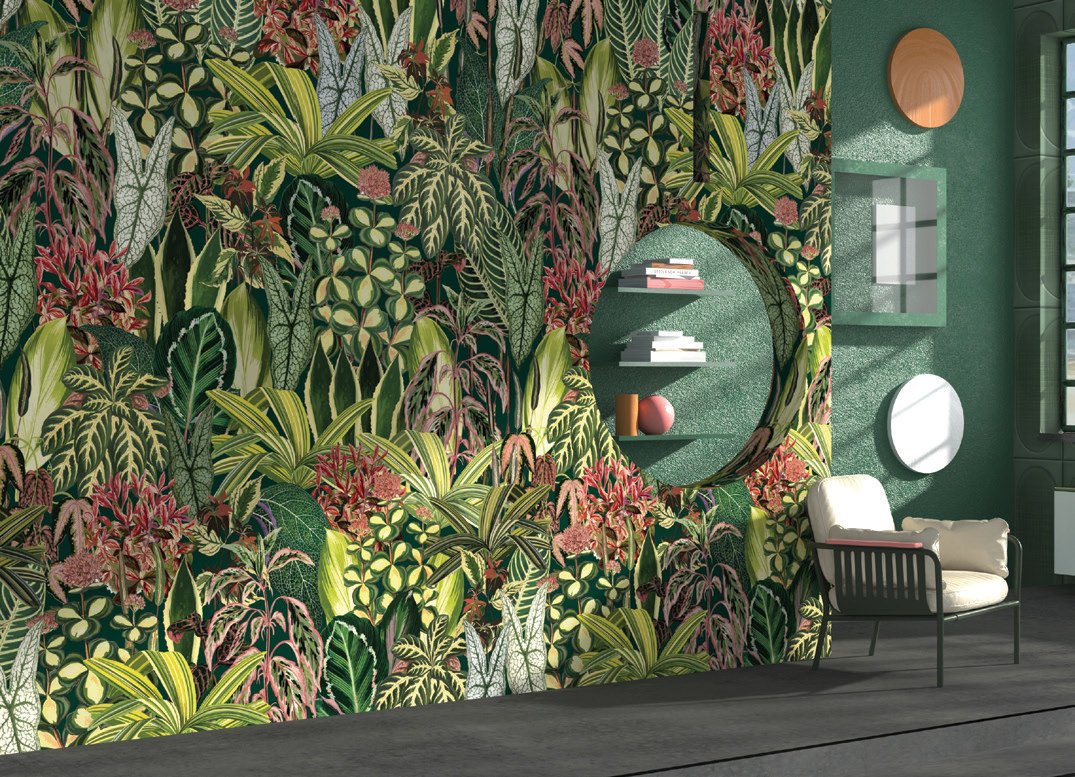
Two selection rules multiply the effect. Choose matt over sheen: glossy and metallic surfaces reflect light directionally and highlight every undulation. And choose pattern over plain: an organic, non-linear pattern breaks up the light across the wall so the eye never gets a clean reference line to judge flatness against. Our comparison of vinyl versus non-woven wallpaper explains the construction differences in more detail.
Deep-Emboss and Textured Wallcoverings: The Heavy Concealers
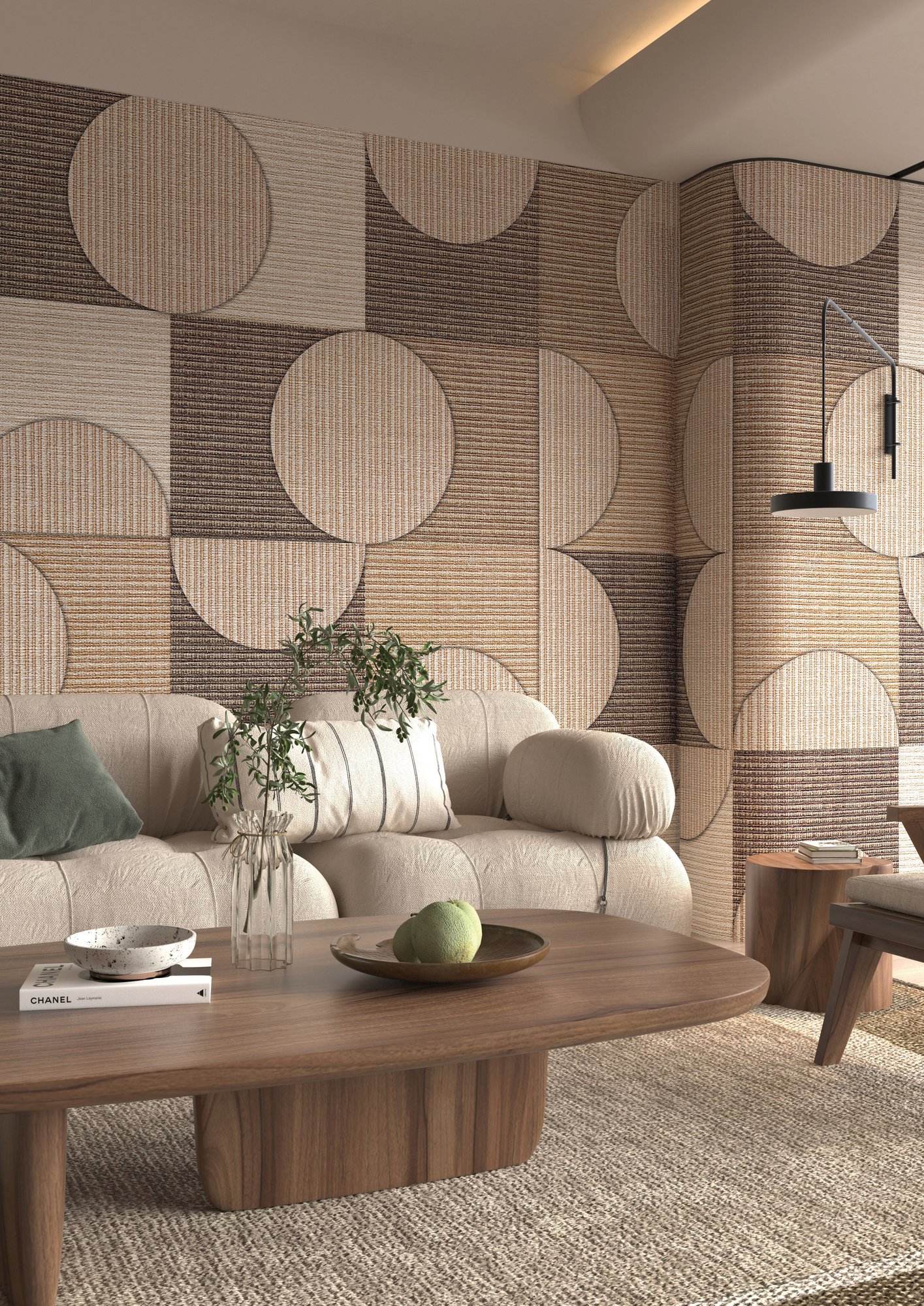
For walls with genuine texture problems, deep-emboss wallcoverings are the strongest tool in the box. These products carry pronounced relief — weaves, plasters, geometric grids, fabric effects — that creates its own shadow play across the wall. Once the surface has intentional texture, the wall’s unintentional texture disappears into it.
Textured wallcoverings also age gracefully in busy homes, disguising the scuffs and marks of daily life along with the wall’s history. Browse our roundup of textured wallpaper design ideas for the range of looks, from subtle linen to bold sculptural relief.
Panel-Effect Wallcoverings: Structure That Distracts
Panel-effect wallcoverings — designs that reproduce wainscoting, fluted timber, and slatted panelling in printed, embossed form — take a different approach: instead of hiding the wall, they give the eye architecture to look at. The strong intentional geometry of a panelled design reads as a finished, constructed wall, drawing attention away from surface flaws that a flat colour would expose.
They are particularly effective in resale flats where one wall carries most of the visible damage: turn that wall into the feature, and the problem becomes the showpiece. For the wider decision between covering and repainting older walls, our guide to wallcovering versus paint in Singapore weighs both routes honestly.
When to Skim-Coat Instead
There are walls no wallcovering should be asked to rescue. Be honest about these situations:
- Flaking, powdery, or hollow plaster: Wallcovering adhesion depends on a sound substrate. Covering failing plaster traps the problem and the finish will fail with it.
- Damp or water-stained walls: Find and fix the moisture source first. In our climate, papering over damp is an invitation to mould behind the wallcovering.
- Walls visibly out of plane: Where unevenness is deep enough to cast shadows across a metre or more, embossing will not save it — the wall needs a skim coat to restore a flat plane.
- Active structural cracks: Cracks that reopen seasonally will eventually print through any covering. Have them assessed and repaired properly.
A skim coat — a thin levelling layer of plaster over the existing wall — typically adds a few days and a modest sum per wall to a renovation, and it upgrades the result of everything applied afterwards. The best-value sequence for badly worn walls is often skim-coat plus a mid-weight wallcovering, rather than the heaviest concealing product over a poor surface. If you are renovating a resale flat wholesale, our guide to wallpaper for resale HDB flats covers the wider planning picture, and our wallpaper installation cost guide sets out what preparation adds to the budget.
Matching the Fix to the Flaw
| Wall condition | Recommended approach |
|---|---|
| Hairline cracks, patch marks, tired paint | Lining paper plus mid-weight vinyl or non-woven |
| Rough or sandy plaster, trowel marks | Deep-emboss or heavily textured wallcovering |
| One badly marked feature wall | Panel-effect or bold patterned wallcovering |
| Shallow undulations across large walls | Thick matt vinyl with organic pattern, lining paper beneath |
| Flaking plaster, damp, deep unevenness | Repair and skim-coat first, then wallcover |
One more practical note: ask your installer to inspect the walls before you fall in love with a product. A ten-minute site assessment settles whether lining paper is enough, which weight of wallcovering the surface can carry, and whether any wall needs the skim coat — and it turns the product shortlist from guesswork into a specification.
Final Thoughts
For most resale HDB and older condo walls, the formula is straightforward: sound but tired walls take a thick, matt, patterned vinyl — with lining paper underneath for a flawless base — while textured and panel-effect wallcoverings handle rougher surfaces with confidence. Reserve the skim coat for walls that are genuinely failing or out of plane, and you will spend the budget where it changes the result. Explore the wallpaper and wallcovering collection with texture and thickness filters in mind.
Request free samples and hold them against your actual wall in raking light — five minutes with a sample tells you more than any photograph.