Wallpaper & Wallcovering
Wallpaper Patterns Explained: A Guide to Popular Styles
Why Wallpaper Patterns Matter in Interior Design
The pattern you choose for your wallpaper does more than decorate a wall. It influences how a room feels, how large it appears, and how the space connects with the rest of your home. A well-chosen pattern can make a compact HDB bedroom feel spacious, a plain corridor feel elegant, or a living room feel distinctly yours.
Understanding the main wallpaper pattern families helps you make confident decisions. Each pattern type carries its own visual weight, historical associations, and practical considerations. This guide walks through the most popular styles available today and explains where each works best.
Floral Patterns
Floral wallpaper is one of the oldest and most enduring pattern categories. Modern interpretations range from delicate trailing botanicals to bold, oversized blooms that function as art installations on your walls.
Small-Scale Florals
Ditsy and small-repeat floral patterns create a gentle, textured effect from a distance. They suit bedrooms, powder rooms, and children’s rooms where a soft, approachable look is desired. In compact BTO bedrooms, small florals add personality without overwhelming the space.
Large-Scale Florals
Oversized botanical prints make a dramatic statement and work best on feature walls or in rooms with generous proportions. These patterns are increasingly popular in contemporary Singapore interiors, where a single bold wall of large florals replaces traditional artwork.
Tropical and Botanical
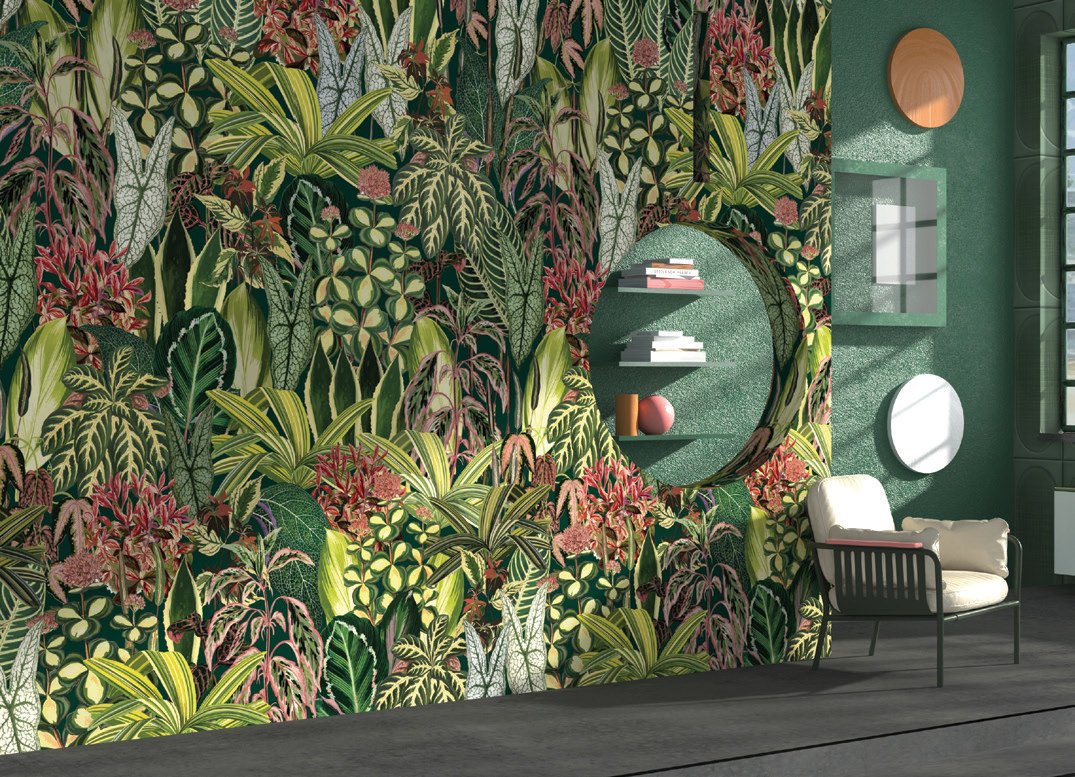
Palm leaves, monstera, banana plants, and tropical flowers connect Singapore interiors to the lush landscape outside. These patterns work particularly well in living rooms and dining areas, creating a resort-inspired atmosphere. Explore tropical and other residential wallcovering options to find the right botanical scale for your room.
Geometric Patterns
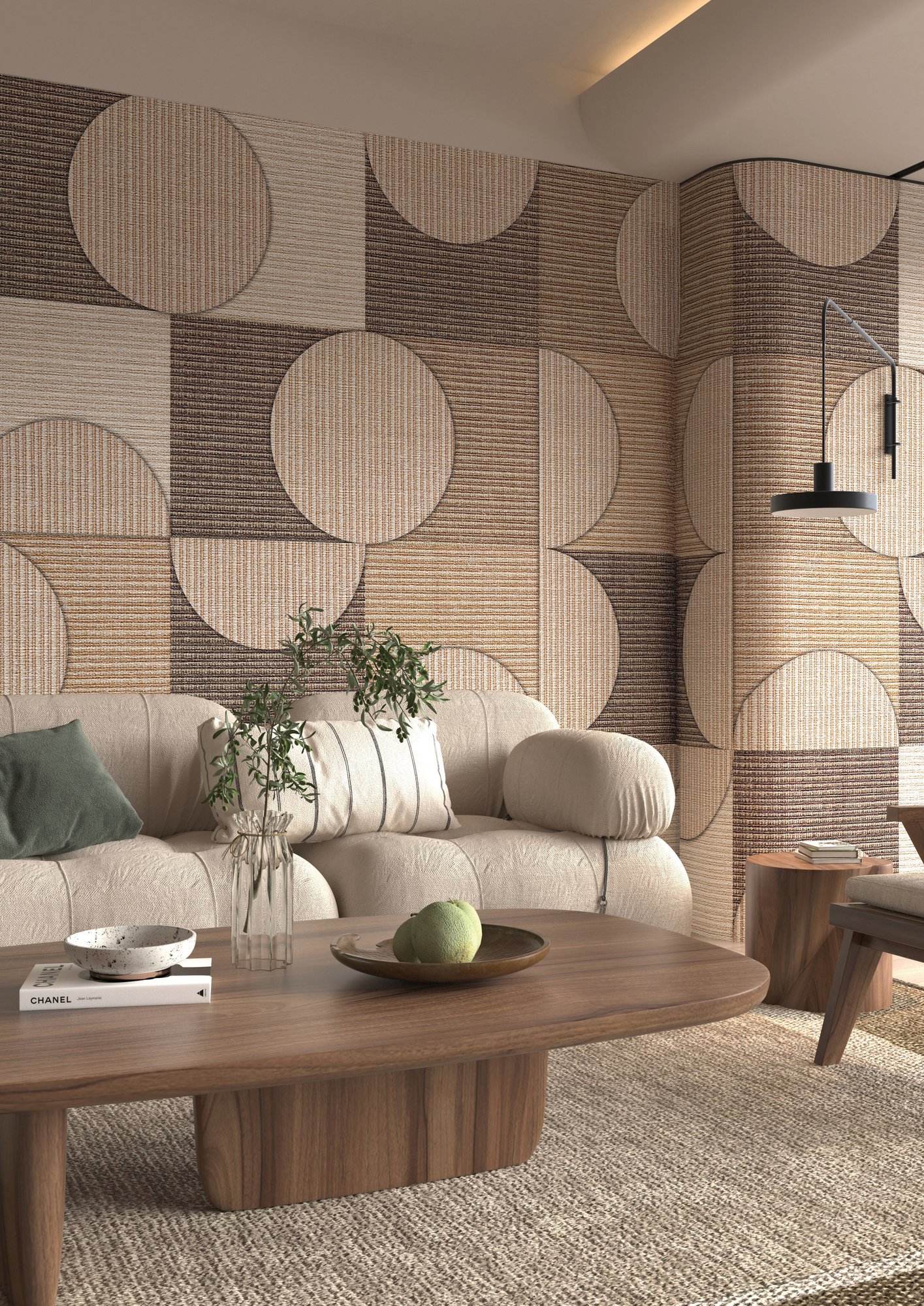
Geometric wallpaper brings structure, order, and a modern sensibility to interior spaces. The clean lines and repeating shapes appeal to homeowners who prefer a contemporary aesthetic.
- Hexagons and honeycombs: These organic geometrics feel modern but not harsh, making them versatile for living rooms and bedrooms alike.
- Chevrons and herringbone: Dynamic directional patterns that add energy and movement. Vertical chevrons draw the eye upward, useful in rooms with standard ceiling heights.
- Trellis and lattice: These open, airy patterns suit transitional interiors that blend traditional and modern elements.
- Art deco fans and arches: Glamorous patterns inspired by the 1920s that work beautifully in dining rooms and entryways.
- Simple lines and grids: Minimal geometric patterns provide subtle texture without dominating the room.
Geometric patterns are particularly effective in modern condominiums with clean architectural lines. They complement rather than compete with contemporary furniture and fittings.
Stripes
Striped wallpaper is a powerful tool for manipulating perceived room proportions. The direction, width, and colour contrast of the stripes all influence the visual effect.
| Stripe Type | Visual Effect | Best Application |
|---|---|---|
| Narrow vertical | Makes ceilings appear taller | HDB rooms with 2.6m ceilings |
| Wide vertical | Creates a classic, formal look | Dining rooms, hallways |
| Horizontal | Makes rooms appear wider | Narrow corridors, small bedrooms |
| Tonal / tone-on-tone | Subtle texture and depth | Any room, understated elegance |
| Bold contrast | Strong visual impact | Feature walls, powder rooms |
In Singapore’s typical HDB and BTO flats, vertical stripes are especially useful. A standard 2.6-metre ceiling can feel noticeably taller with the right striped wallpaper, improving the overall sense of space.
Textured and Plain Patterns
Not all wallpaper needs an obvious motif. Textured plains use surface variation rather than printed patterns to create visual interest. These wallpapers are among the most versatile and commercially popular options.
Common Textured Finishes
Grasscloth wallpaper uses woven natural fibres laminated to a paper backing, creating a tactile, organic surface. Linen-effect wallpapers replicate the look of woven fabric without the natural fibre, offering better humidity resistance for Singapore’s climate.
Concrete and plaster-effect wallpapers bring an industrial edge without the mess and maintenance of actual raw walls. Silk and satin-effect finishes add subtle sheen and sophistication to bedrooms and formal spaces.
These textured options pair exceptionally well with quality drapery fabrics, creating layered interiors with depth and tactile richness.
Damask, Toile, and Heritage Patterns
Traditional pattern styles continue to find their place in modern Singapore homes, often reinterpreted in contemporary colourways.
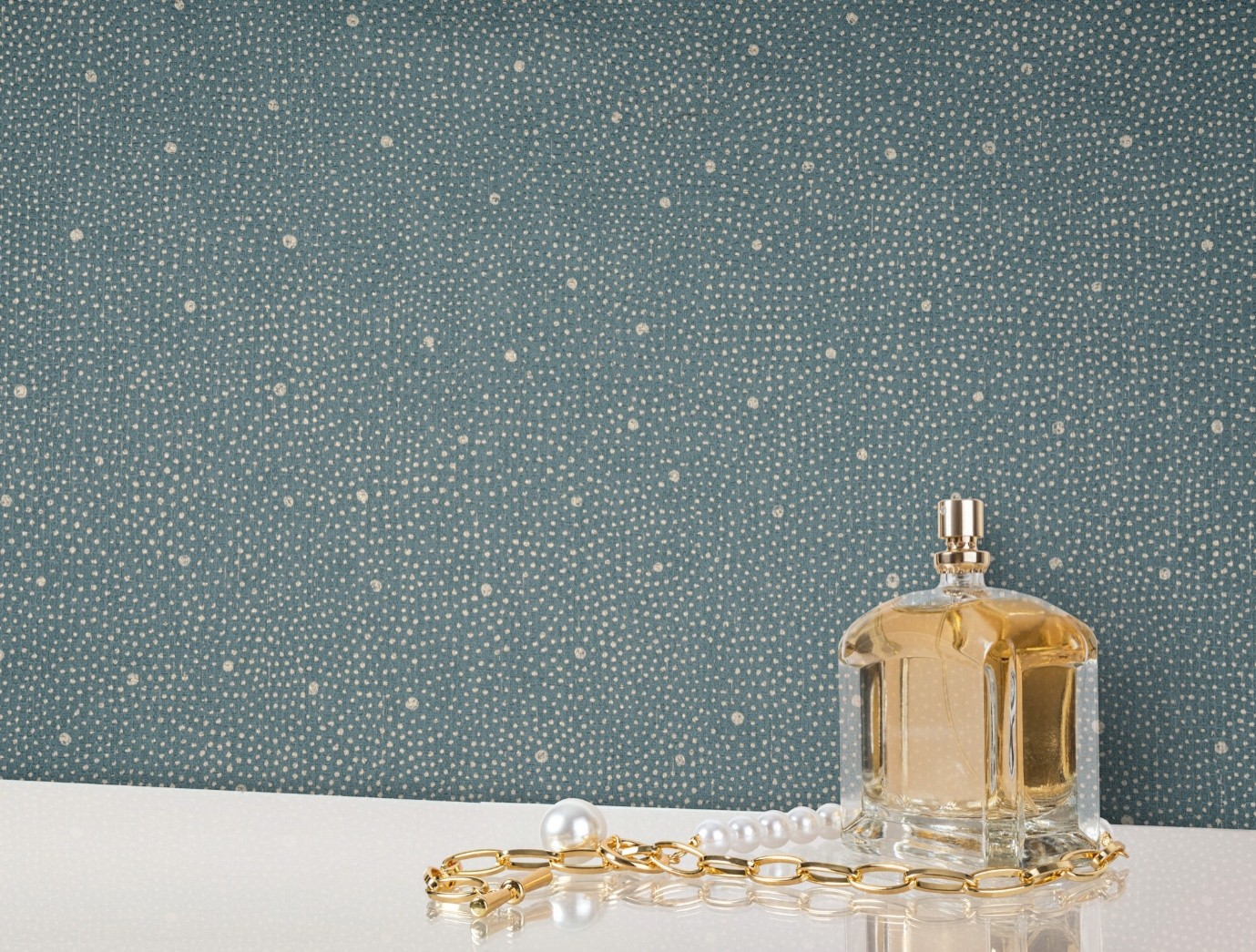
Damask patterns feature symmetrical, ornate motifs that repeat in a formal arrangement. Originally inspired by woven silk fabrics from Damascus, these patterns convey elegance and heritage. Modern damasks often appear in tone-on-tone colourways that read as texture rather than bold pattern.
Toile de Jouy features scenic illustrations, typically pastoral or historical, printed in a single colour on a light ground. While traditionally European, modern toile patterns increasingly incorporate Asian and tropical scenes suited to regional tastes.
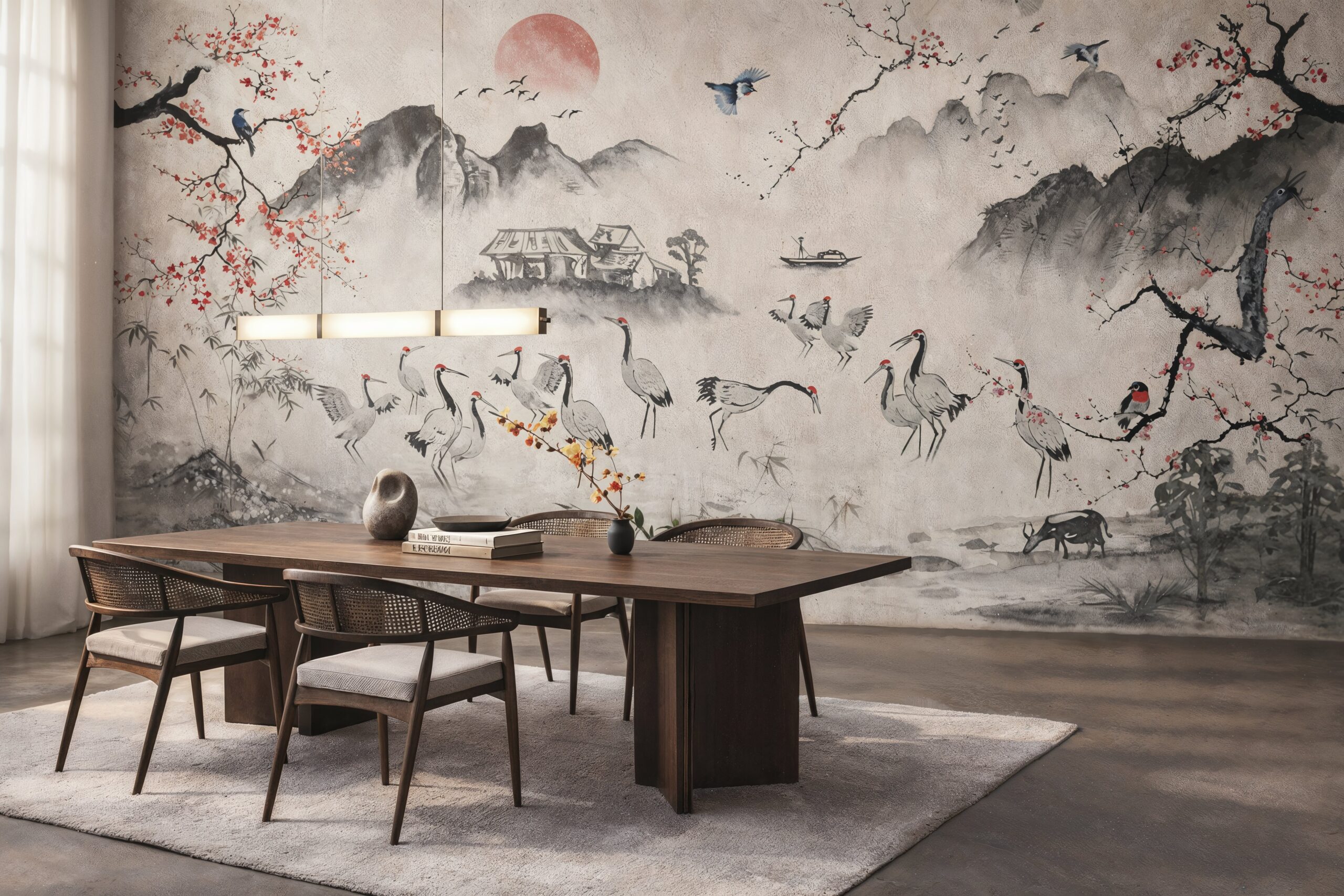
Chinoiserie patterns draw from Chinese artistic traditions and feature birds, branches, florals, and landscapes. These designs feel particularly appropriate in Southeast Asian interiors and add a sense of curated sophistication.
Mixing Patterns in One Room
Combining multiple patterns within a single room is an advanced technique that, when done well, creates rich and layered interiors. The key is maintaining a unifying element that ties the patterns together.
The safest approach uses a shared colour palette. A floral wallpaper in blue and cream pairs harmoniously with blue-striped curtains and a geometric blue cushion, because the colour blue connects all three patterns despite their different styles.
Vary the scale of patterns to avoid visual competition. Pair a large-scale wallpaper pattern with small-scale fabric patterns, or vice versa. When two patterns of similar scale sit next to each other, neither reads clearly, creating visual confusion.
Limit the number of patterns to three in most rooms. Beyond three distinct patterns, the effect moves from curated to cluttered for most spaces. One dominant pattern, one secondary pattern, and a subtle textured pattern is a reliable formula.
Choosing the Right Pattern for Your Room
Selecting a wallpaper pattern involves balancing aesthetic preference with practical room considerations. Here are the key factors to weigh.
Room size: Large patterns can overwhelm small rooms. In compact HDB bedrooms, choose smaller-scale or textured patterns. Reserve large-scale designs for spacious living rooms or feature walls where they have room to breathe.
Existing furnishings: If your furniture and soft furnishings already feature patterns, opt for a plainer wallpaper to avoid visual competition. Conversely, simple furniture allows bolder wallpaper choices.
Natural light: Rooms with abundant natural light can handle darker patterns and busier designs. Darker rooms benefit from lighter, simpler patterns that maximise the available light.
Purpose of the room: Bedrooms generally suit calming patterns like soft florals, gentle textures, or tonal stripes. Living and dining areas can accommodate bolder choices. Home offices benefit from non-distracting textures and simple geometrics.
Pattern repeat: The repeat length affects both installation cost and visual impact. Large repeats require more wallpaper due to waste from matching, but create a grander effect. Small repeats are more economical and create a more uniform appearance.
Longevity: Consider how long you intend to live with the wallpaper. Trend-driven patterns may feel dated within a few years, while classic patterns like subtle geometrics, timeless florals, and textured plains retain their appeal over longer periods. If you change your interior scheme frequently, choose patterns that work with multiple colour palettes.
Seeing patterns in person is essential, as screens cannot accurately convey scale, texture, or colour. Request free samples from our Singapore showroom and view them against your own walls before committing to a full installation.