Industry Insights
Wall Protection Systems for Healthcare and Commercial Interiors
Wall protection is the kind of specification line item that does not exist on the project budget at concept stage and inevitably appears at value-engineering stage as either a quietly added cost or a quietly absent provision. The cost of getting it wrong shows up later — in scuffed corridors that need repainting every six months, in chipped plaster around lift lobbies, in damaged drywall behind hospital trolleys, in skirting destroyed by cleaning machines. The cost of getting it right is modest at construction stage and disappears as a maintenance cost forever after.
At Goodrich, we specify wall protection systems — Korogard rigid sheets, P3TEC advanced wall protection, and complementary skirting and corner-guard products — across healthcare, education, hospitality, and high-traffic commercial work. This article sets out the framework we use to scope wall protection on a project, where the specification earns its place, and how to budget the system so it does not become the value-engineering casualty it usually becomes.
Why Wall Protection Matters Where It Matters
Most interior wall surfaces in a building never need protection. They are touched only by hands, occasionally bumped by furniture, and refreshed on the same paint cycle as the rest of the room. The economics of wall protection do not work for those surfaces.
Wall protection earns its place in the specific zones where the load on the wall is structural in everything but name — corridors with constant trolley traffic, stretcher and bed transit routes, food service back-of-house, education hallways with thousands of students per day, gym and locker-room zones, kitchen and laundry corridors, plant rooms. In these zones, unprotected drywall, plaster, and standard wallcoverings fail visibly within the first year and require continuous remedial intervention thereafter.
The right way to think about wall protection is as a one-time capital substitution for an ongoing operational cost. The protection material is more expensive per square metre than paint or wallcovering. Over a ten-year service life it is consistently cheaper than the maintenance cycle it replaces.
The Categories of Wall Protection
Rigid sheet wall protection
Sheet products — Korogard Rigid Sheets and equivalent products in the Goodrich range — are continuous high-impact polymer panels installed across the protected wall surface. They handle anti-crush, anti-scratch, anti-abrasion, and antiseptic loads that no painted surface can match. Typical specification: 1.5 to 2 mm sheet thickness, full-height or dado-height application, mechanically fixed and silicone-sealed at edges. Applied across corridor walls in healthcare, education, and high-traffic commercial back-of-house.
Advanced wall protection: P3TEC
P3TEC is the higher-performance category — engineered for impact, chemical, and abrasion exposure that exceeds standard rigid sheet capability. Compelling design range, extensive textures and colours, and easy-to-install handling make it the specification of choice for premium healthcare, executive education, and any project where the wall protection cannot read as institutional even when it must perform institutionally. We specify P3TEC across hospital corridors, healthcare consultation areas, and corporate corridors where the protection is hidden in plain sight rather than visually announcing itself.
Crash rails and bumpers
Linear horizontal-rail products installed at trolley height, bed-cot height, or stretcher height. Designed to take direct impact without transferring load to the wall behind. Typically PVC-extruded with internal aluminium reinforcement, mounted on continuous brackets, replaceable in sections without removing the whole rail. Used in healthcare bed-transit corridors, hotel back-of-house service corridors, and food-service corridors with trolley traffic.
Corner guards
Vertical edge protection at every external corner in a high-traffic zone. Standard plastic corner guards handle the routine bumps; clear polycarbonate guards handle the same load while remaining visually invisible; metal corner guards (stainless or aluminium) are specified where the visual statement matters or the corner is hit by harder impact than plastic can handle.
Bumper rails and door protection
Door faces, door frames, and the sub-handle area of doors take particular punishment in corridor-traffic environments. Polymer kick plates, bumper plates, and continuous lower-third protection address the specific impact zone without committing the entire door to a heavy specification.
Where Wall Protection Earns Its Place
Healthcare facilities
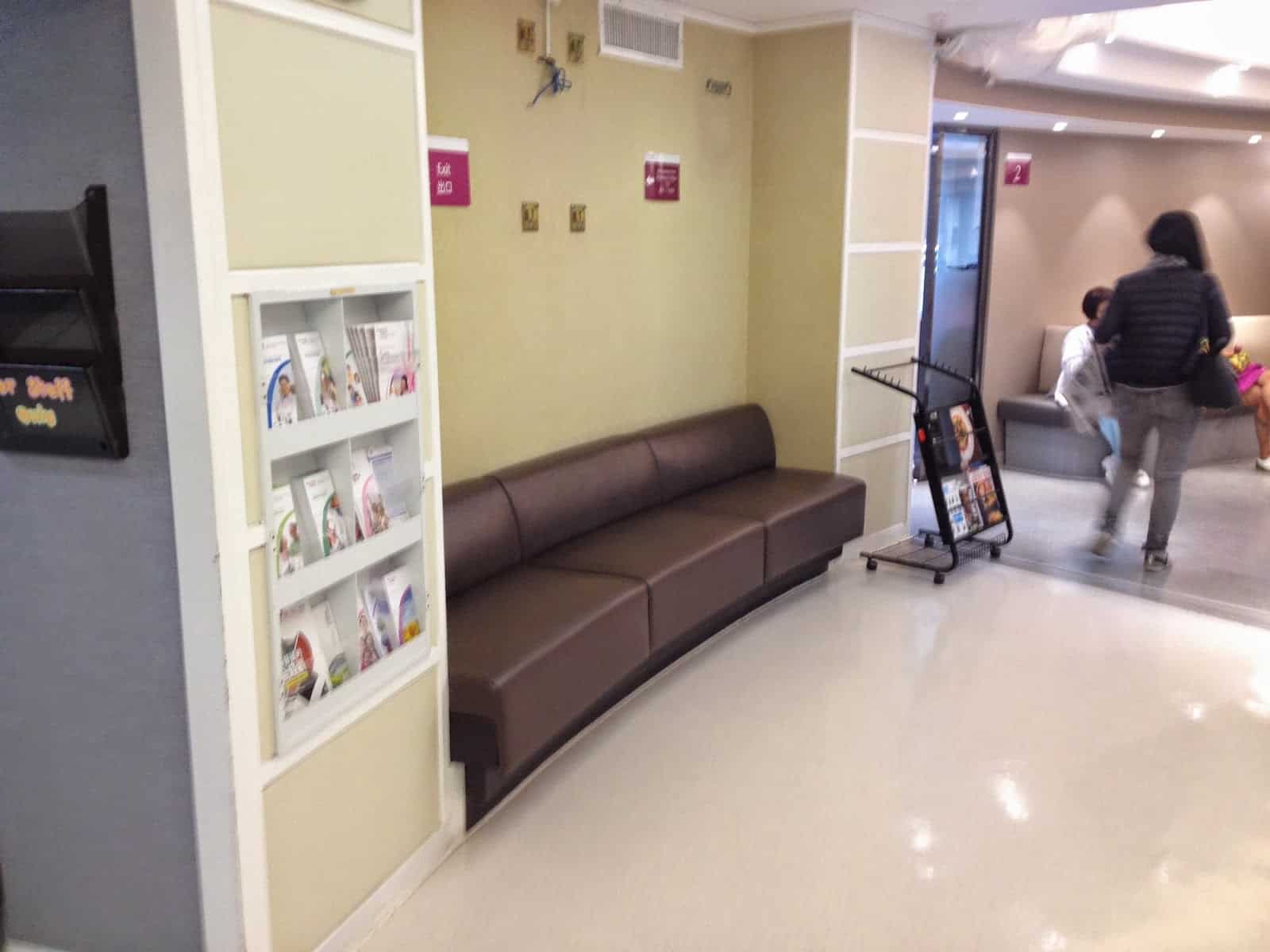
Bed-transit corridors are the canonical wall-protection brief. Patient beds, gurneys, food-service trolleys, cleaning equipment, and supply trolleys all transit corridors at speed and with imperfect aim. Healthcare wall protection is typically specified as crash-rail at bed height plus full-height or dado-height rigid sheet on the corridor walls plus continuous corner guards at every external corner. The system is engineered to handle the combined load class and is designed so that damaged sections can be replaced without remaking the entire wall.
Antimicrobial performance is typically a healthcare wall-protection specification requirement. The Goodrich rigid sheet and P3TEC range delivers antiseptic-grade surfaces that resist microbial colonisation and tolerate the bleach-based cleaning protocols that healthcare cleaning regimes require.
Education facilities
Corridor traffic in primary, secondary, and tertiary education facilities is among the most concentrated commercial wall-load profiles. Thousands of students transit corridors during five-minute period-changes; bags, trolleys, and equipment make contact with wall surfaces at consistent height bands. The right specification handles full-height rigid sheet in major corridors plus targeted dado-height bumper rails in heavy-traffic zones, with corner guards at every external corner.
For Singapore international schools, polytechnics, and universities, the additional consideration is acoustic — corridor wall surfaces are also hard sound-reflective surfaces. Combining wall protection with acoustic wallcovering or panel treatment in adjacent zones is a common coordinated specification.
Hospitality back-of-house
Hotel guest corridors get the design language; back-of-house corridors get the trolleys. Service corridors carrying linen carts, food trolleys, room-service deliveries, and housekeeping equipment punish the wall surfaces continuously. Specification: full-height rigid sheet protection along service routes, crash rails at trolley height, continuous corner protection. Done well, this disappears behind a coordinated colour scheme; done badly, this becomes a constant maintenance line item for the property’s facilities team.
Commercial high-traffic and back-of-house
Office building service corridors, retail back-of-house, F&B kitchen corridors, and any back-of-house zone with continuous trolley or equipment traffic benefit from the same specification logic. The cost of wall protection is small relative to the operational cost of repainting and re-plastering a service corridor every two years.
Public buildings and transport
Public assembly buildings — theatres, cinemas, exhibition halls, transport interchanges — see crowd traffic and equipment movement that exceed normal commercial wall-loading. Wall protection in these zones is typically specified as a system of dado-height impact protection plus full-height polymer protection in the most heavily loaded segments.
How to Scope a Wall Protection Specification
The framework we use on live briefs:
1. Identify the protected zones
Walk the floor plan with the operator and identify every corridor, transit route, service zone, and high-traffic area where wall protection earns its place. Most projects have three or four such zones — they are not the whole building, and they are not random surfaces in random rooms.
2. Identify the load class for each zone
Trolley load, bed/stretcher load, crowd load, equipment load. Each load class corresponds to a system specification (rigid sheet, P3TEC, crash rail, corner guard combinations). High-load zones get the full system; lower-load zones get targeted elements.
3. Identify the visual context
The same load class can be solved with several different visual specifications. Healthcare corridors that read as institutional are appropriate; healthcare corridors in premium private hospitals where the visual brief is hospitality-grade need a higher visual specification (typically P3TEC) at the same load class.
4. Coordinate with the cleaning protocol
Bleach exposure, chemical cleaning agents, abrasion from cleaning machines. The chemical-resistance and abrasion-resistance specification of the wall protection must align with the cleaning protocol the operator will actually use.
5. Plan for replacement and damage events
The best wall protection systems are designed so that damaged sections can be replaced individually without remaking the entire wall. Specifying continuous one-piece systems creates a future remedial problem; specifying modular replaceable systems aligns the design with the actual operational reality.
Specification and Installation
Goodrich provides supply and installation for Korogard rigid sheets, P3TEC advanced wall protection, and complementary skirting and corner-guard products across our project base. Installation quality determines outcome — edge sealing, fixing density, and substrate preparation are the variables that separate a wall-protection installation that holds for ten years from one that requires remedial work in year three.
The complementary specifications matter. Wall protection coordinates with flooring (Armstrong Medintech Plus, Orchid 3000, anti-slip vinyl), wallcoverings (Premierwall Azurite, Widewall Mixture for adjacent low-traffic surfaces), and door and joinery protection (kick plates, bumper plates) to deliver a continuous protected envelope rather than a patchwork of individually specified elements.
Budget Discipline at Value Engineering
Wall protection is the most-frequent value-engineering casualty we see, and it is the value-engineering decision that has the highest probability of being regretted within the first 24 months of operation. The honest framing for the operator at value-engineering stage:
- Wall protection is approximately 0.2 to 0.5 per cent of total project capital cost on a typical commercial fit-out.
- Removed from specification, the same protection is delivered through painting and remedial work over the first ten operational years at approximately 1.5 to 3 per cent of original capital cost.
- The operational impact (closed corridors during repainting, deferred maintenance, brand impact of a worn-looking facility) is harder to quantify but consistently real.
For projects where operational continuity, brand consistency, and deferred-maintenance avoidance matter, wall protection is rarely the right value-engineering target. Better targets exist — and the operator’s facilities team is usually the best stakeholder to consult before the line item is removed.
The Goodrich Project Track Record
Wall protection systems are core to our healthcare, education, and high-traffic commercial work across Singapore and the region. References include hospital corridors, international school campuses, polytechnic and university common areas, and commercial back-of-house projects. The work spans single-floor refurbishments through to full-campus rollouts coordinated across multiple buildings on a single specification.
Speak to our team to scope a wall protection specification for healthcare, education, or high-traffic commercial. Browse the wall protection range in the Goodrich e-catalogue, see the full wallcovering and surfacing collection, or explore project case studies from our healthcare and commercial portfolio.