Wallpaper & Wallcovering
Types of Wall Coverings: A Complete Guide for Singapore Interiors
Understanding the different types of wall coverings is the first step to choosing walls that actually suit how a space is used. A powder-room feature wall, a hotel corridor, and a child’s bedroom all call for different materials — and with more than 700 wallcovering products in the Goodrich Global range, knowing the categories makes the shortlist far easier.
This guide maps out the full taxonomy: vinyl, non-woven, paper, fabric, natural grasscloth, murals, panel-effect designs, and the speciality products built for acoustics, protection, and function. For each, we cover what it is, where it performs best in Singapore’s climate, and where to read further.
Vinyl Wall Coverings: The Workhorse
Vinyl is the most widely specified wallcovering type in Singapore, and for good reason. A printed and often embossed PVC layer over a paper or fabric backing produces a surface that is washable, scrubbable, and highly resistant to humidity — the single biggest threat to wall finishes in a tropical climate.
Vinyl splits into residential weights, which balance fine printed detail with easy maintenance, and heavy contract grades designed for hotels, hospitals, and offices. The thicker the vinyl layer, the more abuse the wall can take: contract vinyls shrug off trolley knocks, scuffs, and repeated cleaning that would destroy a paper product.
Because the surface is embossed rather than flat-printed, vinyl also reproduces textures convincingly — linen weaves, plaster effects, timber grain, and stone. It is the default recommendation for high-traffic areas, rental properties, and any home with young children.
Non-Woven Wall Coverings: The Installer’s Favourite
Non-woven wallcoverings are made from a blend of textile and cellulose fibres, similar to the material used in teabags and medical gowns. The practical advantages are significant: non-woven backings are dimensionally stable, so they do not expand when pasted or shrink as they dry — the main cause of visible seams.
Most non-wovens are paste-the-wall products, meaning adhesive goes onto the wall rather than the paper, roughly halving installation time. They are also dry-strippable, peeling away cleanly at renovation time, which makes them a smart choice for anyone planning to refresh interiors every few years. Our detailed comparison of vinyl versus non-woven wallpaper weighs the two head-to-head.
Paper Wall Coverings: Traditional but Limited Here
Pure paper wallpapers are the traditional format and still carry some of the most beautiful printed designs, particularly from heritage European mills. Their weakness in Singapore is moisture: paper absorbs humidity, is difficult to clean, and can stain or bubble in poorly ventilated rooms.
Where a paper design is the right aesthetic choice, confine it to air-conditioned bedrooms, studies, and display areas away from kitchens, bathrooms, and external walls. For most local projects, a vinyl or non-woven version of a similar design is the safer specification.
Fabric and Textile Wall Coverings
Textile wallcoverings — silk-look, linen, woven polyester, and velvet-effect products laminated to a stable backing — bring a depth and softness that printed products cannot fully imitate. They diffuse light beautifully and add a measure of warmth and acoustic softening to a room.
The trade-off is maintenance: most textiles are not scrubbable and suit lower-traffic spaces such as master bedrooms, executive offices, and hotel suites. Our guide to wallpaper versus fabric wall coverings covers when the textile route is worth it.
Grasscloth and Natural-Fibre Wall Coverings
Grasscloth is hand-woven from natural fibres — arrowroot, sisal, jute, seagrass — mounted on a paper backing. No two rolls are identical, and the visible seams and shade variation are considered part of the charm. It is a favourite of interior designers for dens, studies, and feature walls where organic texture is the brief.
Natural products need more care in Singapore’s humidity and are best kept to air-conditioned rooms. Read our dedicated guide to grasscloth wallpaper for fibre-by-fibre advice, or explore sustainable wallcovering options if low-impact materials are a priority.
Mural and Custom-Printed Wall Coverings
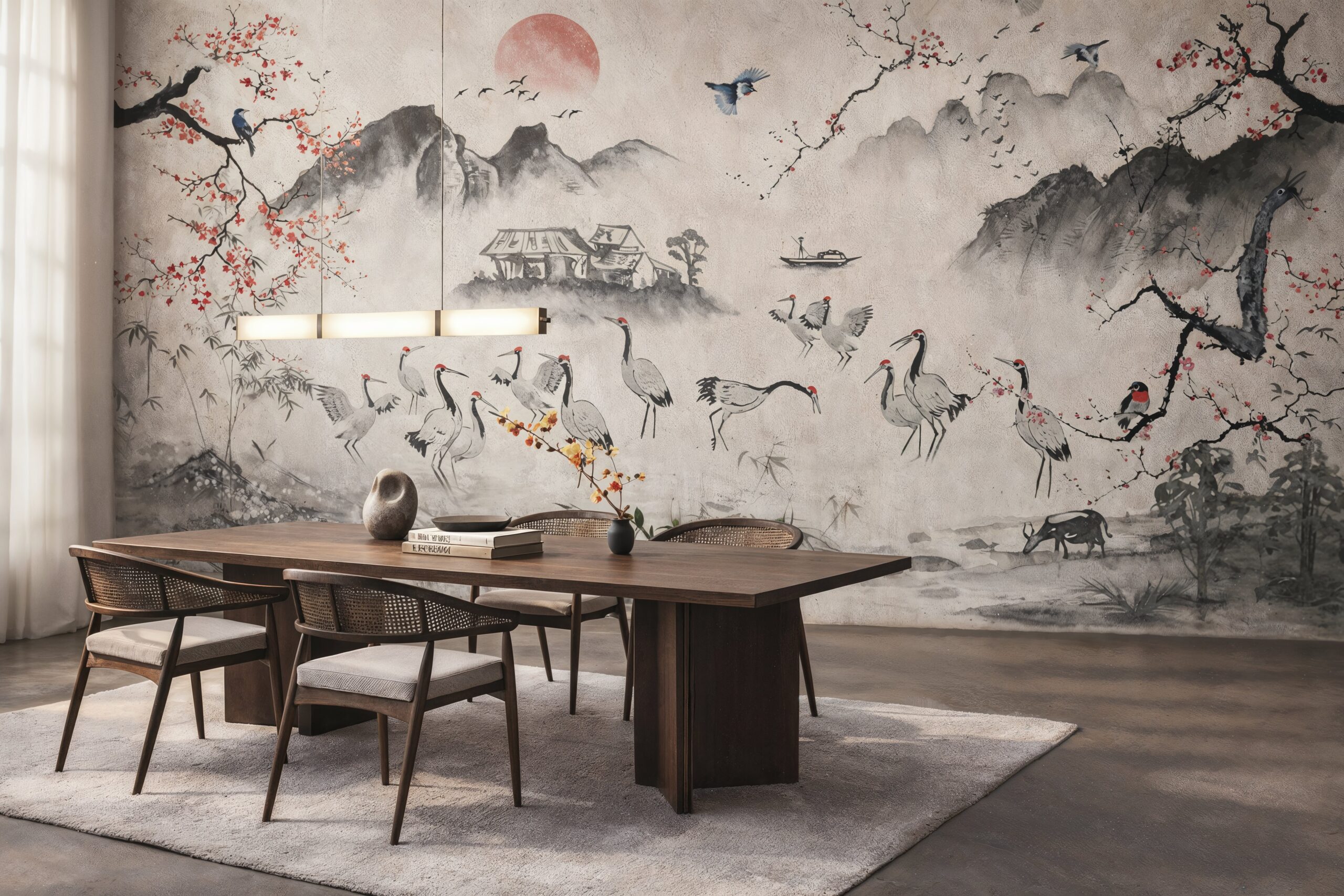
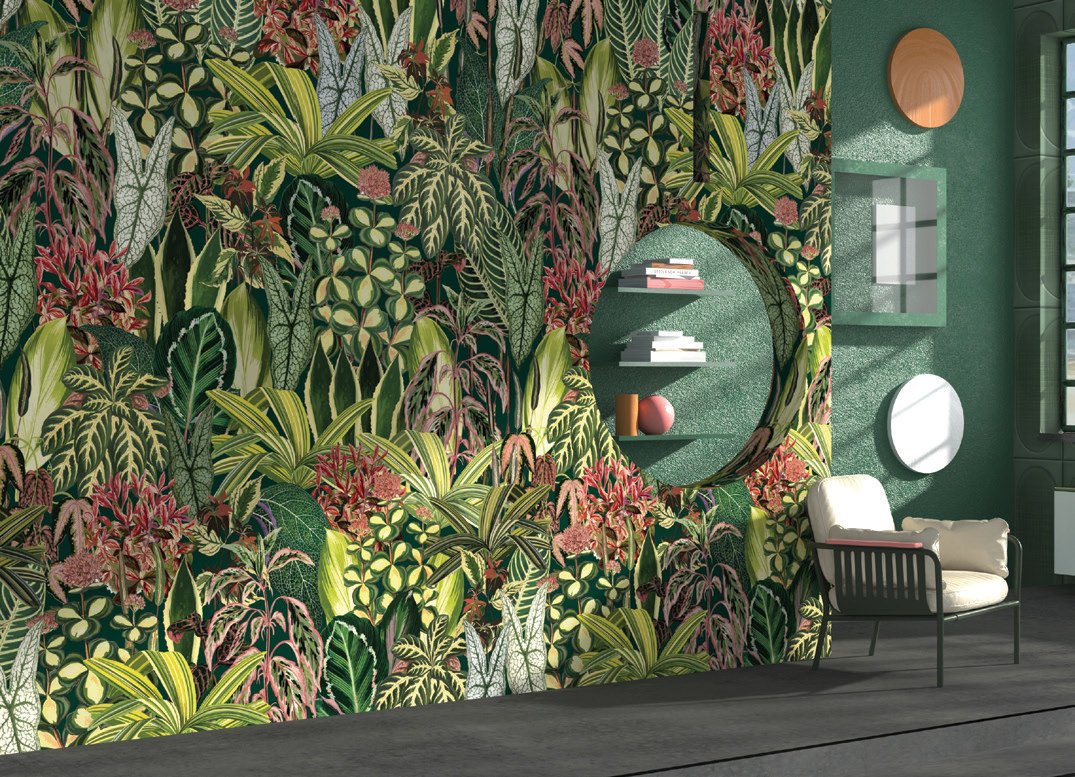
Murals turn an entire wall into a single image — a botanical panorama, an abstract gradient, a map, or artwork scaled to the exact wall dimensions. Digital printing has made this category accessible: designs are produced to measure, in panels, on the same vinyl or non-woven bases described above.
Murals suit feature walls in living rooms, children’s bedrooms, restaurants, and office breakout areas, and they are one of the strongest branding tools in commercial fit-outs. See our guide to custom-printed wallpaper in Singapore for how the made-to-measure process works.
Panel-Effect Wall Coverings
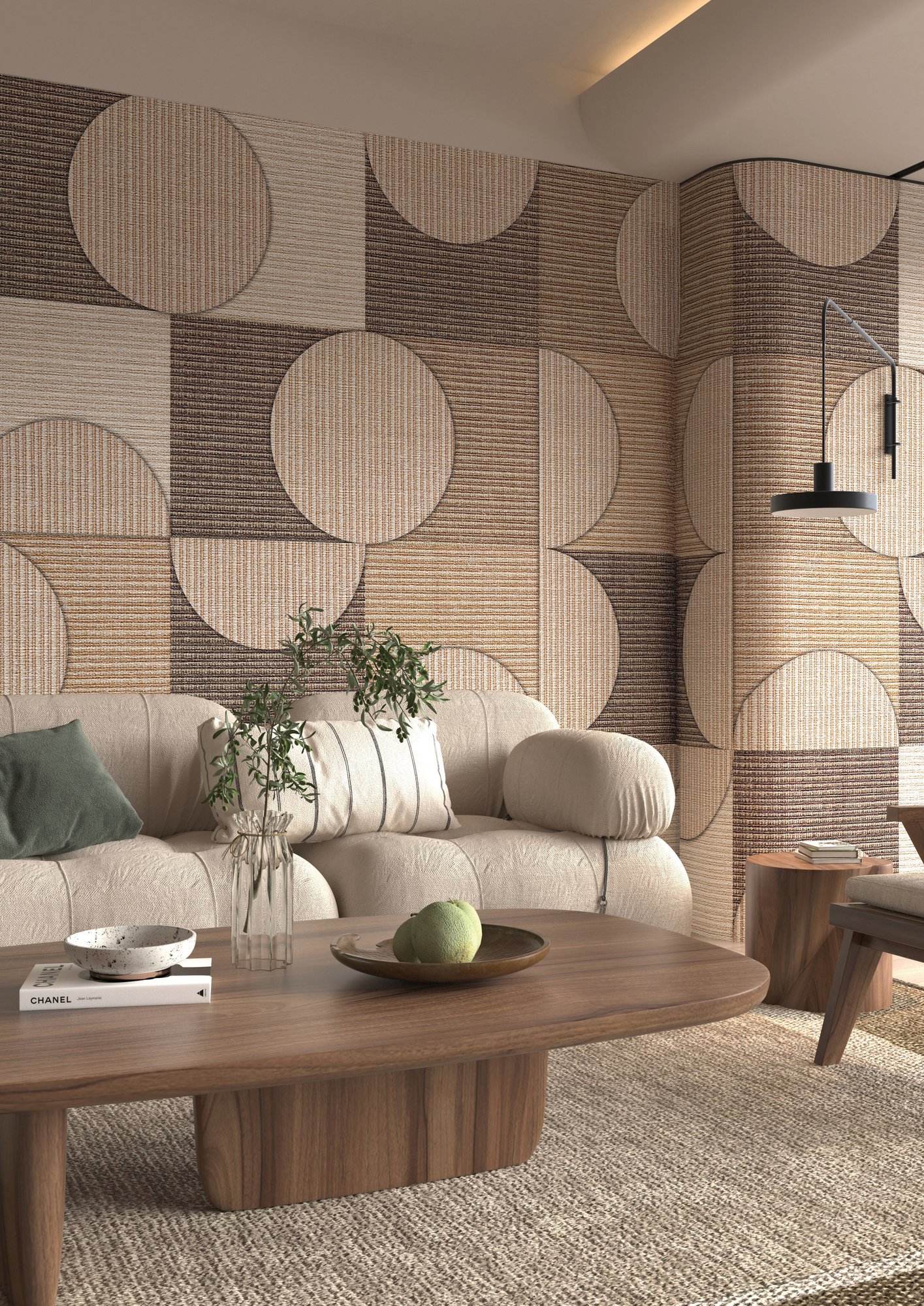
Panel-effect wallcoverings reproduce the look of wainscoting, fluted timber, slatted wood, and moulded panelling in printed and embossed form. They deliver the panelled aesthetic in a day, without carpentry, at a fraction of the cost — and without the permanence, which matters in rentals and HDB flats where fixed joinery complicates future works.
For homeowners weighing panelled looks against simpler finishes, our comparison of wallcovering versus paint is a useful starting point, and our roundup of textured wallpaper design ideas shows what embossed products can achieve.
Speciality Wall Coverings
Beyond the decorative categories, a growing family of wallcoverings is specified for what it does rather than how it looks:
- Acoustic wallcoverings: Sound-absorbing textile and foam-backed products that reduce echo in offices, meeting rooms, and open-plan spaces. Our guide to acoustic wallcoverings for offices covers ratings and placement.
- Magnetic and writable surfaces: Wallcoverings that accept magnets or dry-erase markers, turning meeting-room walls into working surfaces.
- Protective wallcoverings: Heavy-duty impact-resistant sheets and rigid-vinyl systems for hospital corridors, lift lobbies, and back-of-house areas where walls take constant knocks.
- Antimicrobial-treated surfaces: Contract vinyls with treated finishes specified in healthcare and eldercare fit-outs.
Which Type of Wall Covering Should You Choose?
| Type | Best for | Cleanability | Humidity tolerance |
|---|---|---|---|
| Vinyl | High-traffic homes, commercial spaces | Excellent | Excellent |
| Non-woven | Fast installation, future re-decoration | Good | Good |
| Paper | Air-conditioned, low-traffic rooms | Poor | Poor |
| Fabric/textile | Bedrooms, suites, executive spaces | Low | Moderate |
| Grasscloth/natural | Feature walls, studies | Low | Moderate |
| Mural/custom print | Feature walls, branding | Depends on base | Depends on base |
| Panel-effect | Panelled looks without carpentry | Good | Good |
| Speciality | Acoustics, protection, function | Varies | Varies |
As a rule of thumb: choose vinyl where walls must survive traffic and cleaning, non-woven where installation speed and clean removal matter, and reserve paper, textile, and natural products for controlled, lower-traffic rooms. Murals, panel-effects, and speciality products are chosen for a specific job — a feature, a look, or a performance requirement.
A Room-by-Room Shortcut for Singapore Homes
Applying the taxonomy to a typical HDB flat or condo: living and dining areas suit mid-weight vinyls and non-wovens that handle daily life; bedrooms open the door to textiles, naturals, and delicate papers because traffic is low and air-conditioning is common; children’s rooms call for scrubbable vinyl, full stop. Kitchens and bathroom-adjacent walls should stay with vinyl or be left to paint and tile — no wallcovering enjoys direct steam and splash. Hallways and entrances benefit from textured or patterned products that disguise scuffs between repaints of the rest of the home.
Whatever the room, two habits protect the outcome: view a physical sample on the actual wall before committing, and match the adhesive and preparation to the product — a wallcovering is a system, and the layers you cannot see determine how long the one you can see stays perfect.
Final Thoughts
The types of wall coverings available today go far beyond the printed rolls most people picture — from scrubbable contract vinyls to hand-woven grasscloth and sound-absorbing acoustic textiles. Start with how the room is used, narrow to the category that fits, then choose the design. Browse the full wallpaper and wallcovering collection to see every category in one place.
Request free samples from our Singapore showroom to compare wallcovering types side by side in your own lighting.