Wallpaper & Wallcovering
Bathroom Wall Coverings Besides Tiles: What Works in Singapore
Searching for a bathroom wall covering besides tiles usually starts with one of two frustrations: the cost and mess of hacking off old tiles, or the feeling that yet another tiled wall will look like every other bathroom in the block. The good news is that tiles are not the only legitimate option. The important news is that the alternatives are zone-dependent — what works beside the vanity will fail inside the shower.
This guide covers the realistic non-tile options for Singapore bathrooms — waterproof panels, vinyl wallcovering, and moisture-rated wallpaper — and is honest about exactly where each one can and cannot go.
Wet Zones and Dry Zones: The Rule That Decides Everything
Every Singapore bathroom divides into two zones, and every wall covering decision follows from that split:
- Wet zones take direct, sustained water contact — inside the shower enclosure, walls around a bathtub, and any wall regularly hit by spray. In HDB flats these areas sit over the mandatory floor and wall waterproofing membrane, and the surface finish must be fully waterproof too.
- Dry zones get humidity and the occasional splash but no direct water: the wall behind the vanity mirror, above a half-height tiled section, around the WC in a larger bathroom, and powder rooms without a shower at all.
Tiles handle both zones, which is why contractors default to them. The non-tile alternatives each claim a different slice of this map — and being clear-eyed about which slice saves expensive mistakes. As a rule of thumb: if water can hit the wall while someone showers, it is a wet zone, whatever the floor plan says.
Option 1: Waterproof Wall Panels for Wet Zones
Large-format waterproof panels — PVC, SPC-based, and compact laminate systems — are the main tile substitute inside actual wet zones. Panels interlock or seal at the joints, creating a continuous waterproof surface with far fewer grout lines to scrub. Because large panels can often be installed over sound existing tiles, they are popular in resale-flat refreshes where owners want to avoid hacking, dust, and the cost of re-doing waterproofing.
The trade-offs: design ranges are narrower than tile or wallpaper, joints and edge trims must be detailed properly to stay watertight, and quality varies widely between systems. Panels are supplied and installed through renovation contractors rather than through Goodrich Global — our bathroom range covers the wallcovering options below — but for shower enclosures they are the credible non-tile route.
Option 2: Vinyl Wallcovering for Dry Zones
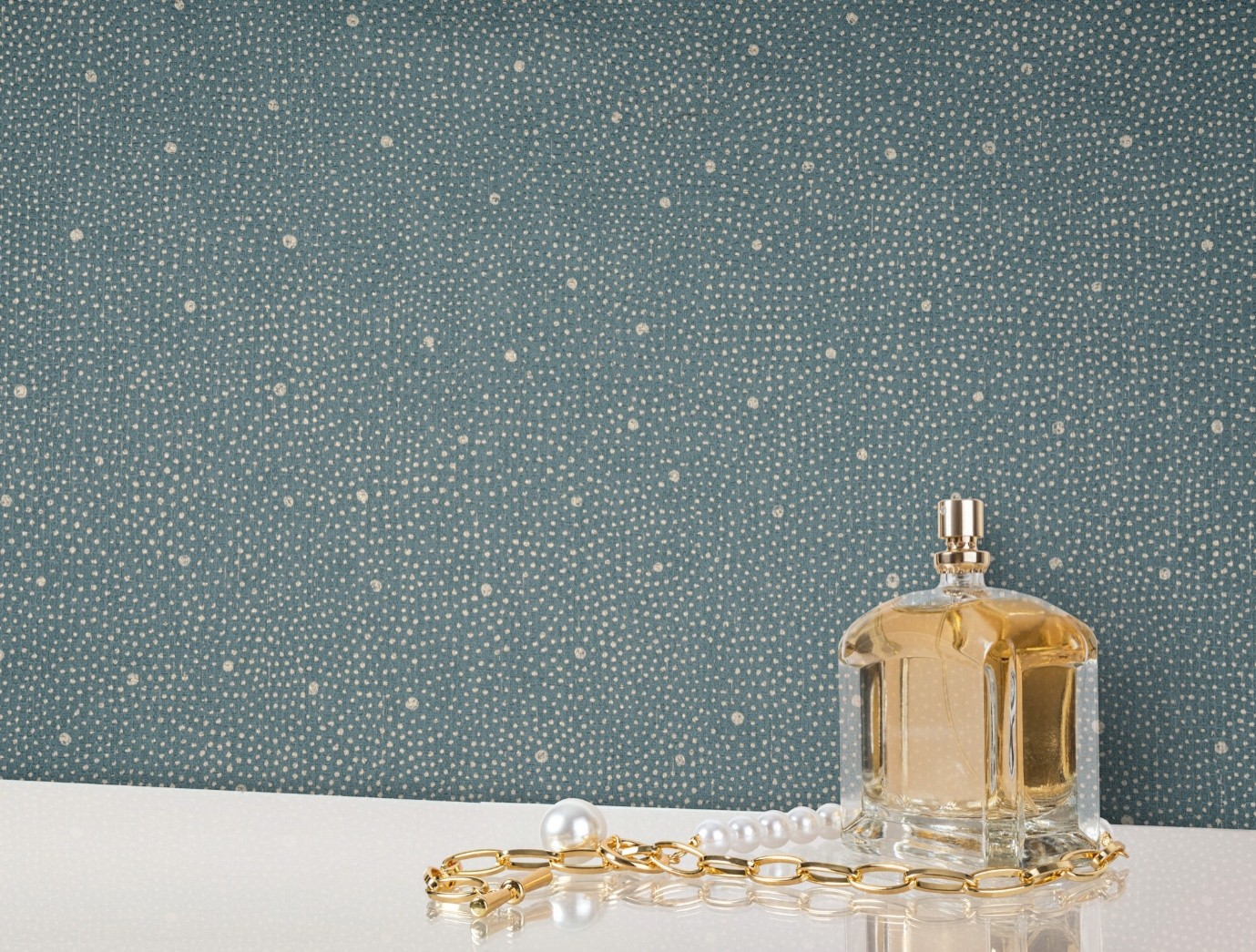
For the dry-zone walls, heavy-duty vinyl wallcovering is the strongest alternative to tiling — and often the better-looking one. Vinyl wallcoverings have a solid polymer face that resists humidity, wipes clean, and tolerates the splash-and-steam conditions of a well-ventilated bathroom. They are specified in hotel washrooms across Asia for exactly this reason.
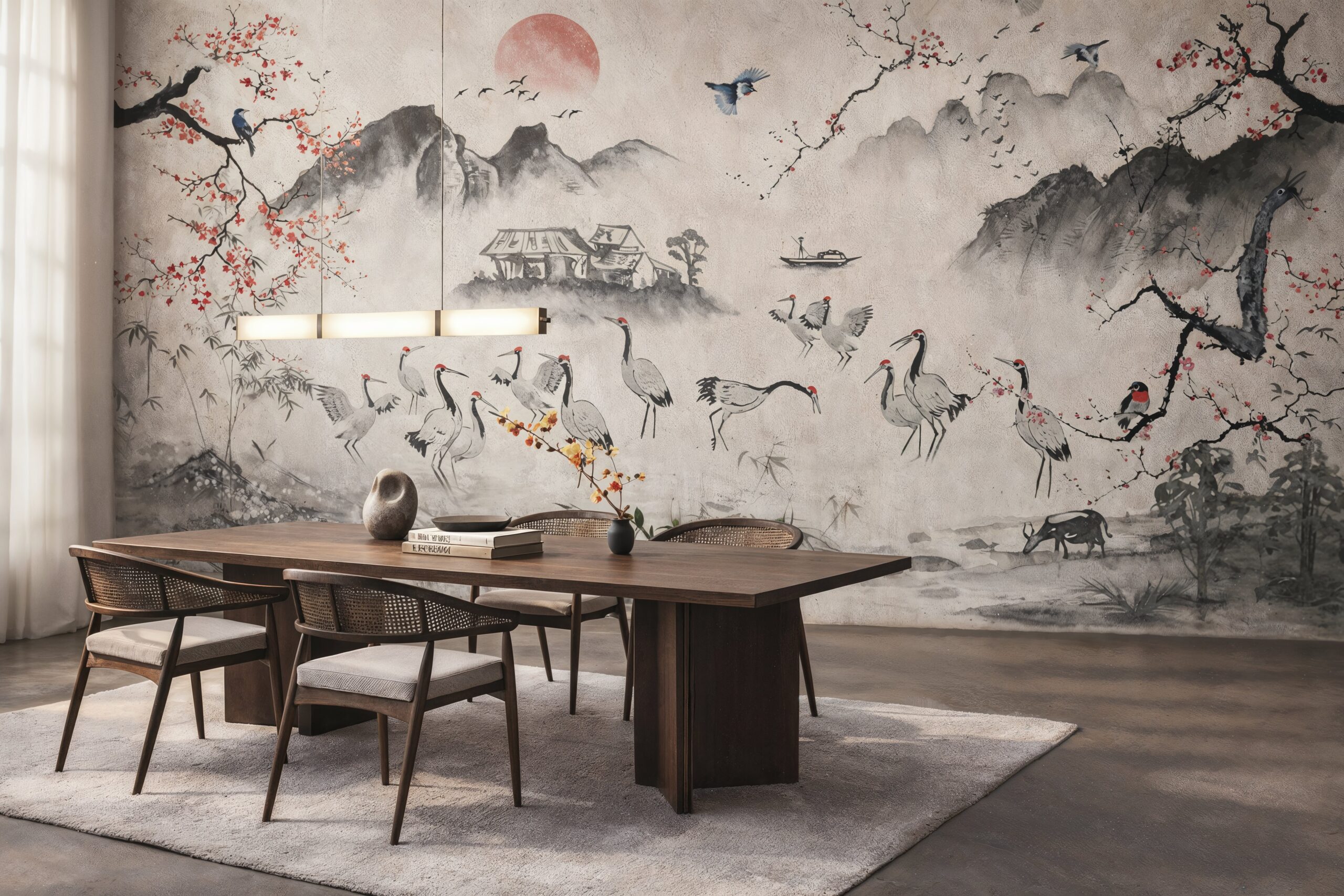
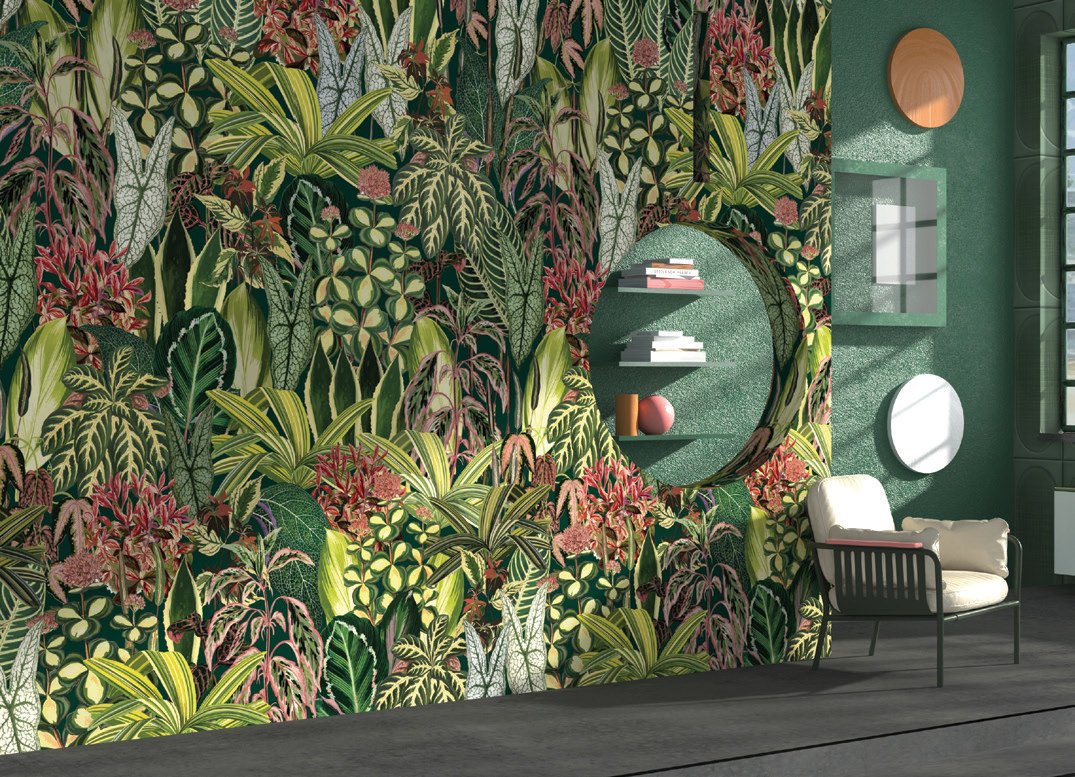
The design advantage is significant. Instead of choosing from tile catalogues, you can run marble-effect, textured, botanical, or panelled designs across the vanity wall — finishes tiles simply do not offer. Installed against a sound, primed wall with the correct adhesive, a quality vinyl from our wallpaper and wallcovering range performs for years in this setting. Our guide to wallpaper for bathrooms in Singapore goes deeper on suitable designs and placement.
Option 3: Moisture-Rated Wallpaper for Powder Rooms and Feature Walls
A step below full vinyl sits moisture-resistant wallpaper: washable non-wovens and lighter vinyls that handle humidity but not repeated soaking. These open up the widest design choice of all, and they are ideal for powder rooms — the guest toilet with no shower is essentially a small dry room, and it is the single best place in the house for a dramatic paper.
Understand the vocabulary before buying: “washable”, “scrubbable”, and “moisture-resistant” describe different performance levels, and none of them means waterproof. Our waterproof wallpaper guide unpacks the ratings, and our toilet wall design ideas show what a well-papered powder room can look like.
What Works Where: A Zone-by-Zone Summary
| Wall covering | Shower / wet zone | Dry zone (vanity, WC wall) | Powder room |
|---|---|---|---|
| Waterproof wall panels | Yes, with sealed joints | Yes, though often unnecessary | Yes, though design range is limited |
| Heavy-duty vinyl wallcovering | No | Yes, with good ventilation | Yes |
| Moisture-rated wallpaper | No | Selectively, away from splash | Yes — the ideal zone |
| Standard paper wallpaper | No | No | Risky; choose a rated product instead |
The Renovation Maths: Why Non-Tile Options Save More Than Material Cost
The appeal of skipping tiles is not just the finish — it is what you avoid. Hacking off existing bathroom tiles in an HDB flat means a demolition permit, days of noise within permitted hours, debris disposal, and then re-screeding and re-waterproofing before a single new tile goes up. In a resale flat where the existing waterproofing is sound, that is a lot of money spent destroying something that still works.
The non-tile routes sidestep most of this. Waterproof panels can often overlay sound existing tiles in the wet zone. Vinyl wallcovering goes up over prepared plaster or skim-coated surfaces in the dry zones with no demolition at all. For owners refreshing a five- or fifteen-year-old bathroom rather than gutting it, the difference in cost, dust, and days without a working bathroom is substantial — and the design outcome is often better, because the budget saved on hacking goes into the finishes you actually see.
One caveat: overlaying is only as good as what sits beneath. Hollow-sounding tiles, active leaks, or failed waterproofing must be fixed properly first — no covering rescues a wet substrate.
The Hybrid Approach Most Designers Actually Use
In practice, the best-looking Singapore bathrooms rarely choose one covering — they zone them. Tiles or waterproof panels handle the shower enclosure; a half-height tiled or panelled section runs behind the WC and basin; and a decorative vinyl wallcovering takes the upper walls and the vanity feature wall. The wet areas get uncompromised waterproofing, the visible walls get real design, and the budget goes further because expensive finishes only cover the walls you actually look at.
Three practical rules make the hybrid work in our climate:
- Ventilation is part of the specification. An exhaust fan or a window that actually gets opened dramatically extends the life of any wallcovering in a bathroom.
- Seal the edges. Where wallcovering meets tile, trim, or ceiling, a neat silicone or trim junction stops steam creeping behind the material.
- Fix the wall first. Wallcovering needs a sound, dry, primed substrate — treat any existing damp or mould before covering it, never over it.
Maintenance is refreshingly simple once the zoning is right. Vinyl wallcoverings in dry zones need only an occasional wipe with a damp cloth and mild detergent; avoid abrasive cleaners, which dull the surface. Check the sealed edges once a year — a five-minute re-run of silicone at a lifting corner prevents the slow steam ingress that actually kills bathroom wallcoverings.
Final Thoughts
You are not obliged to tile every bathroom wall. Keep genuine waterproofing — tiles or sealed panels — in the wet zones, then let vinyl and moisture-rated wallcoverings do what tiles cannot: bring real pattern, texture, and warmth to the walls you see every day. Zone the materials honestly and the result outlasts and outshines a wall-to-wall tiled box.
Book an appointment with our consultants to review vinyl and moisture-rated wallcoverings suited to your bathroom’s dry zones.