Carpet & Flooring
HDB Vinyl Strip Flooring with UPVC Skirting: What It Is and Upgrades
Somewhere in every BTO application journey, buyers meet a line item that reads “vinyl strip flooring with laminated UPVC skirting”. It appears under HDB’s Optional Component Scheme (OCS), sitting alongside internal doors and sanitary fittings, and it forces an early decision: tick the box and let HDB lay the floor before you collect your keys, or opt out and arrange flooring yourself during renovation.
Neither answer is wrong, but the two paths lead to very different floors, budgets and renovation timelines. This guide explains exactly what the HDB package includes, where it serves buyers well, where it falls short, and how the upgrade paths work — whether you upgrade at renovation or several years down the line.
What the HDB Package Actually Includes
Opting in gets you a functional, no-frills resilient floor. HDB’s contractors lay vinyl strips — plank-format pieces, typically in a small palette of standard wood tones such as light oak, warm beige and mid-brown — across the living room, dining area and bedrooms. Kitchens, bathrooms and service yards are excluded, as those areas come with ceramic floor tiles as standard.
The skirting is laminated UPVC: a rigid plastic profile in a finish matched loosely to the vinyl, fixed along the wall base to cover the expansion gap and protect the wall from mop splashes. It is a single standard profile — you do not choose its height, shape or colour beyond the default pairing.
Crucially, everything is installed before key collection. You walk into a flat with finished floors on day one, and the cost is folded into your flat purchase rather than your renovation loan. For a four-room flat the package typically works out to a few thousand dollars — noticeably cheaper than any retail flooring quote for the same area.
The Case For, and the Limits
The package’s strengths are genuine. It is move-in ready, which matters enormously if you are renting while waiting for your flat or want to defer a full renovation. It removes one trade from your renovation schedule entirely — no flooring quotes, no laying time, no coordination between the flooring installer and your carpenter. And because HDB procures at scale, the per-square-metre cost is hard for any retail option to beat.
The limits are just as real. OCS vinyl strips are entry-level products with a thin wear layer — generally at the lower end of the 0.2–0.3mm band, versus the 0.3–0.55mm found on retail luxury vinyl planks. A thinner wear layer means scratches, scuffs and traffic lanes show sooner, particularly in households with pets, children or trolleyed furniture. Design choice is minimal: a handful of safe wood tones, one plank size, straight lay only. And the UPVC skirting, while tidy, is a builder-grade profile that seldom matches the joinery-led interiors most owners eventually commission.
Take the Package or Opt Out?
The decision usually turns on three questions. First, how soon will you renovate? If you plan a full interior design project immediately after key collection, opting out avoids paying for a floor you may cover or remove. If you intend to live in the flat lightly furnished for a year or two before renovating, the package buys you a comfortable interim floor for very little.
Second, how demanding is your household? A couple working long hours will find the standard vinyl perfectly adequate for years. A family with a large dog and young children will wear through an entry-level surface visibly faster, and may be better served going straight to a thicker retail plank.
Third, does design matter to you now? Herringbone lays, wide planks, stone-look tiles and coordinated skirting are all retail-only territory. Our BTO flooring guide walks through this decision in the context of the full renovation budget, and the broader HDB flooring options guide compares vinyl against tiles and laminate for resale flats too.
Upgrade Paths: What Retail Luxury Vinyl Adds
Stepping up from the OCS package to retail luxury vinyl is less about changing material and more about changing grade. The differences cluster in four areas.
Wear layer and construction
Retail LVP for Singapore homes typically carries a 0.3mm wear layer for residential use and 0.55mm for commercial-grade durability, over a rigid SPC or flexible LVT core. That translates directly into scratch resistance and lifespan: a 0.55mm plank in a family home can look presentable for well over a decade. Ceramic-bead and PU surface coatings also improve stain resistance against the kopi and curry spills of daily life.
Formats and design range
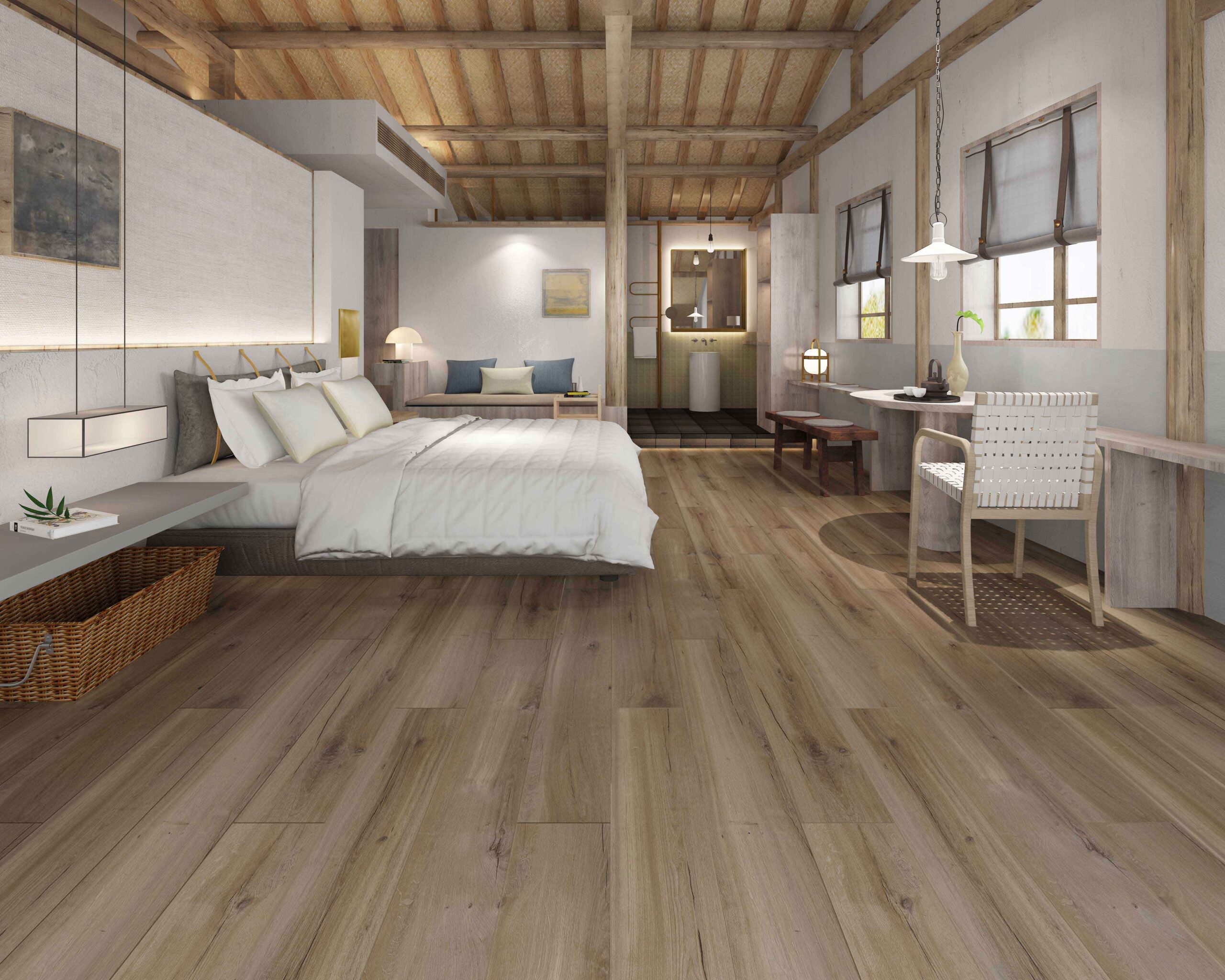
Retail collections run from 4-inch strips to 9-inch wide planks and large stone-format tiles, in hundreds of decors with registered embossing that follows the printed grain. Herringbone and chevron formats — impossible under OCS — are now among the most requested looks in BTO renovations. Our vinyl plank flooring guide covers the format and specification choices in detail.
Skirting options
Upgrading the floor also opens up the skirting. Beyond the standard UPVC profile, retail installations can use taller profiles, colour-matched vinyl skirting, aluminium trims or carpentry-integrated bases that sit flush with wardrobes and feature walls. The vinyl skirting guide compares the profiles, heights and price bands available.
Indicative cost bands
| Option | Typical installed cost (S$ per sq ft) | Wear layer |
|---|---|---|
| HDB OCS vinyl strip package | Effectively S$3–S$4 equivalent | Entry level |
| Retail LVT/SPC, residential grade | S$5–S$8 | 0.3mm |
| Retail LVT/SPC, heavy-duty grade | S$7–S$10 | 0.55mm |
| Herringbone or premium formats | S$8–S$12 | 0.3–0.55mm |
Upgrading Later: Overlay or Removal?
Many owners take the OCS package, live with it for a few years, then upgrade. At that point there are two routes. Overlay — laying new vinyl directly over the existing floor — is possible where the old vinyl is firmly bonded, flat and dry, and it keeps the job fast and dust-free. The floor level rises only by the new plank’s thickness, usually 4–5mm, which door clearances normally absorb.
Removal is the better call where the original vinyl has lifted, telegraphed subfloor unevenness, or suffered water damage near service areas. Stripping glued-down vinyl and re-preparing the screed adds roughly S$1–S$2 per square foot plus disposal, but gives the new floor a clean substrate and full manufacturer warranty cover. A site assessment settles the question quickly — installers check for hollow spots, moisture and level before recommending either route.
Final Thoughts
HDB’s vinyl strip flooring with laminated UPVC skirting is honest value: a serviceable, move-in-ready floor at a price retail cannot match. Its trade-offs — thin wear layer, minimal design choice, one skirting profile — only matter if your household or your design ambitions outgrow it. If they do, retail luxury vinyl offers a clear upgrade ladder in durability, format and finish, either at renovation or as an overlay years later. The sensible first step is to see the difference in person: hold a 0.55mm commercial-grade plank next to a standard strip and the gap explains itself.
Request free vinyl flooring samples and compare wear layers, formats and skirting options against the HDB standard before you decide.