Carpet & Flooring
HDB Flooring Options: Best Choices for Every Room
Flooring Considerations Unique to HDB Flats
HDB flats account for over 80% of Singapore’s residential housing, and each flat type — from 2-room Flexi to executive — presents distinct flooring challenges. Understanding these factors helps you make a smarter choice.
Concrete screed base: New BTO flats come with bare concrete screed in bedrooms and living areas, while bathrooms and kitchens have basic tiles. Resale flats may have existing tiles, parquet or vinyl that you can overlay or remove.
HDB renovation guidelines: Tile hacking requires an HDB-approved contractor and must comply with noise regulations (no renovation noise on Sundays and public holidays, restricted hours on weekdays and Saturdays). Overlay flooring avoids most of these restrictions.
Humidity and ventilation: Many HDB units rely on natural ventilation for part of the day, exposing floors to Singapore’s 70–90% relative humidity. Flooring materials must handle this without warping, buckling or developing mould.
Flooring Options Compared
Here is a practical comparison of the most common HDB flooring options, rated for Singapore conditions:
| Flooring Type | Water Resistance | Durability | Cost (per sq ft) | Best Rooms |
|---|---|---|---|---|
| SPC Vinyl (LVT) | Excellent | 10–20 years | $3–$8 | All rooms including kitchen |
| Laminate | Poor | 8–15 years | $3–$8 | Bedrooms, living room |
| Engineered Hardwood | Low | 20–30 years | $6–$18 | Living room, bedrooms |
| Ceramic/Porcelain Tiles | Excellent | 20+ years | $4–$12 | Bathrooms, kitchen, service yard |
| Polished Concrete | Good | 20+ years | $5–$10 | Industrial-style living areas |
Room-by-Room Flooring Recommendations
Living Room and Dining Area
This is the highest-traffic zone in any HDB flat and the space guests see first. Prioritise durability, ease of cleaning and visual appeal.
SPC vinyl flooring is the most versatile choice — it handles spills, foot traffic and furniture movement with ease. For a more premium feel, engineered hardwood in oak or walnut adds warmth and character. If you choose laminate, select AC3 or higher to withstand daily wear.
Bedrooms
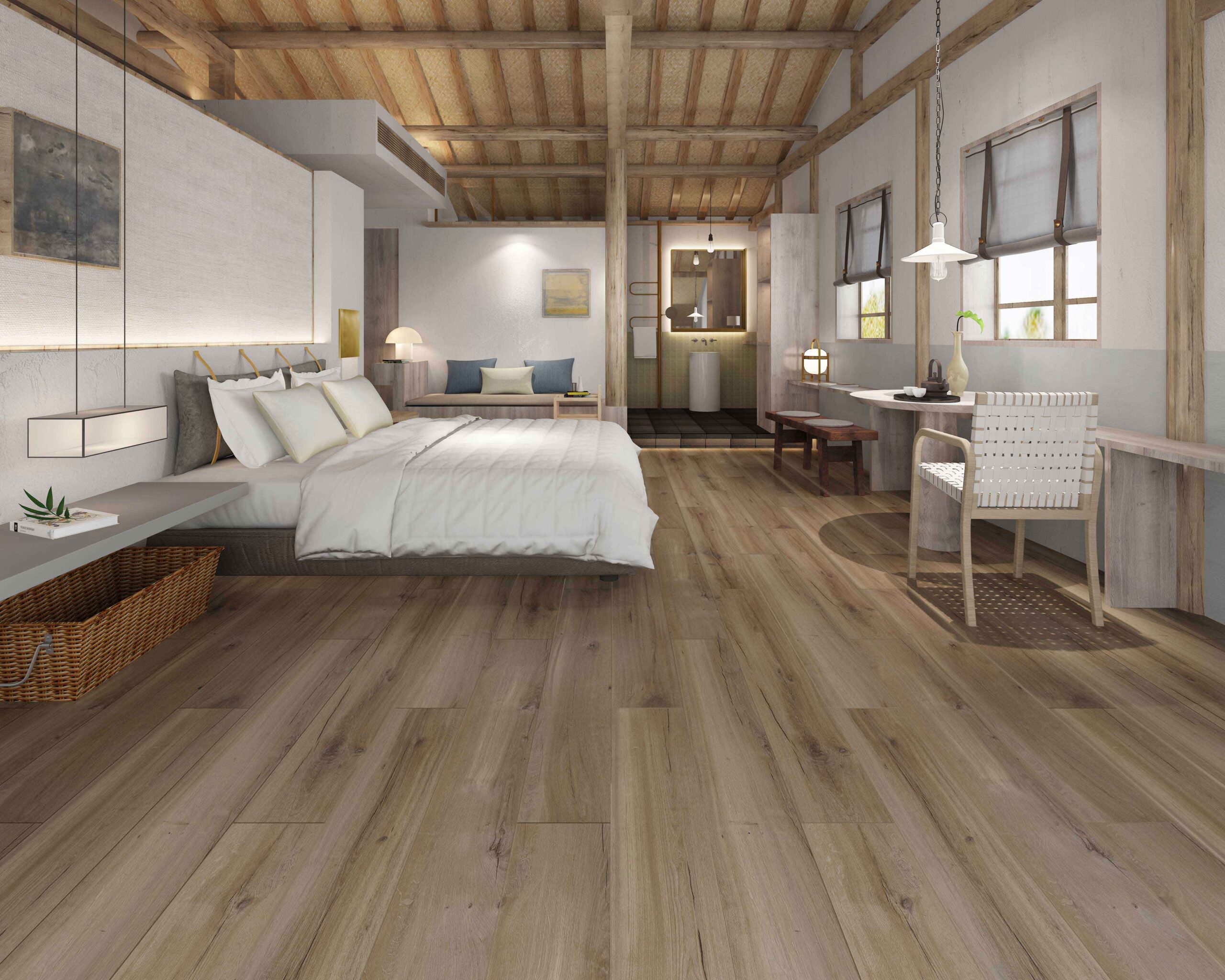
Bedrooms see less traffic but benefit from comfortable, quiet flooring. Vinyl, laminate and engineered wood all perform well here. Many homeowners prefer the warmth of wood-look materials underfoot, especially for master bedrooms.
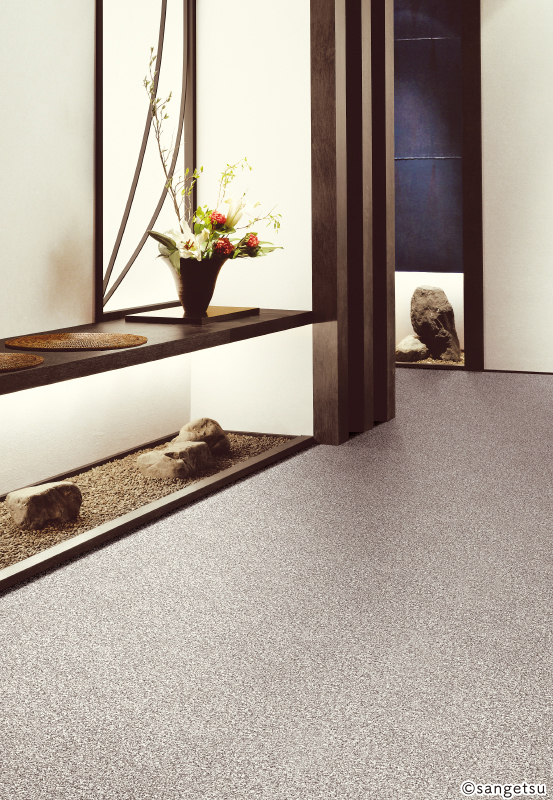
Carpet tiles are another option worth considering for bedrooms — they add softness and sound insulation, which can be valuable in HDB flats where noise travels between units.
Kitchen
Kitchens face water splashes, oil splatters and heavy foot traffic. Water resistance is non-negotiable. SPC vinyl handles all of this comfortably and can be installed seamlessly from the living area into the kitchen for a continuous look.
Ceramic tiles remain a reliable kitchen flooring choice, but they require hacking to install and involve grout maintenance over time.
Bathrooms and Toilets
Bathrooms need fully waterproof, slip-resistant flooring. Ceramic or porcelain tiles with a matte or textured finish remain the standard. Vinyl sheet flooring is occasionally used in bathrooms but requires careful sealing at edges.
Most HDB overlay projects retain the original bathroom tiles and overlay only the dry areas.
Service Yard and Utility Area
These spaces deal with water from the washing machine, drying laundry and cleaning activities. Tiles or SPC vinyl with sealed edges are the most practical options. Avoid laminate and hardwood in these areas entirely.
Overlay vs Hacking: What Makes Sense for Your HDB?
The choice between overlaying and hacking depends on the condition of your existing floor and your renovation goals.
Overlay is ideal when:
- Existing tiles are firmly bonded and level
- You want to minimise renovation time, noise and cost
- You are doing a partial renovation and living in the flat during works
- Door clearance allows for 4–12 mm of additional floor height
Hacking may be necessary when:
- Existing tiles are cracked, loose or popping up
- You need to re-do waterproofing in bathrooms
- You want to change the floor level or install in-floor heating
- The existing floor has significant level variations
For resale HDB flats with dated homogeneous tiles in good condition, overlaying with SPC vinyl is the most cost-effective and time-efficient upgrade. You save $2,000 to $4,500 on hacking costs alone.
A practical middle ground is partial hacking — removing only damaged or loose tiles, levelling those areas with patching compound and overlaying the entire floor with vinyl. This addresses structural issues without the full cost and disruption of complete tile removal.
Budget Planning for HDB Flooring
Flooring typically represents 10% to 20% of a total HDB renovation budget. Here is what to allocate for common flat types:
| Flat Type | Approx. Floor Area | Vinyl Overlay | Laminate Overlay | Engineered Wood |
|---|---|---|---|---|
| 3-Room | 650 sq ft | $3,000–$7,000 | $3,000–$6,500 | $5,500–$14,000 |
| 4-Room | 900 sq ft | $4,000–$10,000 | $4,000–$9,000 | $7,500–$19,000 |
| 5-Room | 1,100 sq ft | $5,000–$12,000 | $5,000–$11,000 | $9,000–$23,000 |
| Executive | 1,400 sq ft | $6,500–$15,000 | $6,500–$14,000 | $12,000–$30,000 |
These figures include materials and installation for dry areas only (living room, dining, bedrooms, hallway). Bathroom and kitchen tiling are separate line items.
Flooring Maintenance Tips for HDB Living
HDB flats present specific maintenance challenges that affect flooring longevity. Following these practices helps protect your investment:
Managing Humidity
Many HDB units rely on natural ventilation during the day, exposing floors to high humidity. If you have wood-based flooring (engineered hardwood or laminate), running a dehumidifier or air-conditioning for a few hours daily helps regulate moisture levels. Vinyl flooring is less affected but benefits from consistent conditions too.
Dealing with Water Ingress
Wet laundry, overflowing washing machines and tracked-in rainwater are common in HDB flats. Keep transition strips properly sealed between dry and wet zones. Place absorbent mats at bathroom doorways and near the service yard entrance to catch moisture before it reaches the main floor.
Furniture Protection
Dining chairs are the biggest culprit for floor scratches in HDB flats — they slide repeatedly over a small area during every meal. Attach felt pads to all chair and table legs and replace them every six months as they compress and pick up grit. For heavy furniture like sofas and cabinets, use wide rubber castor cups to distribute the weight.
Cleaning Best Practices
For vinyl and laminate, a damp mop with a pH-neutral cleaner is all you need. Avoid flooding the floor with water, which can seep into joints and edges. For engineered hardwood, use a wood-specific cleaner and wring the mop until it is barely damp. Never use bleach, ammonia or abrasive pads on any flooring type.
Establish a regular cleaning routine — sweeping or vacuuming two to three times per week removes grit that can micro-scratch the surface over time. For homes with pets, daily sweeping in high-traffic areas prevents hair and dander build-up in floor joints.
Making the Right Choice for Your HDB Flat
For most HDB homeowners, SPC vinyl flooring offers the best balance of performance, aesthetics and value. It works in every dry room, handles Singapore’s humidity without issue and installs quickly over existing floors.
If your renovation budget allows and you prioritise natural materials, engineered hardwood in the living area and bedrooms — paired with vinyl in the kitchen — gives you the best of both worlds.
Goodrich Global’s luxury vinyl and flooring range includes options designed specifically for Singapore’s climate and HDB living. Book an appointment with our design consultants to find the right fit for your flat.