Carpet & Flooring
Exhibition Carpet in Singapore: Tiles, Rolls and Specification
Exhibition carpet has an unusual brief. It must look immaculate on opening day, survive thousands of visitors in a few weeks or months, go down fast inside a fixed build window, and then either come up cleanly or stay in service for the next show. Whether the project is a national exhibition, a museum gallery, a trade show stand or a brand experience, the carpet sets the tone for every visitor from the first step inside.
This guide covers how organisers, exhibition designers and venue teams in Singapore choose exhibition carpet: the formats available, the performance questions to ask, fire documentation, colour and design, and how to plan installation and reuse.
The short version: for exhibitions that run for weeks or months, or that will be reused, commercial carpet tiles are usually the best choice. They install quickly, can be replaced one tile at a time and can be lifted and relaid. For very short events, rolled exhibition carpet is common. Whatever the format, ask for a fire test report early, because venues and organisers will ask for it.
What Makes Exhibition Carpet Different
An office carpet is designed to be walked on by the same people for ten years or more. Exhibition carpet faces a different pattern of use:
- Peaked, concentrated footfall. Crowds arrive in waves and follow the same routes past popular exhibits, so wear is uneven and intense.
- Fixed build and dismantle windows. Venue hire is expensive, so the floor has to go down fast and come up fast.
- Visible to cameras and media. Exhibitions are photographed constantly, so seams, shading and stains show up in every image.
- Heavy loads and rolling equipment. Plinths, display cases, trolleys and lifts all cross the floor during set-up.
- Acoustic comfort. Busy halls with hard floors become loud quickly. Carpet absorbs footfall noise and helps audio-visual content stay clear.
Carpet Tiles vs Rolled Exhibition Carpet
There are two main formats, and the right one depends on how long the show runs and whether the floor will be used again.
Carpet tiles
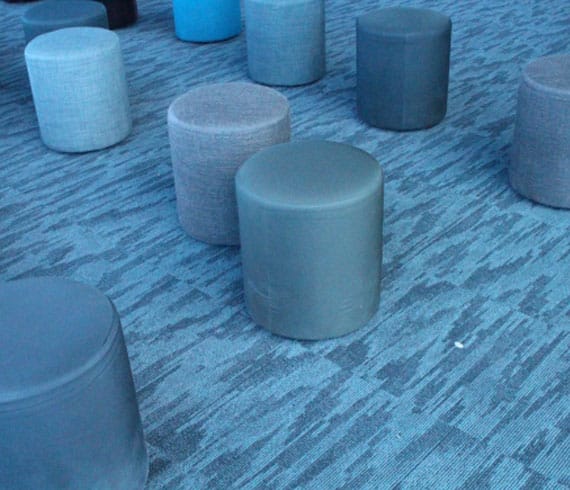
Commercial carpet tiles, usually 50 by 50 centimetres, are the most flexible option for exhibitions that run for more than a few days. Their advantages:
- Fast, modular installation over large areas, working around columns, ramps and built structures.
- Spot replacement. If a tile is stained or worn during the run, it can be swapped in minutes without disturbing the rest of the floor.
- Zoning and wayfinding. Different colours can mark routes, zones and feature areas without custom cutting.
- Reuse. Tiles laid with a releasable tackifier can be lifted, cleaned and relaid for the next exhibition, which cuts waste and cost over several shows.
Goodrich supplied Goodfloor carpet in tile format for The Future of Us exhibition at Gardens by the Bay. The tiles allowed rapid installation to suit a fixed build programme and let individual tiles be replaced quickly if wear or soiling occurred during the busy public run.
Rolled exhibition carpet
Rolled exhibition carpet, often a lightweight needle-punch construction, is widely used for trade fairs and events that last a few days. It covers large aisles quickly and comes in a broad range of colours. It is less suited to longer runs because worn areas cannot easily be replaced, and lighter constructions are generally not designed to be lifted and reused.
For permanent or semi-permanent event spaces such as ballrooms and function halls, a heavier installed carpet is the better choice. Our guide to carpet for event halls and ballrooms covers that brief.
Performance Questions to Ask
Before choosing a product, ask the supplier for data on each of these:
- Use classification. Contract carpets are classified for traffic intensity under standards such as ISO 10874 and EN 1307. Choose a heavy-contract rating for main routes and entrances.
- Construction and pile. Low, dense loop or cut-and-loop piles resist crushing and keep their appearance under rolling loads better than high, soft piles.
- Soiling and cleanability. Solution-dyed yarns and mid-tone or patterned designs hide soiling between cleans and tolerate spot cleaning during the run.
- Backing stability. A stable backing keeps tiles flat and square, which matters when tiles will be lifted and relaid.
- Emissions. Enclosed halls with many visitors benefit from low-emission carpet with recognised certification, such as Green Label Plus or a Singapore Green Building Product listing.
Our commercial carpet range includes contract-grade tiles suited to exhibitions, galleries and public venues, such as Goodfloor Galaxy and Goodfloor Reconnect.
Fire Safety Documentation
Fire safety is the question that most often delays exhibition builds. Exhibition venues and organisers in Singapore typically require floor coverings and other build materials to be fire-retardant, with supporting test certificates submitted before the build. Requirements vary by venue and are shaped by the SCDF Fire Code, so check the exhibitor manual early.
Ask the supplier for a current fire test report for the exact product, not a range brochure. Common floor-covering tests include ASTM E648 (critical radiant flux) and the European EN 13501-1 classification, where a rating such as Bfl-s1 is often requested for public spaces. Having the report ready at the design stage avoids last-minute product swaps.
Colour, Design and Wayfinding
Carpet is one of the largest visual surfaces in an exhibition, so it should support the story rather than compete with it:
- Neutral fields, bold accents. A calm base colour lets exhibits stand out, with stronger colours used to signal zones, entrances or feature areas.
- Mid-tones over extremes. Very dark and very light carpets both show dust, fluff and footprints. Mid-tones and subtle textures look cleaner for longer.
- Directional cues. Lines or colour changes in the carpet can guide visitors along the intended route without extra signage.
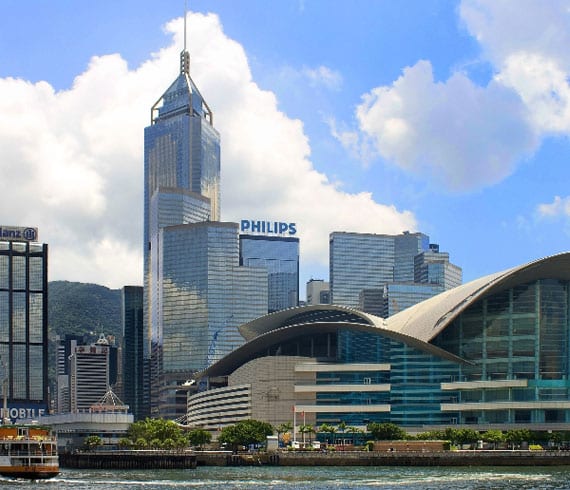
- Coordinate with walls. Exhibition walls take heavy contact during build and dismantle. Commercial wallcoverings with a wipeable face, like the TZA234 wallcovering Goodrich supplied for the Hong Kong Convention and Exhibition Centre, keep walls presentable between shows.
Installation and Programme Planning
Most exhibition carpet problems come from the programme, not the product. Plan for these:
- Lead time. Stock colours can be available quickly, but large areas, specific colours or custom designs need more time. See our guide to material lead times and logistics.
- Sequence. Lay carpet after heavy construction and before final fit-out where possible, and protect it with a temporary covering while stands and displays are built.
- Subfloor. Check that the venue floor is clean, dry and level. Bumps and debris telegraph through thin carpets and can create trip hazards.
- Edges and transitions. Use proper edge trims at ramps and changes in level, so carpet edges do not lift under foot traffic.
- Attic stock. Keep spare tiles from the same production batch on site to replace damaged tiles with an exact colour match during the run.
Where an exhibition needs a hard floor in some zones, such as food areas or hands-on displays, loose lay vinyl can be installed and lifted with similar speed.
Reuse and Sustainability
Single-use exhibition carpet is a significant source of event waste. Organisers looking to reduce their footprint can:
- Choose carpet tiles laid with releasable adhesive, so they can be lifted, cleaned and reused for the next show or for back-of-house areas.
- Specify products with recycled content and an Environmental Product Declaration where available.
- Plan colours that can be reused across multiple events rather than a one-off shade for a single show.
Carpet tiles also help with sound. Our guide to acoustic carpet tiles explains how they reduce noise in busy, hard-surfaced rooms.
Exhibition Projects by Goodrich Global
Goodrich has supplied flooring and wall finishes for exhibition and event settings across the region, including carpet tiles for The Future of Us at Gardens by the Bay, contract wallcovering for the Hong Kong Convention and Exhibition Centre, and Goodwall and BN wallcoverings for the HDB Habitat Forum. For permanent galleries, see our museum and gallery interior materials guide.
Planning an exhibition or event floor? Request a quotation today.
Frequently Asked Questions
What is the best carpet for an exhibition?
For exhibitions running more than a few days, contract-grade carpet tiles are usually best. They install quickly, can be replaced one tile at a time if stained or worn, and can be lifted and reused. For very short trade fairs, rolled needle-punch exhibition carpet is common because it covers large aisles quickly.
Can exhibition carpet tiles be reused?
Yes, if they are laid with a releasable tackifier rather than permanent adhesive. Tiles can then be lifted, cleaned and relaid for later exhibitions or moved to back-of-house areas. Keeping colours consistent across shows makes reuse easier and reduces event waste.
Does exhibition carpet need to be fire-rated in Singapore?
Exhibition venues and organisers in Singapore typically require floor coverings and build materials to be fire-retardant, with test certificates submitted before the build. Requirements vary by venue and follow the SCDF Fire Code, so check the exhibitor manual and request the product’s fire test report early.
What colour carpet works best for exhibitions?
Mid-tone colours and subtle textures hide dust and footprints better than very dark or very light carpet. Many exhibitions use a neutral base colour so exhibits stand out, with accent colours to mark zones, entrances and visitor routes.
How far ahead should exhibition carpet be ordered?
Stock colours can often be supplied quickly, but large areas, specific colours and custom designs need longer lead times. Confirm quantities, colours and fire documentation at the design stage and allow spare tiles from the same batch for replacements during the run.
Sources
- Singapore Civil Defence Force (SCDF), Fire Code: Code of Practice for Fire Precautions in Buildings.
- ISO 10874: Resilient, textile and laminate floor coverings, Classification.
- EN 1307: Textile floor coverings, Classification.
- ASTM E648: Standard Test Method for Critical Radiant Flux of Floor-Covering Systems Using a Radiant Heat Energy Source.
- EN 13501-1: Fire classification of construction products and building elements.
- Carpet and Rug Institute, Green Label Plus programme.
- Singapore Green Building Council, Singapore Green Building Product certification scheme.