Carpet & Flooring
Limestone Flooring: Softer Stone, Real Costs and Look Alternatives
Limestone flooring is having a quiet moment in Singapore. As limewash paint, plaster-effect walls and the organic-modern palette take over renovation moodboards, the pale, chalky, slightly cloudy surface of a honed limestone floor has become the flooring designers reach for to complete the look. It is travertine’s close cousin — softer in colour, calmer in pattern — and it photographs beautifully.
It is also one of the most demanding stones you can put on a floor. Before you commit a landed home or penthouse budget to it, it is worth understanding exactly what limestone asks of its owner, what it costs to buy and keep in Singapore, and how close the best limestone-look alternatives now get to the real thing.
Goodrich Global does not supply natural limestone. Our range covers stone-look luxury vinyl that delivers the pale limestone and travertine aesthetic without sealing cycles, etching or acid sensitivity.
Why Limestone Is Suddenly Everywhere on Moodboards
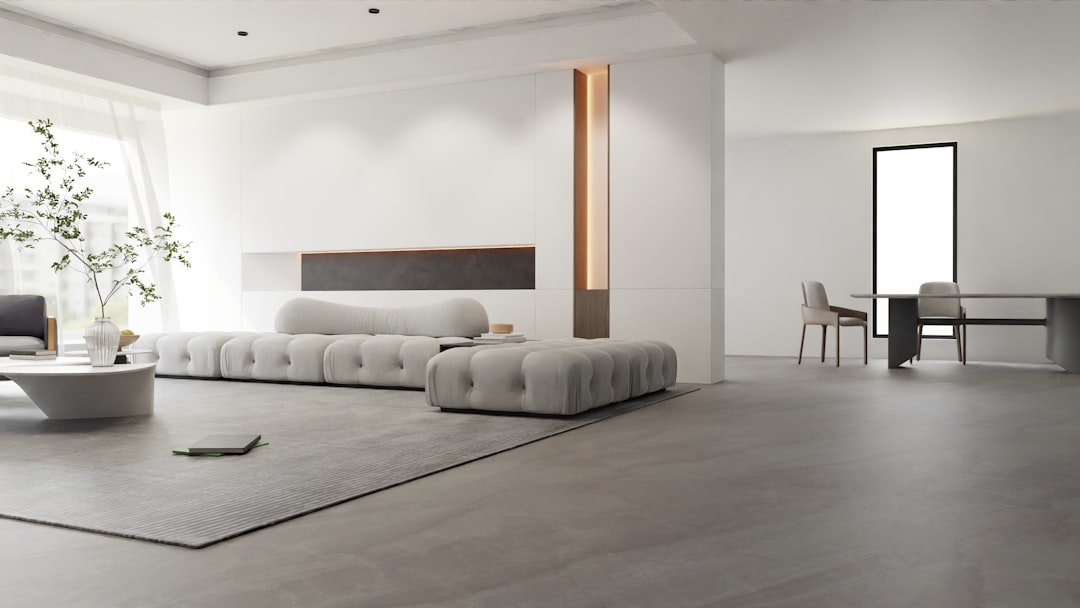
Limestone’s appeal is tonal. Where granite is speckled and marble is veined, limestone reads as a soft, near-uniform field of bone, sand, greige or pale grey, often with faint fossil traces and gentle clouding. That quietness is exactly what the current organic-modern and wabi-sabi direction wants: floors that behave like a backdrop rather than a statement.
It pairs naturally with limewashed walls, microcement, linen upholstery and light timber — the whole European farmhouse-meets-gallery look. In Singapore you will see it in luxury landed projects, boutique hotel spas and high-end retail fit-outs, where the muted mineral floor sets a hushed, expensive tone that polished marble cannot quite match.
The Honest Reality: Limestone Is a Soft, Porous Stone
Here is the part the moodboards leave out. Limestone is a sedimentary stone, formed from compacted calcium carbonate, and it sits at roughly 3 to 4 on the Mohs hardness scale — meaningfully softer than granite and softer than most marbles. On a floor, that softness shows up in three ways.
It scratches and wears
Grit tracked in on shoes acts like sandpaper on limestone. Entrances, kitchens and corridors develop traffic paths and fine scratching within a few years, and furniture dragged without felt pads leaves marks immediately. Honed finishes hide this better than anything polished, but the stone will visibly age.
It etches from acids
Because it is calcium carbonate, limestone reacts chemically with anything acidic. A squeeze of lime juice, a splash of vinegar, a wine spill left overnight, or a general-purpose bathroom cleaner will leave a dull etched mark that no amount of wiping removes — only professional re-honing does. In a Singapore kitchen or dining area, that is a constant, low-level anxiety.
It stains readily
Limestone is porous, so oil, coffee, curry and rust from metal furniture feet soak in quickly. Sealing slows absorption but does not stop it, and the sealer itself wears off. Expect to re-seal high-use areas every 12 to 24 months in a humid climate, and to keep spills to a strict wipe-immediately discipline in between.
What Limestone Flooring Costs in Singapore
Limestone is imported — typically from Portugal, Spain, Turkey or France — and pricing reflects that. Indicative bands look like this:
| Item | Typical range (S$ per sq ft) | Notes |
|---|---|---|
| Limestone tiles, supply only | S$12–S$25 | Turkish and Spanish stones at the lower end; French limestones higher |
| Premium slabs and large formats | S$25–S$45+ | Consistent pale lots and 20mm slabs climb quickly |
| Installation (wet works) | S$7–S$14 | Screed, adhesive, on-site honing and initial sealing |
| Periodic re-sealing | S$1–S$3 per cycle | Every 1–2 years; more often in kitchens and spas |
Weight matters too. Like granite, a stone build-up adds serious dead load and floor height, so limestone over existing tiles is rarely feasible — budget for hacking, screeding and a multi-week wet-works programme. The whole-life cost, once re-sealing and eventual re-honing are counted, comfortably exceeds the invoice price. Our granite flooring guide covers the same structural arithmetic for Singapore’s hardest-wearing stone.
Tumbled, Honed or Brushed: Choosing a Finish
Finish changes both the look and the maintenance load. A honed finish — smooth but matt — is the default for interiors and the closest match to the current aesthetic; it hides light scratching far better than any polish. A tumbled finish softens edges and adds a worn, rustic character suited to spas, courtyards and Mediterranean-leaning schemes, though its open texture traps dirt and demands more scrubbing. A brushed finish sits between the two, with a gentle undulating surface that adds slip resistance around wet areas.
Polished limestone exists but is rarely wise in Singapore: the shine wears unevenly under traffic, shows every etch mark, and turns dangerously slick when wet. If you want a reflective pale stone floor, marble is the better-behaved candidate — our marble flooring guide sets out those trade-offs.
The Limestone-Look Vinyl Alternative
For most HDB, condo and even landed interiors, the practical route to the limestone look is now resilient flooring. Limestone- and travertine-look luxury vinyl is produced from high-resolution scans of real honed slabs, with matt, low-sheen surfaces and subtle mineral texturing that reads convincingly as soft stone at standing height. Large-format tiles with fine grout-line detail keep the rhythm of a genuine stone layout.
The living experience is where the comparison tilts decisively. Vinyl does not etch — lime juice, wine and bathroom cleaners wipe off without a trace — and it never needs sealing; routine mopping is the entire regime. It is warmer underfoot than stone, quieter under footsteps and dropped objects, and slip-rated emboss finishes handle kitchen and bathroom splashes. At around 5mm thick, it raises no dead-load questions and can often go over existing sound tiles, turning a multi-week wet-works project into a few days of dry installation at a fraction of the cost. Our stone-look vinyl flooring guide walks through the specific pale-stone visuals available, and the wider flooring range covers plank and tile formats for every room.
Where does real limestone still win? Genuinely bespoke settings — a landed courtyard, a spa wet zone designed around tumbled stone, a heritage restoration — where the material’s natural variation and mass are the point, and where an owner accepts the sealing calendar as part of the deal. For everyday living spaces, the look is now separable from the labour.
Final Thoughts
Limestone flooring delivers the softest, most current stone aesthetic on the market, and in the right luxury project it is a beautiful, legitimate choice. But it is a soft, porous, acid-sensitive stone that scratches, etches and stains, needs sealing on a recurring schedule, and arrives with real weight, wet-works and whole-life costs. If you love the pale mineral look but not the custodianship, limestone-look luxury vinyl gives you the same calm surface — warmer, quieter and effectively maintenance-free.
Request free limestone-look vinyl samples and see how today’s pale stone visuals compare with the quarried article in your own home’s lighting.