Carpet & Flooring
Vinyl Flooring Over Tiles: Install Without Hacking
Why Overlay Installation Is So Popular in Singapore
Hacking floor tiles is one of the most disruptive, messy, and expensive parts of a renovation. The process generates enormous amounts of dust and noise, takes several days, and adds substantial disposal costs. For many homeowners in Singapore — particularly those in HDB resale flats and condominiums — overlay installation offers a welcome alternative.
Installing vinyl flooring directly over existing tiles eliminates the need for hacking entirely. The result is a faster, cleaner, and more affordable renovation that transforms the look and feel of your home without the upheaval. It is no surprise that vinyl overlay has become one of the most requested flooring solutions in Singapore.
However, not every tiled floor is suitable for overlay. This guide explains when it works, how to prepare the surface, and what to expect from the finished installation.
When Vinyl Over Tiles Works
Installing vinyl flooring over tiles is feasible when the existing floor meets several key criteria. Assess each of the following before committing to the overlay approach.
Tiles must be firmly bonded. Walk across the entire floor and listen for hollow-sounding tiles. Tap each tile with a hard object — a solid, dull sound means the tile is well-adhered, while a hollow ring indicates it has separated from the substrate. A few isolated hollow tiles can be addressed individually, but widespread debonding means the tile floor is not a suitable base.
The surface must be reasonably level. Check for lippage — height differences between adjacent tiles. Lippage of more than 1 millimetre can telegraph through thin vinyl, creating visible ridges at every tile joint. Thicker vinyl products (4 millimetres and above) are more forgiving, but significant lippage should still be corrected.
Tiles must be clean and free of coatings. Wax, polish, paint, or any other coating on the tiles can prevent proper adhesion. The surface must be stripped back to bare tile for glue-down installations.
Floor height must be acceptable. Adding vinyl over tiles raises the floor height by 2 to 5 millimetres, depending on the product. Check that doors will still open and close freely and that the height difference at the threshold between rooms is manageable.
Preparing the Tile Surface
Proper preparation of the existing tile surface is essential for a successful overlay. Skipping or rushing this stage is the most common cause of problems down the line.
Cleaning: Thoroughly clean the entire tile surface to remove dirt, grease, and any cleaning product residue. Pay particular attention to the grout lines, which can harbour dust and debris. A stiff brush followed by vacuuming works well for grout joints.
Repairing loose or damaged tiles: Any tiles that are cracked, chipped, or loose must be addressed. Loose tiles can be re-adhered using tile adhesive. Cracked or chipped tiles should be filled with a cementitious filler or patching compound, sanded smooth once cured.
Levelling grout lines: Deep grout lines can telegraph through thinner vinyl products. For tiles with wide or deep grout joints, applying a thin layer of self-levelling compound over the entire floor creates a smooth, uniform surface. This step adds time and cost but significantly improves the final result.
Priming: For glue-down vinyl installations, a primer is usually applied to the tile surface to improve adhesive bond strength. The primer type depends on the tile material — glazed ceramic, porcelain, and natural stone each require different primers. Consult the flooring manufacturer’s technical guidelines for the correct product.
Choosing the Right Vinyl Product
Not all vinyl flooring products are equally suited to overlay installation. The right choice depends on the condition of the existing tiles and the installation method you prefer.
| Product Type | Thickness | Installation Method | Best For |
|---|---|---|---|
| Dryback vinyl (glue-down) | 2 to 3 mm | Full-spread adhesive | Well-prepared, level tile surfaces |
| Click-lock vinyl (SPC/WPC) | 4 to 6 mm | Floating, no adhesive | Tiles with minor imperfections |
| Loose-lay vinyl | 4 to 5 mm | Friction grip, minimal adhesive | Easy future removal or replacement |
Thicker click-lock products with a rigid core (SPC — stone polymer composite) are particularly well-suited for overlay over tiles. The rigid core bridges minor surface irregularities and reduces the risk of tile joints telegraphing through. These products also float over the existing floor, meaning no adhesive is needed and the original tiles remain undamaged.
For the widest selection and expert guidance on which product suits your specific situation, visit the Goodrich flooring range.
Installation Considerations for Singapore Homes
Several practical factors specific to Singapore’s residential environment should be considered when planning a vinyl overlay project.
Door clearance: Most interior doors in HDB flats and condos have a clearance of around 10 to 15 millimetres above the existing floor. Adding vinyl flooring will reduce this gap. Measure the clearance before purchasing to determine whether doors will need to be trimmed. If trimming is necessary, it is a straightforward job that your installer can handle.
Bathroom and kitchen thresholds: Where vinyl flooring meets tiled areas in bathrooms or the kitchen, a transition strip creates a clean, safe edge. Choose a strip that matches the flooring colour for a seamless look. The transition should also account for any height difference between the two surfaces.
Built-in furniture: If your renovation includes new built-in wardrobes or kitchen cabinets, coordinate the installation sequence. In most cases, flooring is installed first, and carpentry is built on top. This allows for easier flooring replacement in future without dismantling the cabinetry.
Noise considerations: In HDB flats, renovation noise is regulated by town council rules. Vinyl overlay installation is significantly quieter than tile hacking, which is one of its major advantages. Click-lock installations in particular produce minimal noise, making them neighbour-friendly.
Acclimatisation: Vinyl flooring should be stored in the room where it will be installed for at least 24 to 48 hours before installation. This allows the material to adjust to the room’s temperature and humidity, reducing the risk of expansion or contraction after installation.
Frequently Asked Questions
Can you lay vinyl flooring over parquet?
Usually yes, provided the parquet is firmly bonded, flat and dry. Loose or lifting blocks must be re-secured or removed first, and any polish stripped so adhesives or underlay sit properly. A site check for moisture is essential with older timber.
Can you lay vinyl flooring over carpet?
No. Carpet is too soft and unstable a base — planks flex, click-lock joints fail and indentation marks appear quickly. Carpet and underlay should be uplifted and the subfloor prepared before vinyl goes down.
Can you install vinyl over an existing vinyl floor?
Often yes, if the existing vinyl is a single well-bonded layer that is flat and undamaged. Cushioned, loose-lay or multi-layer old vinyl should come up first. Your installer will check adhesion and overall floor height at doorways.
Do tiles need to be levelled before laying vinyl?
Grout lines and lippage need attention. Shallow grout joints are typically skim-coated with a levelling compound so lines never telegraph through the new vinyl; uneven or cracked tiles are ground down or repaired first.
Can you tile over vinyl flooring?
It is not recommended. Tile adhesives bond poorly to resilient surfaces, so the vinyl should be removed and the substrate prepared before tiling. Going the other way — vinyl over tiles — is the far more common and practical renovation route in Singapore.
What to Expect After Installation
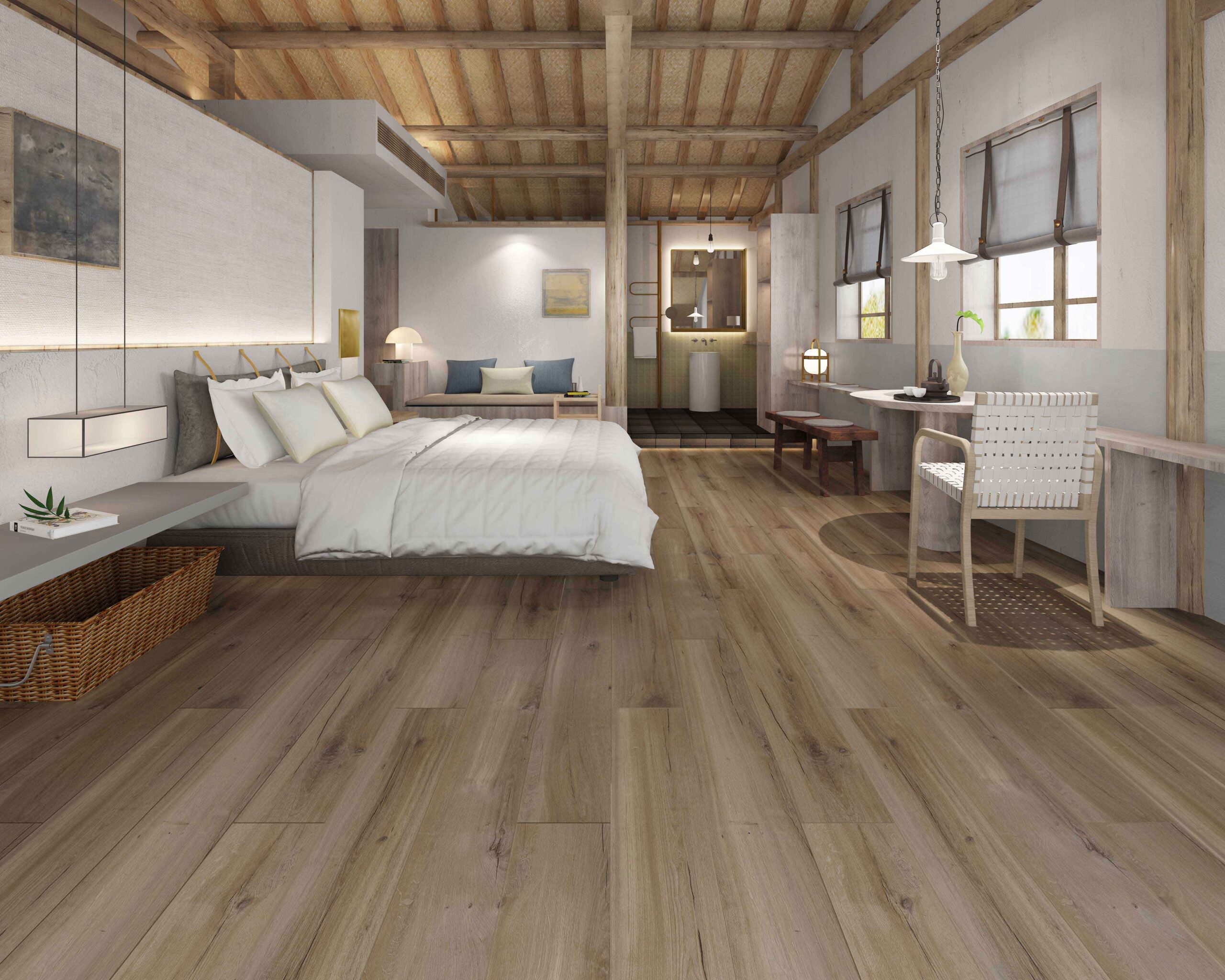
A well-executed vinyl overlay should look and feel like a brand-new floor. The transformation can be dramatic — dated ceramic tiles replaced by elegant timber-look planks or contemporary stone-effect tiles in a matter of hours.
Maintenance is straightforward. Regular sweeping or vacuuming to remove grit and dust, followed by damp mopping with a mild cleaner, keeps the floor in excellent condition. Avoid harsh chemicals, abrasive cleaners, and excessive water.
With proper installation and care, vinyl flooring over tiles can last many years. The overlay approach also has the advantage of being reversible — if you ever wish to change the flooring, the vinyl can be removed without damaging the original tiles beneath.
Many homeowners are pleasantly surprised by the improvement in comfort. Vinyl is warmer and softer underfoot than ceramic tiles, creating a noticeably more comfortable living surface. In air-conditioned rooms, where tiles can feel uncomfortably cold on bare feet, vinyl provides a welcome improvement. The sound-dampening properties of vinyl also make the home quieter, reducing the sharp click of footsteps and the clatter of dropped items that hard tiles amplify.
For families with young children or elderly members, the slightly yielding surface of vinyl offers a safety advantage. Dropped toys are less likely to break, and a stumble on vinyl is less punishing than on unyielding ceramic. These practical benefits, combined with the aesthetic transformation and the ease of installation, explain why vinyl overlay has become one of the most popular renovation choices across Singapore.
Request free samples from our Singapore showroom. Explore the full range of vinyl flooring suitable for overlay installation at Goodrich Global.