Carpet & Flooring
Commercial Flooring Maintenance: A Practical Guide
Commercial flooring maintenance is the single most influential factor in determining how long your floor investment lasts and how it looks throughout its service life. A well-maintained commercial floor in a Singapore office, retail store, or hospitality venue can serve ten to fifteen years beyond its expected replacement date. A neglected one can look tired within two to three years, triggering costly early replacement.
This guide covers proven maintenance strategies for the most common commercial flooring types in Singapore, with practical recommendations for building managers, facility teams, and cleaning contractors.
Why Maintenance Programmes Matter
Commercial flooring represents a significant capital investment. In a typical 1,000-square-metre Singapore office, the floor covering alone can account for $30,000 to $80,000 depending on the material specified. Protecting that investment through structured maintenance is straightforward economics.
Beyond cost, floor appearance directly affects business outcomes. Retail customers associate clean, well-maintained floors with quality and trustworthiness. Hotel guests rate properties lower when corridors and lobbies show visible wear. Office tenants expect landlords to maintain common-area flooring to the standard promised in lease agreements.
Singapore’s climate adds another layer of complexity. High humidity promotes mould growth on organic materials and accelerates adhesive degradation. Fine dust from construction activity — ever-present in Singapore’s building-dense environment — acts as an abrasive that dulls floor surfaces when not removed promptly. Tropical rain tracked indoors creates slip hazards and moisture damage if not managed immediately.
Vinyl Flooring Maintenance
Luxury vinyl flooring and vinyl sheet flooring are among the most common commercial floor surfaces in Singapore. Their maintenance is straightforward but must be consistent.
Daily Care
Dust mop or vacuum the floor to remove loose particles. This single step prevents more damage than any other maintenance activity — grit left on the surface acts like sandpaper under foot traffic, gradually wearing through the protective layer. Use a microfibre dust mop or a vacuum with a hard-floor setting (rotating brush bars off) to avoid scratching.
Damp Mopping
Mop with a well-wrung microfibre mop and a diluted pH-neutral floor cleaner. Avoid flooding the surface — excess water can seep into seams and edges, potentially reaching the adhesive layer or subfloor. Change the mopping solution frequently to avoid redepositing soil.
Periodic Deep Cleaning
Monthly or quarterly, depending on traffic levels, use a rotary floor machine with a soft pad or an auto-scrubber to remove embedded soil and restore surface lustre. Follow the manufacturer’s recommendations for machine speed and pad type — aggressive pads can damage the wear layer.
Polish and Seal
Some vinyl floors benefit from periodic application of a manufacturer-approved polish or sealer. This adds a sacrificial protective layer that absorbs wear instead of the permanent wear layer, extending the floor’s life significantly. Not all vinyl products require or accept polish — check the manufacturer’s maintenance guide before applying any coating.
What to Avoid
- Bleach and ammonia-based cleaners, which can discolour and degrade the surface.
- Abrasive scrubbing pads, steel wool, or scouring powders.
- Steam mops, which can soften adhesive bonds and cause edge lifting.
- Rubber-backed mats, which can cause permanent discolouration through chemical reaction with the vinyl surface.
Carpet Maintenance
Commercial carpet — both broadloom and carpet tiles — requires a structured four-stage maintenance approach to maximise appearance retention and service life.
Stage 1: Preventive
Install walk-off mats at all entrances to capture soil and moisture before they reach the carpet. In Singapore, where rain is frequent and footwear transitions from outdoor to indoor are common, quality entrance matting systems remove up to 80 per cent of incoming soil. This single investment reduces carpet cleaning costs dramatically.
Stage 2: Daily Vacuuming
Vacuum all traffic areas daily with a commercial upright vacuum equipped with a height-adjustable rotating brush bar. The brush bar agitates the pile, lifting soil from the fibre base where it would otherwise accumulate and cause permanent discolouration. Non-traffic areas can be vacuumed two to three times per week.
Stage 3: Interim Cleaning
Every three to six months, apply a low-moisture interim cleaning method such as encapsulation. Encapsulation involves applying a crystallising polymer that surrounds soil particles and is then removed by vacuuming. This method dries quickly, minimises disruption, and effectively maintains appearance between deep cleans.
Stage 4: Restorative Deep Cleaning
Annually, or when the carpet’s appearance cannot be restored by interim cleaning, perform a full hot-water extraction (often called steam cleaning). This method flushes deep-seated soil, allergens, and cleaning residue from the carpet fibres. Schedule deep cleaning during weekends or public holidays to allow adequate drying time — 12 to 24 hours in Singapore’s humid conditions with air conditioning running.
Spot Cleaning
Address spills immediately. Blot (never rub) liquids with a clean white cloth, working from the edge of the spill inward to prevent spreading. Apply an appropriate spot remover for the stain type — protein-based stains (food, blood) require different treatment than tannin stains (coffee, tea) or oil-based stains.
Timber and Engineered Wood Maintenance
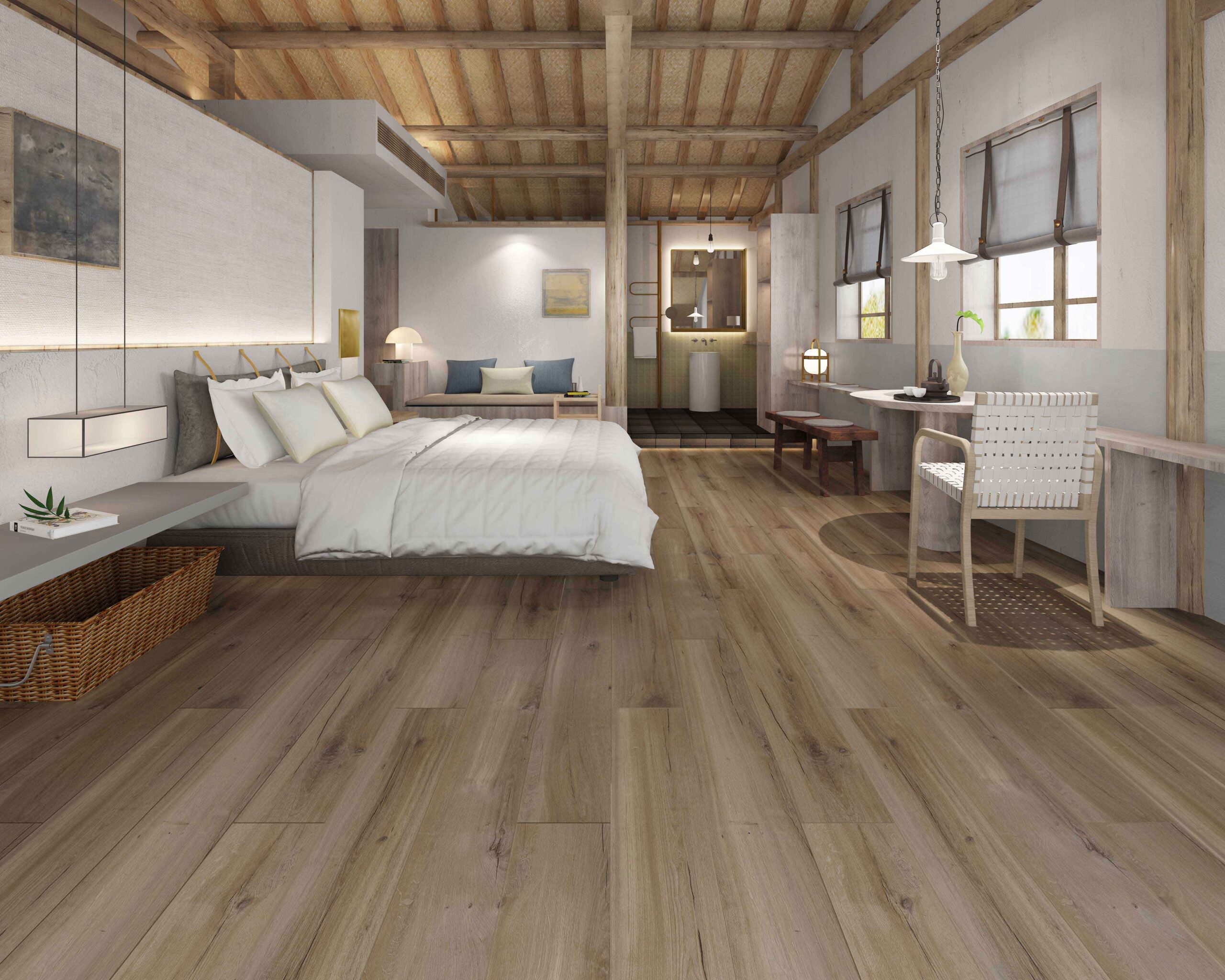
Timber flooring in Singapore commercial spaces — particularly in hospitality, retail, and premium offices — demands more careful maintenance than vinyl or carpet due to its sensitivity to moisture.
Humidity Management
Maintain indoor relative humidity between 55 and 70 per cent to prevent timber from shrinking (causing gaps) or expanding (causing buckling). In Singapore, this primarily means ensuring consistent air conditioning operation. Sudden humidity changes — such as when a system is shut down over a long weekend — cause the most damage.
Cleaning
Dust mop daily. Damp mop sparingly with a well-wrung microfibre mop and a cleaner specifically formulated for finished timber. Never wet-mop timber flooring — standing water causes swelling, staining, and finish failure.
Recoating
Commercial timber floors with polyurethane or lacquer finishes require periodic recoating to restore the protective layer worn by foot traffic. In high-traffic areas, this may be needed every two to three years. Recoating involves light abrasion of the existing finish, cleaning, and application of a fresh topcoat — a process that typically requires 24 to 48 hours of downtime.
Creating a Maintenance Schedule
Effective commercial flooring maintenance follows a documented schedule that specifies tasks, frequencies, methods, and responsible parties.
| Task | Vinyl | Carpet | Timber |
|---|---|---|---|
| Dust mop / vacuum | Daily | Daily | Daily |
| Damp mop | Daily to weekly | N/A | Weekly (minimal moisture) |
| Spot cleaning | As needed | As needed | As needed |
| Machine scrub / interim clean | Monthly to quarterly | Quarterly to biannually | N/A |
| Deep clean / extraction | Biannually | Annually | N/A |
| Polish / recoat | Annually (if applicable) | N/A | Every 2-3 years |
Document the schedule, train cleaning staff on correct methods and products, and review the programme annually. Adjust frequencies based on observed wear patterns and traffic changes.
Final Thoughts
Commercial flooring maintenance is not glamorous, but it is the most cost-effective way to protect your floor investment and maintain the professional appearance your business depends on. Consistent daily care, periodic deep cleaning, and prompt attention to spills and damage keep floors looking their best for years beyond their expected service life.
A structured maintenance programme costs a fraction of premature floor replacement — and the difference is visible every day.
Browse our e-catalogue for the latest commercial flooring products from Goodrich Global, designed for performance and easy maintenance.