Carpet & Flooring
LVT vs SPC Flooring: Which Is Better for You?
LVT vs SPC flooring is one of the most common comparisons Singapore homeowners and designers encounter when selecting vinyl flooring. Both fall under the luxury vinyl category, both offer realistic wood and stone designs, and both are waterproof — yet their construction differs significantly, which affects performance, comfort, and suitability for different applications. This guide breaks down the key differences to help you make the right choice.
Understanding the Core Difference
The fundamental distinction between LVT and SPC lies in the core layer, which determines how each product feels, performs, and installs.
LVT (Luxury Vinyl Tile) has a flexible core made from multiple layers of PVC and plasticisers. This flexibility gives LVT a softer, more cushioned feel underfoot. It conforms slightly to the subfloor beneath it, which means subfloor preparation must be thorough — any imperfections will telegraph through the surface.
SPC (Stone Polymer Composite) features a rigid core made from a blend of limestone powder and PVC polymer. This rigidity makes SPC dimensionally stable, resistant to temperature-induced expansion, and less dependent on a perfectly smooth subfloor. However, the rigid core produces a firmer feel underfoot compared to LVT.
Head-to-Head Comparison
| Feature | LVT | SPC |
|---|---|---|
| Core material | Flexible PVC layers | Rigid limestone-PVC composite |
| Thickness range | 2 – 5 mm | 3.5 – 7 mm |
| Comfort underfoot | Softer, more cushioned | Firmer, more rigid |
| Dimensional stability | Good (with proper adhesion) | Excellent (handles temperature shifts) |
| Subfloor tolerance | Low (requires smooth, level subfloor) | Higher (bridges minor imperfections) |
| Installation method | Typically glue-down | Typically click-lock floating |
| Sound insulation | Good (flexible core absorbs sound) | Moderate (rigid core transmits more) |
| Water resistance | 100% waterproof | 100% waterproof |
| Indent resistance | Moderate (can indent under heavy loads) | High (rigid core resists compression) |
| Cost range (per sq ft) | $3 – $8 | $3.50 – $9 |
When to Choose LVT
LVT is the better choice in several specific scenarios common in Singapore interiors.
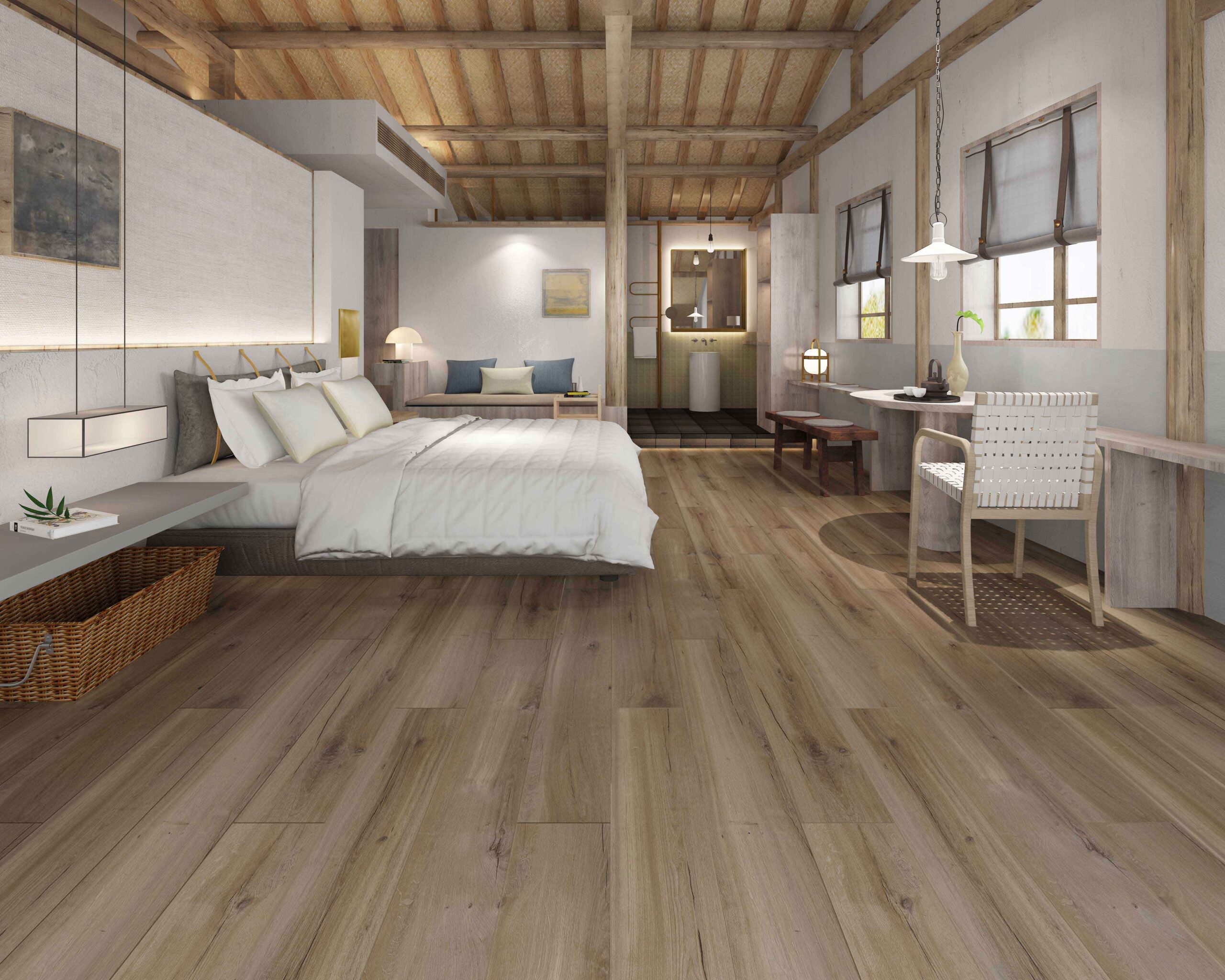
Bedrooms and living rooms where comfort matters: The flexible core provides a warmer, softer walking surface that feels more natural underfoot, especially in bare-foot zones like bedrooms. For households with young children or elderly residents, LVT’s slight give reduces fatigue and impact from falls.
Noise-sensitive apartments: LVT’s flexible construction absorbs impact sound more effectively than SPC’s rigid core. In HDB flats and condos where noise transmission to lower floors is a concern, glue-down LVT with an acoustic adhesive offers superior sound insulation.
Large commercial installations: Glue-down LVT is the preferred format for hotel rooms, office floors, and retail spaces exceeding 200 square metres. The full-surface adhesion prevents movement, eliminates hollow spots, and provides long-term stability in high-traffic environments. Explore the LVT range from Goodrich Global for commercial-grade options.
When to Choose SPC
SPC excels in situations where rigidity, speed, and subfloor tolerance are priorities.
DIY-friendly renovations: SPC’s click-lock system allows planks to snap together without adhesive, making it a feasible option for confident DIY renovators. The floating installation also means the floor can be removed and reinstalled if you move to a new flat.
Uneven subfloors: In older HDB resale flats and shophouses where the concrete screed is uneven, SPC’s rigid core bridges minor imperfections (up to 2 mm over 2 metres) that would cause visible issues with flexible LVT.
Areas with direct sunlight: Rooms with large west-facing windows in Singapore experience significant afternoon heat. SPC’s limestone core is less susceptible to thermal expansion than LVT’s PVC core, reducing the risk of buckling or gapping at plank joints in sun-exposed areas.
Heavy furniture zones: SPC resists indentation from heavy wardrobes, bookshelves, and dining tables better than LVT. Its rigid core distributes point loads more effectively, preventing the permanent dents that can form under concentrated weight on flexible vinyl.
Installation Considerations for Singapore Homes
The installation method is a practical differentiator between LVT and SPC that affects cost, timeline, and future flexibility.
Glue-down LVT requires thorough subfloor preparation, including cleaning, levelling, and priming. The adhesive needs 24 to 48 hours to cure before the floor can accept foot traffic. Once cured, the bond is essentially permanent — removing glue-down LVT is labour-intensive and typically damages the subfloor.
Click-lock SPC installs over the existing subfloor with minimal preparation. A thin foam or cork underlay is laid first, and the planks click together in a floating assembly. The entire process is faster, generates less mess, and the floor can be walked on immediately. If you rent your apartment or anticipate moving within a few years, SPC’s removability is a significant advantage.
Can You Mix LVT and SPC in One Home?
Yes, and many Singapore homeowners do. A common approach is to use glue-down LVT in bedrooms for comfort and acoustic performance, and click-lock SPC in the living room, kitchen, and dining area for rigidity and indent resistance. Matching the design across both product types creates visual continuity, while each zone benefits from the format best suited to its function.
Use flush transition strips at the junction between LVT and SPC areas to accommodate the slight height difference and ensure a clean visual break.
Final Thoughts
The choice between LVT vs SPC flooring comes down to your specific priorities: comfort and acoustics favour LVT, while rigidity, ease of installation, and subfloor tolerance favour SPC. Both deliver the waterproof, low-maintenance performance that Singapore’s climate demands, and both are available in an extensive range of wood and stone designs.
Request free samples of both LVT and SPC from our Singapore showroom to compare them side by side.