Carpet & Flooring
Tiles Popping Up? Causes, Fixes and Vinyl Alternatives
Why Tiles Pop Up in Singapore Homes
Tile popping — also called tile tenting or tile buckling — is a common problem in Singapore homes, particularly in HDB flats and older condominiums. It occurs when floor tiles detach from the screed and push upward, sometimes with a loud cracking sound. In severe cases, tiles lift several centimetres off the ground, creating a safety hazard.
The phenomenon is not random. It is driven by well-understood physical causes that are amplified by Singapore’s tropical climate.
Thermal Expansion
All materials expand when heated and contract when cooled. Ceramic and porcelain tiles, the concrete screed beneath them and the adhesive bonding layer all expand at different rates. When a room heats up — from afternoon sun through west-facing windows or from the absence of air-conditioning — the tiles expand outward. If there are no expansion joints to absorb this movement, the built-up pressure has nowhere to go except upward.
Inadequate Expansion Joints
Expansion joints are flexible gaps left between tiled sections and at the perimeter of rooms, filled with a compressible sealant. They allow tiles to expand without pushing against walls or each other. When these joints are missing, too narrow or filled with rigid grout instead of sealant, thermal expansion creates enormous internal pressure.
Poor Adhesive Bond
If the original tiling used insufficient adhesive, the wrong type of adhesive or was done on a dusty or damp screed, the bond between tile and subfloor is weak. Tiles with a poor adhesive bond detach more easily when thermal or moisture stresses occur.
Moisture Migration
Ground-floor HDB units and older buildings may experience moisture rising through the concrete slab. This moisture weakens the adhesive bond and contributes to tile displacement. Units above void decks or near water features can be particularly affected.
Age of the Installation
Tile installations in HDB flats that are 15 to 25 years old are at the highest risk. Over time, the adhesive degrades, minor movements accumulate and the tiles reach a tipping point where a relatively small temperature change triggers the pop.
What to Do When Tiles Pop
Immediate Safety Steps
- Keep children and pets away from the affected area. Popped tiles have sharp edges and can shatter.
- If multiple tiles have lifted, cover the area with cardboard or a thick mat to prevent injury.
- Do not attempt to push tiles back down by standing on them — they may crack under pressure.
- Document the damage with photos. If you are in an HDB flat within the Defects Liability Period (DLP), report it to HDB for rectification.
Temporary Fixes
For a single popped tile, you can attempt a temporary repair:
- Carefully remove the loose tile and clean the old adhesive from both the tile and the screed
- Apply fresh tile adhesive and re-lay the tile, leaving a small gap at the edges for grout
- Allow 24 hours for the adhesive to cure before walking on it
However, if one tile has popped, others in the same area are likely to follow. A single-tile repair often buys time but does not solve the underlying problem.
Full Re-Tiling
The most thorough fix is to hack out all affected tiles (and often the entire room), inspect the screed, install proper expansion joints and re-tile with fresh adhesive. This is effective but expensive, disruptive and time-consuming.
For a 4-room HDB flat, full hacking and re-tiling costs $8,000 to $15,000, takes one to two weeks and generates significant noise and dust. For many homeowners, this is overkill — especially if the underlying screed is in good condition.
Vinyl Flooring: The Practical Alternative
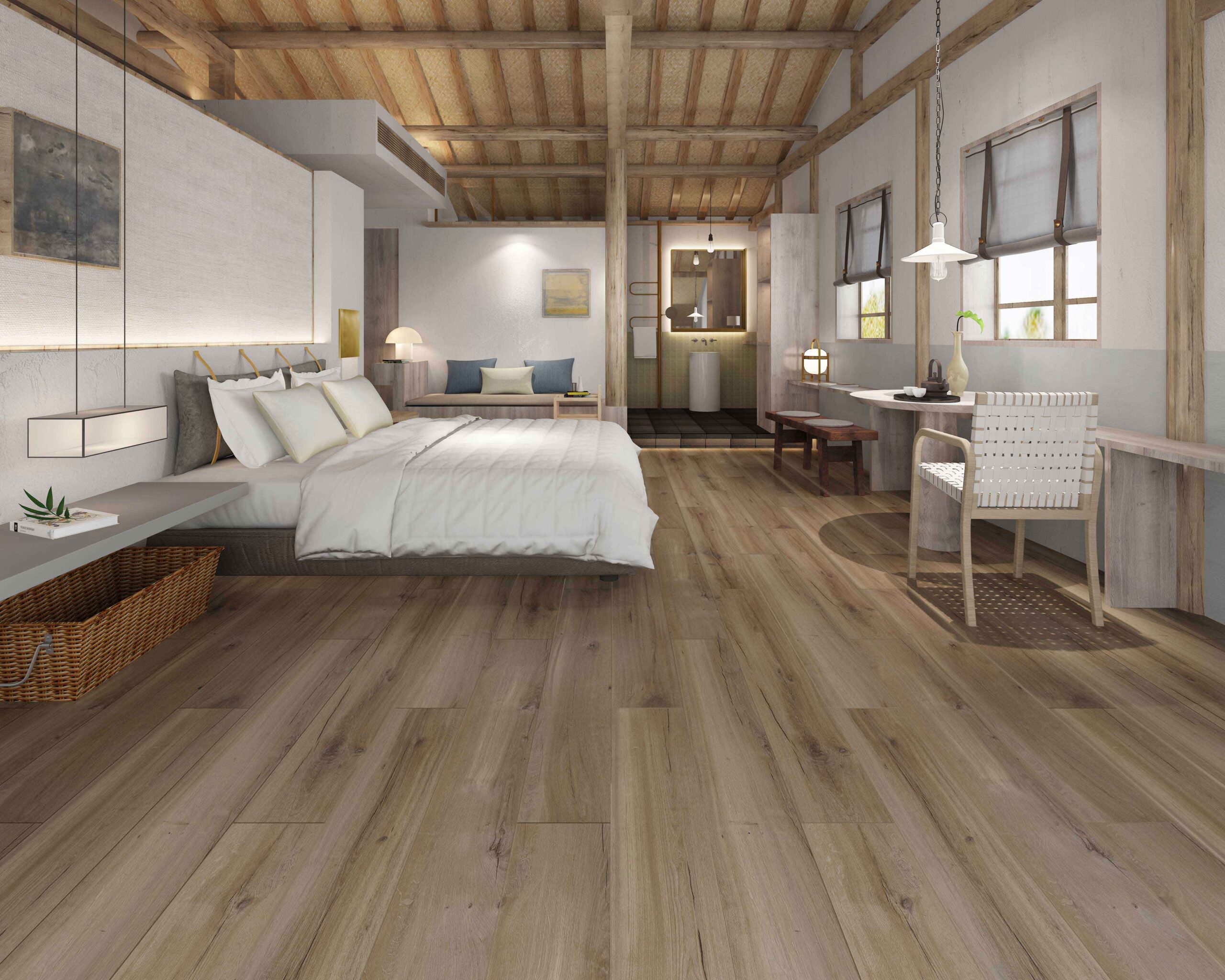
An increasingly popular solution for tile popping in Singapore homes is to remove only the loose tiles, level the subfloor and overlay the entire area with SPC vinyl flooring. This approach addresses the root cause and provides a fresh, modern floor without the cost and disruption of full re-tiling.
Why Vinyl Overlay Works
- No thermal expansion issues: SPC vinyl has a coefficient of thermal expansion far lower than ceramic tiles. It does not pop, buckle or tent under normal conditions.
- Flexible installation: Vinyl click-lock planks float on an underlay, so they can move microscopically with temperature changes without building up stress.
- Covers imperfections: Once loose tiles are removed and the area is levelled with self-levelling compound, vinyl sits flat over the remaining tiles and patched sections.
- Faster and quieter: No full hacking required. The overlay can be completed in one to two days for a typical HDB flat.
The Process
- Remove all loose or popped tiles and clean the area down to the screed
- Apply self-levelling compound to create a flat, even surface across the remaining tiles and exposed screed areas
- Lay a moisture barrier over the entire floor
- Install underlay for cushioning and sound dampening
- Click-lock SPC vinyl planks over the prepared surface
- Fit skirting and transition strips to finish
Cost Comparison: Re-Tiling vs Vinyl Overlay
| Approach | Cost (4-Room HDB) | Duration | Disruption Level |
|---|---|---|---|
| Full hack and re-tile | $8,000–$15,000 | 1–2 weeks | Very high — dust, noise, may need to vacate |
| Partial hack + vinyl overlay | $4,000–$10,000 | 2–4 days | Moderate — minimal hacking |
| Vinyl overlay (tiles stable) | $3,500–$8,500 | 1–2 days | Low — no hacking |
The vinyl overlay approach typically saves 40% to 60% compared to full re-tiling while delivering a floor that is more resistant to the temperature-induced stresses that caused the original tiles to pop.
Preventing Tile Popping in Future Installations
If you are installing new tiles elsewhere in your home, these measures significantly reduce the risk of future popping:
- Insist on expansion joints: Every 3 to 4 metres and around the room perimeter. Fill with flexible sealant, not grout.
- Use full-bed adhesive application: The adhesive should cover at least 90% of the tile back. Spot-bonding (adhesive only in corners and centre) creates weak areas.
- Choose the right adhesive: Flexible polymer-modified adhesives accommodate more movement than rigid cement-based types.
- Allow for curing: Do not walk on newly tiled floors for at least 24 hours. Full adhesive curing takes 48 to 72 hours.
- Avoid large-format tiles without proper preparation: Bigger tiles amplify thermal expansion forces. They require more expansion joints and full-coverage adhesive.
Is Your Home Eligible for HDB Defect Rectification?
If your BTO flat is still within the Defects Liability Period (DLP) — typically one year from key collection — and tiles are popping up, HDB is responsible for rectification at no cost to you. Report the defect through the HDB Defects Feedback System as soon as possible, with photographs documenting the damage.
For older HDB flats well past the DLP, tile popping is the homeowner’s responsibility. However, if the issue affects multiple units in the same block simultaneously — which sometimes happens after an extended hot spell — it may be worth raising the matter with your town council, as they may coordinate a collective assessment.
Next Steps for Your Home
If you are dealing with popped tiles and want a long-term solution that avoids the hassle of full re-tiling, vinyl overlay is the most practical path forward. Goodrich Global’s luxury vinyl flooring is designed to handle Singapore’s climate conditions and installs cleanly over prepared subfloors.
Browse the full flooring range to explore designs, or book an appointment with our design consultants to discuss the best solution for your situation.