Carpet & Flooring
Vinyl Flooring Singapore: Complete Buyer’s Guide
Vinyl flooring in Singapore has evolved from a basic, utilitarian material into one of the most versatile and sought-after flooring solutions for homes, offices, and commercial spaces. Advances in printing technology, wear-layer engineering, and core construction mean that today’s vinyl planks and tiles are virtually indistinguishable from natural hardwood and stone — at a fraction of the cost and maintenance.
This buyer’s guide covers everything you need to know about specifying, purchasing, and installing vinyl flooring in Singapore, whether you are a homeowner planning a BTO fit-out or a designer working on a hospitality project.
Types of Vinyl Flooring Available in Singapore
The term “vinyl flooring” encompasses several distinct product categories, each with different properties and ideal applications.
Luxury Vinyl Tiles (LVT)
LVT consists of multiple PVC layers with a high-resolution photographic design layer and a clear wear layer on top. Available in both plank and tile formats, LVT can be installed as a floating floor (click-lock) or glued directly to the subfloor. Glue-down LVT is thinner — typically 2 to 3 mm — and is popular in commercial settings where a low-profile, fully bonded installation is preferred.
Stone Polymer Composite (SPC)
SPC planks feature a rigid core made from limestone and PVC, giving them superior dimensional stability and dent resistance. SPC is the most popular residential vinyl format in Singapore, favoured for its ease of installation and ability to handle temperature fluctuations from direct sunlight in west-facing HDB flats and condos.
Vinyl Roll / Sheet Vinyl
Sheet vinyl comes in wide rolls and is installed by gluing directly to the subfloor. It is commonly specified for healthcare facilities, laboratories, and commercial kitchens where seamless, joint-free flooring is needed for hygiene. Residential use is less common but remains an option for service yards and utility areas.
Why Vinyl Flooring Suits Singapore’s Climate
Singapore’s equatorial climate — characterised by high humidity, consistent warmth, and frequent heavy rain — creates a challenging environment for many flooring materials. Solid hardwood can warp, laminate cores can swell, and even some engineered products struggle with prolonged moisture exposure.
Vinyl flooring sidesteps these problems entirely. Its synthetic composition makes it 100 per cent waterproof, meaning it can be used confidently in every room, including kitchens, bathrooms, and covered balconies. The material does not absorb moisture, does not support mould growth on its surface, and cleans easily with a damp mop — a practical advantage in a country where wet mopping is the default cleaning method.
Temperature stability is equally important. Quality SPC products experience minimal expansion and contraction across the temperature range found in Singapore homes, even in rooms exposed to direct afternoon sun. This stability reduces the risk of gaps forming between planks over time.
How to Choose the Right Vinyl Flooring
With hundreds of products on the market, narrowing down your choices requires evaluating a few key specifications.
Wear-Layer Thickness
The wear layer protects the design layer from scratches, scuffs, and stains. For residential use, a 12 to 20-mil wear layer is standard. Commercial applications — offices, retail, hospitality — typically require 20 mils or above. A thicker wear layer extends the floor’s lifespan and maintains its appearance under heavier foot traffic.
Core Type and Thickness
Rigid SPC cores suit residential floating installations, while flexible LVT cores work well in glue-down commercial applications. Total plank thickness (including underlay) affects both comfort and ceiling height — an important consideration in HDB flats where every millimetre counts.
Design and Texture
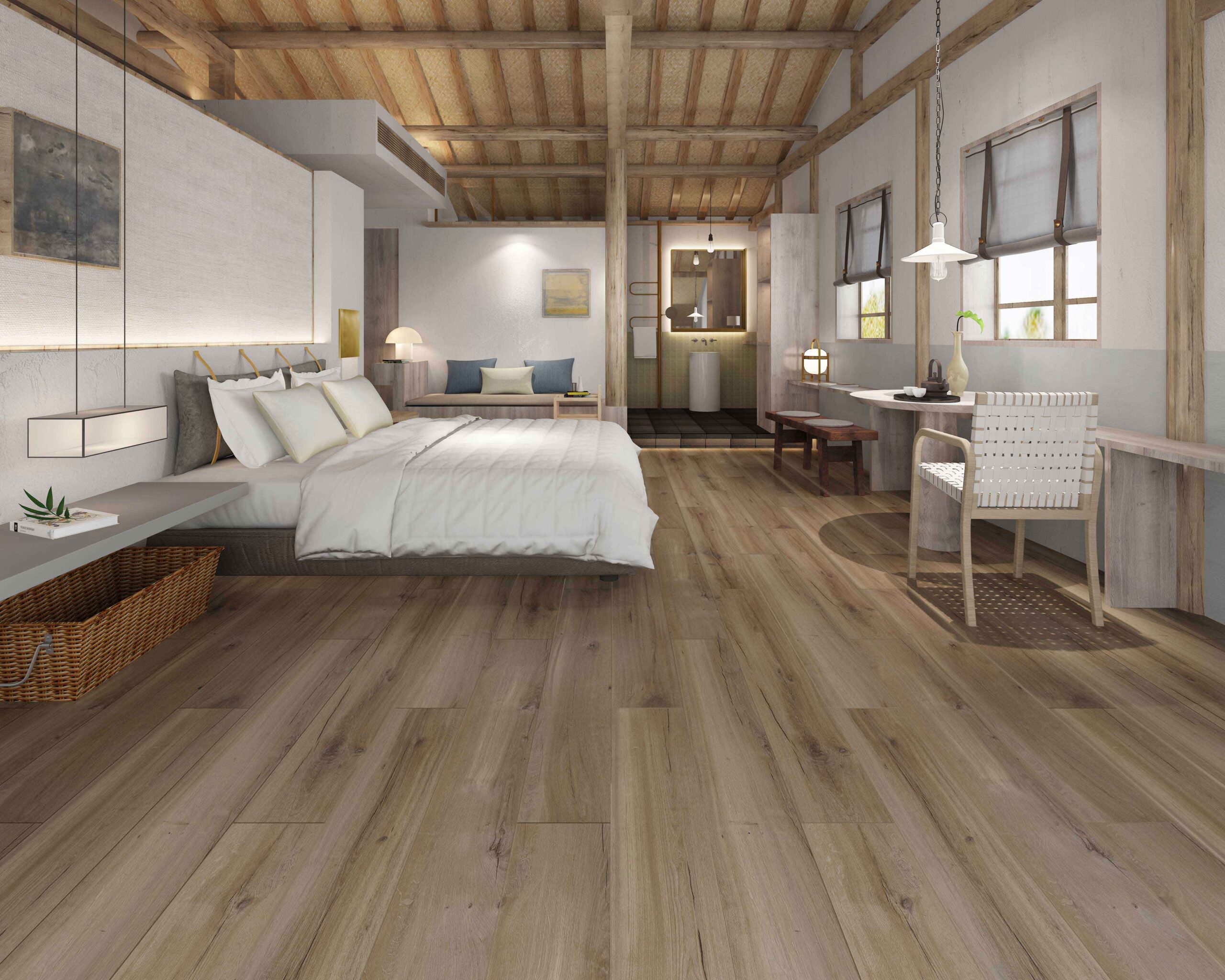
Modern vinyl flooring features embossed-in-register (EIR) textures that align the surface grain with the printed pattern, creating a remarkably realistic look and feel. When choosing designs, consider the overall interior palette. Light oak and ash tones open up smaller HDB rooms, while darker walnut and herringbone patterns add drama to spacious condo living areas.
Certifications
Look for products certified for low volatile organic compound (VOC) emissions, such as FloorScore or Singapore Green Building Council (SGBC) certifications. Indoor air quality matters in tightly sealed, air-conditioned Singapore apartments.
Installation Methods and Considerations
Proper installation is as important as product selection. The two primary methods each have distinct advantages.
Floating click-lock installation is the standard for SPC and some LVT products. Planks interlock without adhesive and float over the subfloor with a small expansion gap at the perimeter. This method is fast, clean, and allows the floor to be removed and replaced without damaging the subfloor — a benefit for tenants or homeowners who may want to update their flooring in future.
Glue-down installation bonds each plank or tile directly to the subfloor using a suitable adhesive. This creates a completely stable surface with zero movement, making it ideal for large commercial areas and rooms with heavy rolling loads. The subfloor must be smooth, level, and dry before gluing — preparation that may add time and cost but ensures a superior result.
Regardless of method, the subfloor should be clean, dry, and free from debris. In new BTO flats, the cement screed typically meets these requirements after a short curing period. In resale flats, existing tiles or vinyl can sometimes serve as the subfloor for overlay installations, saving the cost and disruption of hacking.
Maintaining Vinyl Flooring in Singapore
One of vinyl flooring’s greatest advantages is its low-maintenance nature. Regular sweeping or vacuuming removes dust and grit that could scratch the surface over time. Damp mopping with a pH-neutral cleaner is sufficient for routine cleaning — no waxing, polishing, or special treatments required.
- Use felt pads under furniture legs to prevent indentation, particularly on flexible LVT.
- Place doormats at entryways to trap sand and grit from shoes.
- Wipe up spills promptly, though the waterproof surface means there is no urgency as with laminate or hardwood.
- Avoid using abrasive cleaning pads or harsh chemical cleaners, which can dull the wear layer over time.
With proper care, quality vinyl flooring can maintain its appearance for 15 to 25 years — a strong return on investment for both residential and commercial applications.
Final Thoughts
Vinyl flooring in Singapore has earned its popularity through a compelling combination of waterproof performance, design versatility, and practical affordability. Whether you are planning a full-flat BTO renovation, upgrading a resale HDB, or specifying flooring for a commercial project, vinyl offers a solution that suits Singapore’s climate and lifestyle demands.
Goodrich Global stocks a comprehensive range of vinyl flooring products from trusted manufacturers, with options for every budget and application.
Browse our e-catalogue for the latest designs and discover the right vinyl flooring for your Singapore project.