Carpet & Flooring
Parquet Polishing, Repair or Replace? A Singapore Decision Guide
Parquet was the default flooring for a generation of Singapore homes, and thousands of HDB flats and older condos still have it underfoot. When it dulls, scratches or starts lifting, owners face a three-way decision: polish it back to life, repair the damaged sections, or replace the floor entirely. Each route carries a very different price tag, downtime and long-term outcome.
This guide walks through what parquet flooring polishing actually involves, when each option makes financial sense, and where a modern alternative quietly beats all three.
Goodrich Global does not provide parquet polishing or restoration services. Our range covers herringbone and parquet-look vinyl flooring that delivers the same warm timber patterns without sanding cycles, downtime or moisture worries.
What Parquet Polishing Actually Involves
The term “polishing” undersells the process. A proper parquet restoration is really a sand-and-recoat: contractors run a drum or belt sander across the floor to grind off the tired top surface, taking 0.5mm to 1mm of timber with it. That removes scratches, grey oxidised wood and old lacquer in one pass, exposing fresh grain underneath.
The crew then fine-sands with progressively finer grits, applies stain if you want a colour change, and seals the floor with two to three coats of polyurethane. Each coat needs several hours to cure before the next goes on, and the final coat should rest 24 to 48 hours before furniture returns. Budget three to five days for a whole flat, and expect fine dust to travel despite vacuum-assisted sanders — wardrobes, electronics and kitchen surfaces all need covering.
One more constraint matters. Solid parquet blocks are typically 10mm to 15mm thick and can survive perhaps three to five sanding cycles over their life. Every restoration spends part of that allowance, so a floor sanded twice by previous owners has far less left to give.
When Polishing Makes Sense — and When Repair Is the Right Call
Polishing is the right answer when the timber itself is sound and only the surface has suffered. If blocks sit flat and tight, there is no movement underfoot, and the complaints are dullness, light scratching or traffic lanes worn matte between the sofa and the kitchen, a sand-and-recoat will make the floor look close to new for a fraction of replacement cost.
Signs polishing will work
Solid parquet with sanding thickness left, isolated dull zones, superficial pet or furniture scratches, and an intact subfloor all point to polishing. If a coin tapped across the floor sounds consistent and no blocks flex, the base is healthy.
Signs you need repair first
Lifting or tenting blocks, hollow drumming when tapped, and localised water damage near bathrooms, balconies or air-con trunking call for repair before any polishing. Contractors chisel out affected blocks, treat the screed, and re-lay or replace them. The catch is matching: replacement blocks come from timber that has not spent twenty years darkening under Singapore sun, so patched areas often read as a visibly lighter rectangle even after staining. On a floor with widespread hollow spots, repair becomes whack-a-mole — fixing one zone while adjacent adhesive keeps failing.
When Replacement Wins
Some parquet floors are simply past saving. If earlier restorations have consumed the sanding allowance and the wear layer above the tongue is down to 2mm or less, another sanding risks exposing joints. Widespread termite tracking, subterranean moisture that keeps lifting blocks, or water damage across multiple rooms all push the economics towards replacement, because you would be paying repair prices repeatedly for a floor that keeps failing.
Taste is a legitimate reason too. Many owners renovating a resale flat do not want the orange-toned tropical hardwood look at all — they want wide oak planks, pale Scandinavian tones or a crisp herringbone. No amount of polishing changes the format of the blocks you already own, and staining can only shift colour within a narrow band.
Polishing vs Repair vs Replacement: What It Costs
Prices vary with floor condition, access and finish quality, but these bands reflect typical Singapore quotes for a standard flat.
| Route | Typical cost (per sqm) | Downtime | What you get |
|---|---|---|---|
| Sand and polish existing parquet | S$12–S$25 | 3–5 days plus curing | Refreshed surface; same blocks, same layout; dust and odour during works |
| Repair sections, then polish | S$25–S$50+ for repaired zones, plus polishing | 5–10 days | Sound floor, but colour-matching of new blocks is imperfect |
| Replace with parquet-look vinyl | S$35–S$75 supplied and installed | 2–4 days, walkable immediately | New waterproof floor in any plank or herringbone design |
Polishing looks cheapest per cycle, but it recurs every five to eight years in a busy household, and each cycle brings the same dust, displacement and curing wait. Repair costs scale unpredictably because hidden damage only reveals itself once blocks come up. Replacement is the largest single outlay but resets the clock entirely — and if the replacement is vinyl rather than new timber, the maintenance cycle disappears with it.
The Modern Route: Parquet Patterns Without the Sanding Cycle
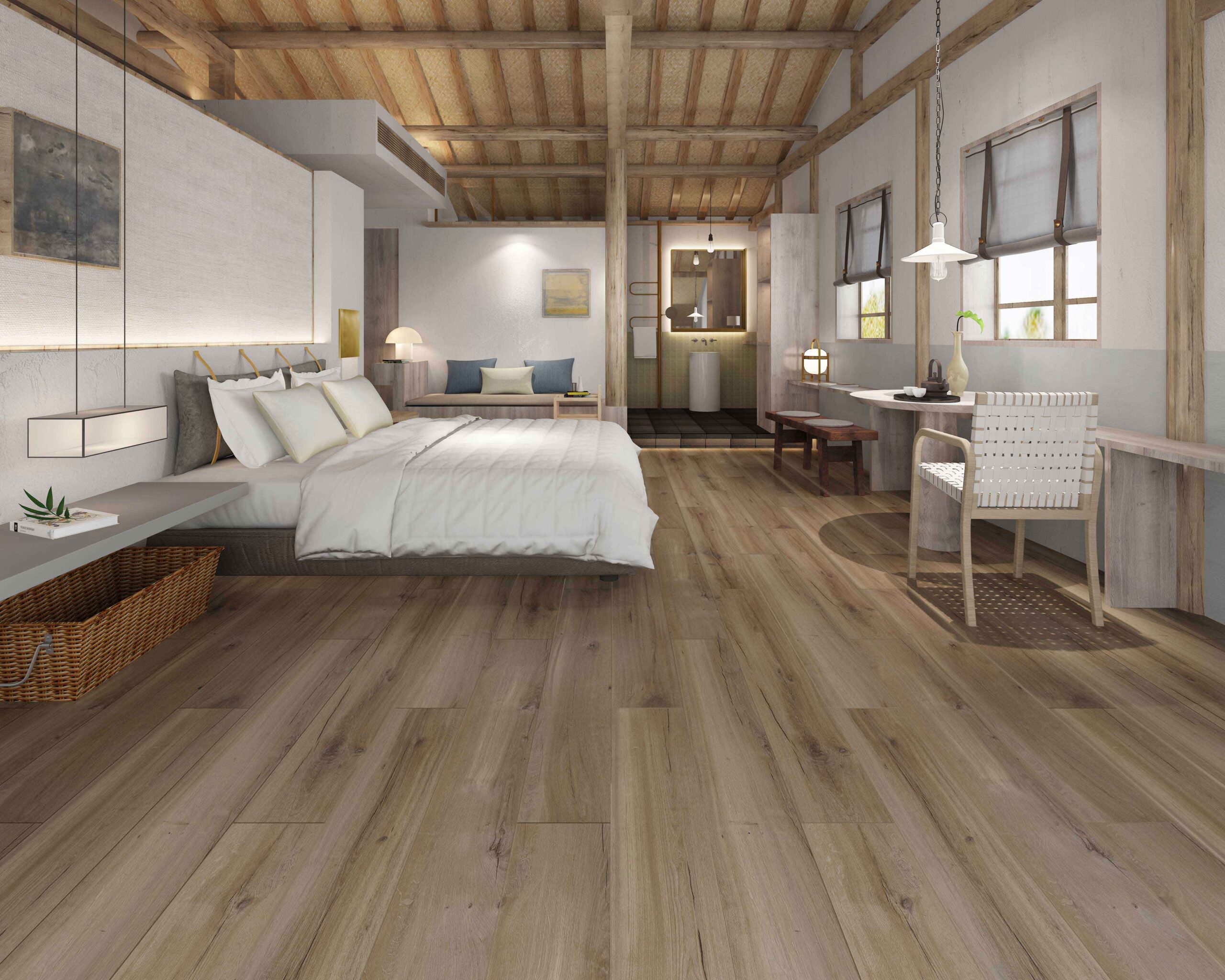
Herringbone and parquet-pattern luxury vinyl flooring has become the default choice for owners replacing tired timber, and the logic is straightforward. The wear surface is a clear performance layer over a printed timber design, so there is nothing to sand — the floor never enters a polish-repair-polish loop. It is fully waterproof, which matters in a climate where 80 per cent humidity, wet bathrooms and the occasional aircon leak are what killed the original parquet in the first place.
Installation is fast because vinyl lays over a properly prepared existing floor, often without hacking. A whole flat is typically done in two to four days with no dust extraction, no lacquer odour and no curing window before you move furniture back. Formats now include true herringbone planks in oak, walnut and ash tones, so the classic chevron geometry of old parquet survives even as the material changes. Our herringbone vinyl flooring guide covers laying patterns and plank sizes in detail, and if you are weighing timber against vinyl head-to-head, the comparison in parquet vs vinyl flooring in Singapore sets out the trade-offs honestly.
Underfoot, modern rigid-core vinyl feels firm and quiet rather than plasticky, and the better ranges carry commercial wear ratings that shrug off chairs, trolleys and pets. Browse the wider flooring collection to see plank, tile and herringbone options side by side.
Final Thoughts
The decision tree is simpler than most contractors make it sound. Sound solid parquet with thickness to spare and only surface wear: polish it. Localised lifting or hollow blocks on an otherwise good floor: repair, then polish, and accept some colour mismatch. Worn past its sanding allowance, damaged across multiple rooms, or simply not the look you want: replace — and at that point, parquet-look vinyl delivers the pattern you loved at a comparable installed cost, with none of the recurring restoration bills.
Before committing thousands to a sand-and-recoat, it is worth holding a herringbone vinyl plank against your existing floor and comparing honestly.
Request free herringbone and parquet-look vinyl samples and see how the modern alternative measures up against your existing parquet at home.